Sunda Colugo (Galeopterus variegatus)
Introduction
The Sunda Colugo, scientifically referred to as Galeopterus variegatus, is a fascinating and unique mammal. Often shrouded in mystery due to its nocturnal and elusive nature, the Sunda Colugo belongs to the order Dermoptera and is one of the two species of colugos found in Southeast Asia. Despite its common name, the Sunda Colugo is not a lemur nor a true flying mammal, but rather one of the most accomplished gliders in the animal kingdom. Its ability to glide long distances between trees in its forested habitat has earned it the nickname "flying lemur," although it is neither a lemur nor capable of powered flight. This article delves into the intricacies of the Sunda Colugo’s life, exploring its physical characteristics, habitat, behavior, and the challenges it faces in the wild.
Physical Description
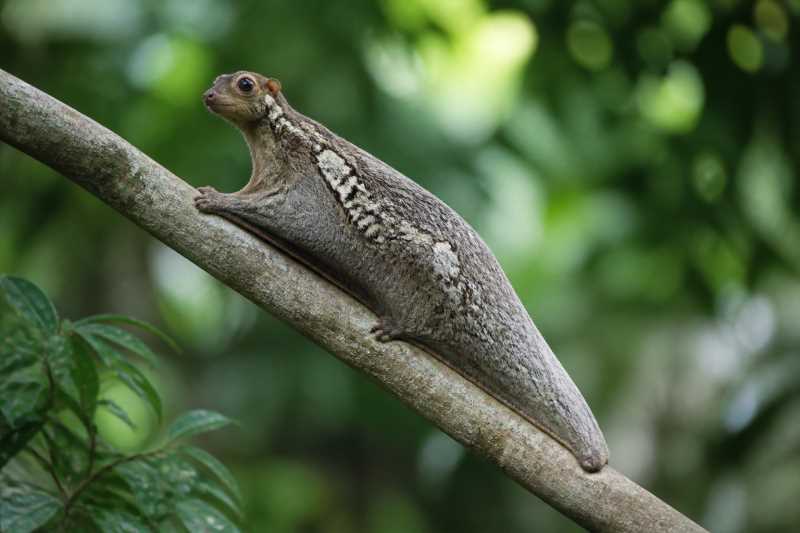
The Sunda Colugo is a medium-sized mammal, measuring approximately 34 to 42 centimeters in body length and weighing between 1 to 1.75 kilograms. One of its most distinctive features is the patagium, a membrane of skin that extends from its neck to the tips of its fingers, toes, and tail, allowing it to glide through the forest canopy. This extensive skin membrane is covered in a soft, dense fur that varies in color, typically ranging from gray to reddish-brown, often with mottled patterns that provide excellent camouflage among the foliage.
The colugo’s head is small, with large, forward-facing eyes that are well-adapted for nocturnal vision, enabling it to navigate and forage at night. Its ears are small and rounded, lying close to the head to avoid interference during gliding. The Sunda Colugo possesses sharp claws on each digit, which aid in climbing and clinging to tree trunks and branches.
Internally, the Sunda Colugo has a unique skeletal structure that supports its gliding lifestyle. Its limb bones are elongated, and the rib cage is modified to provide structural support for the patagium. The colugo’s tail is also elongated, providing additional surface area for gliding and aiding in balance and maneuverability.
Range and Habitat
The Sunda Colugo is native to the tropical rainforests of Southeast Asia, with its range extending across Thailand, Malaysia, Singapore, and Indonesia, including the islands of Sumatra, Borneo, and Java. It inhabits a variety of forested environments, from primary and secondary rainforests to mangrove swamps and plantations.
Colugos are arboreal and seldom descend to the ground, relying heavily on the forest canopy for shelter and sustenance. They are most commonly found at elevations up to 1,200 meters, although they can occasionally be found at higher altitudes. The dense foliage of these regions provides ample opportunities for gliding, as well as protection from predators and harsh weather conditions.
Behavior and Diet
The Sunda Colugo is primarily nocturnal, emerging from its resting sites at dusk to forage for food. It is a folivore, with a diet consisting mainly of leaves, supplemented by fruits, flowers, and young shoots. The colugo’s digestive system is adapted to process this fibrous diet, with a large cecum that houses symbiotic bacteria essential for breaking down cellulose.
Colugos are solitary creatures, with individuals maintaining overlapping home ranges. They communicate through a series of vocalizations, including high-pitched calls used to signal distress or maintain contact with offspring.
Gliding is a key aspect of the Sunda Colugo’s behavior. It can cover distances of up to 100 meters in a single glide, using its patagium to control its descent and direction. This ability allows the colugo to efficiently travel between feeding sites, evade predators, and conserve energy.
Identification Tips
Identifying the Sunda Colugo in the wild can be challenging due to its nocturnal habits and excellent camouflage. However, there are several key features to look for:
- Patagium: Look for the extensive skin membrane that stretches between the limbs and tail, which is visible during gliding.
- Fur Pattern: The mottled gray or reddish-brown fur blends with the tree bark, but the unique pattern can be a distinguishing feature.
- Large Eyes: The colugo’s large, reflective eyes are adapted for night vision and are often visible in low light conditions.
- Resting Position: During the day, colugos can often be found clinging to tree trunks or nestled in tree hollows with their limbs tucked in.
Conservation Status
The Sunda Colugo is currently listed as "Least Concern" by the International Union for Conservation of Nature (IUCN). However, it faces several threats that could impact its population in the future. Habitat destruction due to logging, agricultural expansion, and urban development poses the most significant risk, leading to fragmentation of its forest habitat.
Hunting and the illegal pet trade also threaten colugo populations, although these practices are less common compared to other species. Conservation efforts are primarily focused on habitat protection and promoting sustainable land-use practices.
Protected areas and national parks across the Sunda Colugo’s range play a crucial role in conserving this species, providing refuge and ensuring the preservation of its natural habitat. Continued research and monitoring are essential to understand population trends and inform conservation strategies.
Frequently Asked Questions
What is a Sunda Colugo?
The Sunda Colugo, also known as the Malayan flying lemur, is a gliding mammal native to Southeast Asia. Although it is called a "flying lemur," it is not capable of powered flight and is not a true lemur.
How far can a Sunda Colugo glide?
A Sunda Colugo can glide distances of up to 100 meters. It uses its large skin membrane, or patagium, to glide between trees in the forest canopy.
What do Sunda Colugos eat?
Sunda Colugos are folivores, primarily eating leaves. They also consume fruits, flowers, and young shoots, which provide the necessary nutrients for their diet.
Are Sunda Colugos endangered?
Currently, the Sunda Colugo is classified as "Least Concern" by the IUCN. However, habitat destruction and fragmentation pose significant threats to their populations.
Where can I see a Sunda Colugo in the wild?
Sunda Colugos are found in the tropical rainforests of Southeast Asia, particularly in Thailand, Malaysia, Singapore, and Indonesia. They are most commonly observed at night, gliding between trees.
Related posts