













Introduction
The Greater Mouse-tailed Bat, scientifically known as Rhinopoma microphyllum, is a fascinating member of the bat family that captivates both researchers and wildlife enthusiasts alike. As one of the most distinctive bats within its range, this species is known for its unique physical characteristics and ecological role. This article delves into the life of the Greater Mouse-tailed Bat, covering its physical description, habitat, behavior, and conservation status, along with tips for identification and answers to common questions.
Physical Description
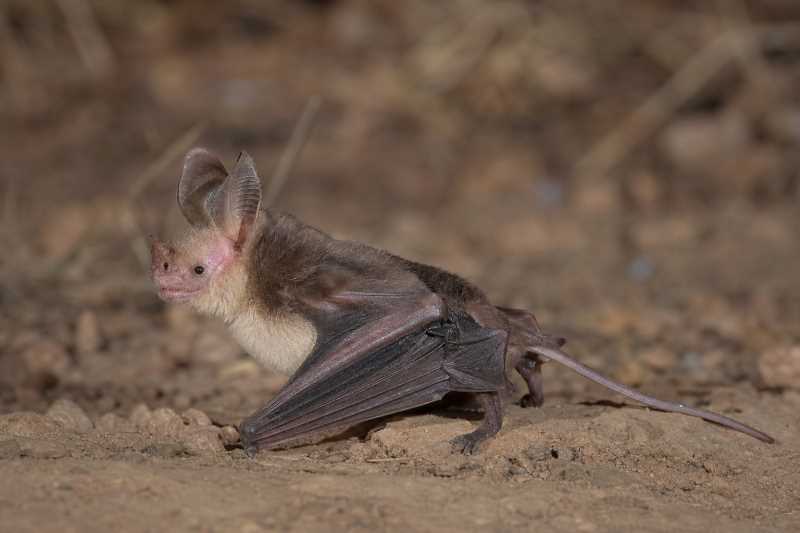
The Greater Mouse-tailed Bat is named for its conspicuously long tail, which extends beyond the flight membrane, resembling that of a mouse. This feature not only sets it apart from other bat species but also plays a role in its aerodynamics during flight. The species is medium-sized, with a body length ranging from 60 to 80 mm and a wingspan of approximately 40 to 50 cm.
Its fur is generally a sandy brown to grey, providing excellent camouflage against the rocky and arid environments it often inhabits. The face of the Greater Mouse-tailed Bat is relatively small, with large, round eyes and ears that aid in its nocturnal lifestyle. The ears are particularly noteworthy, being broad and slightly pointed, which enhances its ability to detect sounds in its environment.
Range and Habitat
Rhinopoma microphyllum inhabits a vast geographical range that spans parts of North Africa, the Middle East, and South Asia. It is commonly found in countries such as Egypt, Israel, Saudi Arabia, and India. The species thrives in arid and semi-arid regions, often residing in deserts, dry scrublands, and rocky terrains.
These bats are highly adaptable and utilize natural and man-made structures for roosting. Common roost sites include caves, crevices, and occasionally buildings, where they can find shelter from predators and extreme weather conditions. The ability to exploit a variety of habitats has been crucial for their survival across such a diverse range.
Behavior and Diet
The Greater Mouse-tailed Bat is a nocturnal species, emerging at dusk to embark on foraging expeditions. Their diet primarily consists of insects, making them an essential part of their ecosystem as natural pest controllers. They exhibit agile flight patterns, enabling them to skillfully navigate and hunt within their arid habitats.
Socially, these bats are known to form colonies that can range from a few individuals to several hundred. Their social structure is typically characterized by a high degree of cooperation, especially in roosting sites, where they cluster together to conserve heat and energy.
Identification Tips (field recognition cues)
Identifying the Greater Mouse-tailed Bat in the field requires attention to a few key features:
- Tail: The long, mouse-like tail extending beyond the flight membrane is the most distinctive trait.
- Ears: Note the large, broad ears, which are slightly pointed.
- Coloration: Look for the sandy brown to grey fur color that blends seamlessly into their arid surroundings.
- Size: Medium-sized body with a wingspan of about 40 to 50 cm.
Spotting these bats at dusk when they emerge from roosts can also aid in identification, as this is when they are most active.
Conservation Status (with threats and protections)
Currently, the Greater Mouse-tailed Bat is classified as "Least Concern" by the International Union for Conservation of Nature (IUCN). Despite this, the species faces several threats that could impact its populations in the future.
Threats
- Habitat Destruction: Urbanization and agricultural expansion are leading to the loss of roosting sites and foraging habitats.
- Pollution: Pesticides can reduce insect populations and directly harm bats through bioaccumulation.
- Climate Change: Alterations in weather patterns can affect their food availability and roosting conditions.
Protections
Efforts to conserve the Greater Mouse-tailed Bat include protecting critical habitats and promoting awareness about their ecological importance. Some regions have established protected areas where these bats are known to roost, and there are ongoing research initiatives aimed at understanding their ecology better.
Frequently Asked Questions
1. What is the primary diet of the Greater Mouse-tailed Bat?
The Greater Mouse-tailed Bat primarily feeds on insects, playing a crucial role in controlling pest populations within its habitat.
2. Where do Greater Mouse-tailed Bats typically roost?
These bats usually roost in caves, crevices, and sometimes in buildings, preferring locations that offer protection from predators and harsh environmental conditions.
3. How does the Greater Mouse-tailed Bat contribute to its ecosystem?
By consuming large quantities of insects, these bats help maintain the balance of ecosystems and aid in pest control, benefiting agriculture and reducing the need for chemical pesticides.
4. Are Greater Mouse-tailed Bats solitary or social animals?
They are social animals, often forming colonies that can vary in size from a few individuals to hundreds, which helps them conserve energy and share information about food resources.
5. How can climate change affect the Greater Mouse-tailed Bat?
Climate change can alter the availability of their prey, disrupt their roosting habitats, and lead to increased competition and stress, potentially impacting their survival.