The Ferruginous Antbird: A Hidden Jewel of the Understory
The Ferruginous Antbird (Drymophila ferruginea) is a captivating species of bird that thrives in the dense undergrowth of South America’s Atlantic Forest. Known for its secretive behavior and distinctive song, this bird is a testament to the region’s rich biodiversity. In this article, we delve into the world of the Ferruginous Antbird, exploring its habitat, behavior, and conservation status, to better understand the challenges and marvels of this remarkable avian species.
Habitat and Distribution
The Ferruginous Antbird is primarily found in the Atlantic Forest, a unique biome that stretches along the Atlantic coast of Brazil. This region is one of the most diverse and endangered ecosystems on the planet, harboring a plethora of endemic species. The bird’s preference for humid, dense forests with abundant undergrowth makes it particularly vulnerable to habitat degradation.
The Atlantic Forest has suffered extensive deforestation over the years, with over 85% of its original cover lost to agriculture, urban development, and logging. Despite this, the Ferruginous Antbird has managed to persist in fragmented patches of forest, showcasing its resilience. However, its restricted range and dependency on intact forest ecosystems make it susceptible to further habitat loss.
Physical Characteristics
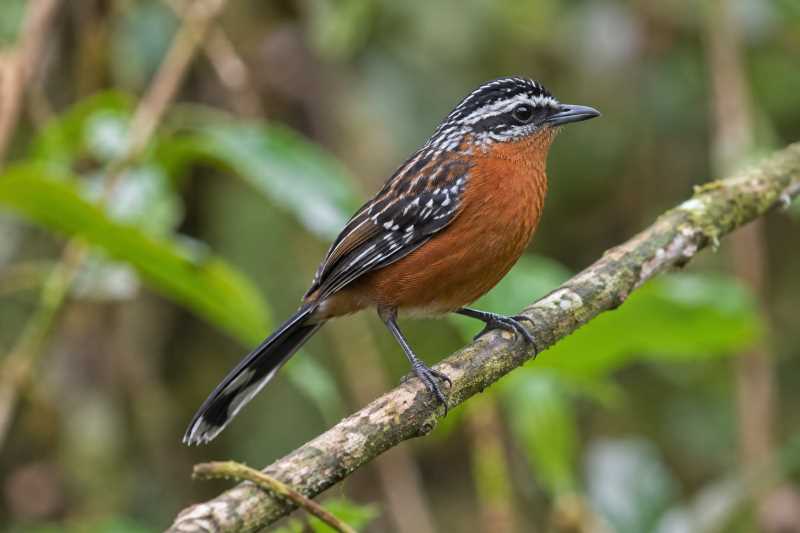
The Ferruginous Antbird is a small bird, measuring approximately 15 centimeters in length. Its plumage is primarily a rich ferruginous brown, with distinctive black streaks on its head and back, which provide excellent camouflage in the forest understory. The bird’s underparts are a contrasting white, and it sports a slender, slightly curved bill adapted for foraging among leaves and branches.
Both males and females exhibit similar plumage, although males are often slightly more vibrant in color. The bird’s inconspicuous appearance, combined with its preference for dense vegetation, makes it a challenge to spot in the wild. However, its vocalizations are a reliable indicator of its presence.
Behavior and Diet
Ferruginous Antbirds are known for their skulking behavior, often staying low in the undergrowth where they forage for insects and other small invertebrates. They exhibit a preference for ants, which are an abundant food source in their habitat. The birds use their sharp bills to probe into leaf litter and crevices, meticulously searching for prey.
These antbirds are territorial and often found in pairs. They communicate with a series of sharp, metallic calls and melodious songs, which play a crucial role in maintaining pair bonds and defending territory. Their song is a series of repeated notes that can vary in pitch and tempo, making it a distinctive sound in the Atlantic Forest.
Breeding and Nesting
The breeding season for the Ferruginous Antbird typically aligns with the rainy season, which varies depending on the region within the Atlantic Forest. During this period, the birds construct cup-shaped nests using leaves, twigs, and other plant materials, often hidden in dense vegetation to protect against predators.
Both parents participate in incubating the eggs and feeding the chicks, demonstrating a strong pair bond and cooperative breeding behavior. The chicks fledge after a few weeks, but the young often remain with the parents for some time before dispersing to establish their territories.
Conservation Status and Challenges
The Ferruginous Antbird is currently listed as Least Concern by the International Union for Conservation of Nature (IUCN), but this status does not reflect the ongoing threats it faces. The continued destruction of the Atlantic Forest poses the greatest risk to the species, as it relies heavily on this habitat for survival.
Conservation efforts are crucial to safeguard the remaining forest fragments and ensure the survival of the Ferruginous Antbird and other endemic species. Initiatives such as reforestation projects, sustainable land-use practices, and protected area designations are vital to preserving these biodiverse ecosystems.
Moreover, raising awareness about the importance of the Atlantic Forest and its inhabitants can help garner support for conservation actions. Engaging local communities in conservation efforts and promoting ecotourism can also provide economic incentives to preserve these critical habitats.
Conclusion
The Ferruginous Antbird is a fascinating example of the hidden treasures found within the Atlantic Forest. Its survival amidst ongoing environmental challenges highlights the resilience of nature but also underscores the urgent need for conservation. By protecting its habitat, we not only ensure the future of this remarkable bird but also contribute to the preservation of one of the world’s most important biodiversity hotspots. Through concerted efforts, we can hope to secure a future where the Ferruginous Antbird continues to thrive in its natural home.
Related posts