Armored Hero Shrew (Scutisorex somereni)
Introduction
The Armored Hero Shrew, scientifically known as Scutisorex somereni, is an extraordinary mammal that stands out due to its unique anatomical features. This small mammal, native to central Africa, has captured the attention of scientists and nature enthusiasts alike because of its remarkable spine, which is unlike that of any other mammal. The Armored Hero Shrew’s peculiar structure allows it to withstand significant pressure, an adaptation that has intrigued researchers trying to understand its evolutionary purpose.
The Armored Hero Shrew belongs to the Soricidae family and is closely related to the more commonly known shrews. However, this species has carved out its own niche in the animal kingdom due to its exceptional vertebral column, which provides unparalleled strength. This article delves into the fascinating aspects of the Armored Hero Shrew, discussing its physical characteristics, habitat, behavior, conservation status, and more.
Physical Description
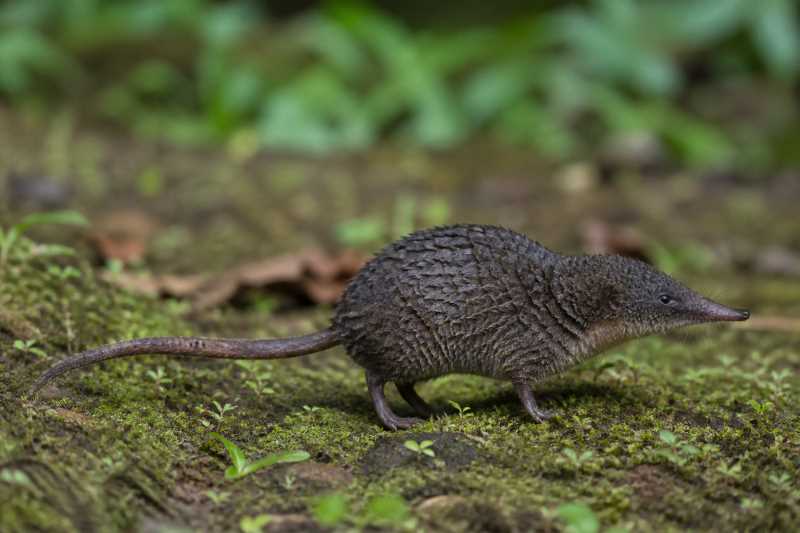
The Armored Hero Shrew is a small mammal, typically measuring between 11 to 15 centimeters in length, excluding the tail, which adds another 5 to 10 centimeters. Despite its small size, this shrew is robustly built, with a weight ranging from 70 to 120 grams. The most notable feature of this species is its spine, which is made up of a series of interlocking vertebrae that can bear substantial weight.
Unlike other mammals, the Armored Hero Shrew’s spine consists of vertebrae with spiny projections that interlock tightly, forming a rigid structure. This adaptation is believed to allow the shrew to withstand forces up to 1,000 times its own body weight, although the exact evolutionary advantage of this feature is still a subject of research.
The shrew’s fur is generally dark brown to black, which aids in camouflage within its natural habitat. Its snout is elongated, a common trait among shrews, allowing it to forage effectively. Additionally, it possesses small eyes and ears, which are adaptations for a life spent primarily under cover.
Range and Habitat
The Armored Hero Shrew is native to the forests of Central Africa, specifically within the Democratic Republic of the Congo. Its range is relatively limited compared to other shrew species, primarily due to its specific habitat requirements. The shrew thrives in dense, humid tropical forests where it can find ample cover and food resources.
Within these forests, the Armored Hero Shrew is often found in areas with abundant leaf litter and fallen logs. These environments provide the necessary cover and a rich feeding ground for the shrew. The dense vegetation and damp conditions of these forests create an ideal habitat that supports the shrew’s lifestyle and dietary needs.
Behavior and Diet
The Armored Hero Shrew is predominantly nocturnal, spending its nights foraging for food. Its diet primarily consists of insects, worms, and other small invertebrates, which it locates using its keen sense of smell. The shrew’s elongated snout is particularly useful for probing into crevices and under leaf litter to uncover prey.
Despite its formidable spine, the Armored Hero Shrew is a solitary and elusive creature, rarely seen during the day. Its behavior is largely dictated by the need to remain hidden from predators, utilizing its natural camouflage and the dense forest environment to its advantage.
The shrew’s social structure is not well understood, but it is believed to be solitary outside of the breeding season. Communication among shrews is thought to be primarily through scent marking and vocalizations, although more research is needed to fully understand these interactions.
Identification Tips
Identifying the Armored Hero Shrew in the field can be challenging due to its elusive nature and the dense habitats it occupies. However, there are several key features to look for:
- Size and Build: Look for a small, robustly built mammal with a length of up to 25 centimeters, including the tail.
- Fur Color: The shrew’s dark brown to black fur is a distinctive trait, aiding in camouflage.
- Spine Structure: Although not visible externally, the shrew’s unique vertebral column is a defining characteristic.
- Habitat: Search in dense, humid tropical forests with abundant leaf litter and fallen logs.
- Behavior: The shrew is nocturnal, so sightings are more likely during night-time foraging activities.
Conservation Status
The conservation status of the Armored Hero Shrew is currently classified as Data Deficient by the International Union for Conservation of Nature (IUCN). This classification is primarily due to the lack of comprehensive data on its population size and trends. However, the species faces several threats that could impact its survival.
Threats
- Habitat Loss: Deforestation and land conversion for agriculture are significant threats to the shrew’s habitat in Central Africa.
- Climate Change: Alterations in climate patterns can impact the shrew’s habitat, affecting food availability and habitat suitability.
- Human Encroachment: Increased human activity in forested areas poses a threat to the shrew’s natural environment.
Protections
Currently, there are no specific conservation measures in place for the Armored Hero Shrew. However, the protection of forest habitats through national parks and reserves indirectly benefits the species. Further research is needed to better understand the shrew’s ecology and develop targeted conservation strategies.
Frequently Asked Questions
What makes the Armored Hero Shrew unique?
The Armored Hero Shrew’s spine is unique due to its interlocking vertebrae, providing exceptional strength and rigidity. This adaptation allows the shrew to withstand significant pressure, although the exact evolutionary advantage remains unclear.
Where can the Armored Hero Shrew be found?
The Armored Hero Shrew is native to the dense, humid tropical forests of Central Africa, particularly within the Democratic Republic of the Congo. Its range is limited to these specific habitats.
How does the Armored Hero Shrew survive in its habitat?
The shrew’s survival is attributed to its nocturnal lifestyle, keen sense of smell, and ability to remain hidden in dense forest environments. Its diet consists of insects and small invertebrates, which are abundant in its habitat.
What are the main threats to the Armored Hero Shrew?
The main threats to the Armored Hero Shrew include habitat loss due to deforestation, climate change, and increased human encroachment into forested areas.
How can we help conserve the Armored Hero Shrew?
Conserving the Armored Hero Shrew involves protecting its forest habitat through the establishment of national parks and reserves, as well as conducting further research to better understand its ecological needs.
Related posts