Introduction
Horsfield’s Treeshrew, scientifically known as Tupaia javanica, is a fascinating mammal species that belongs to the family Tupaiidae. Despite their common name, treeshrews are not true shrews and are more closely related to primates. This species is named after Thomas Horsfield, an American naturalist who made significant contributions to the study of Asian fauna. Treeshrews are small, agile mammals that play a crucial role in their ecosystems, contributing to seed dispersal and the regulation of insect populations. This article delves into various aspects of Horsfield’s Treeshrew, including its physical characteristics, natural habitat, behavioral patterns, and conservation status.
Physical Description
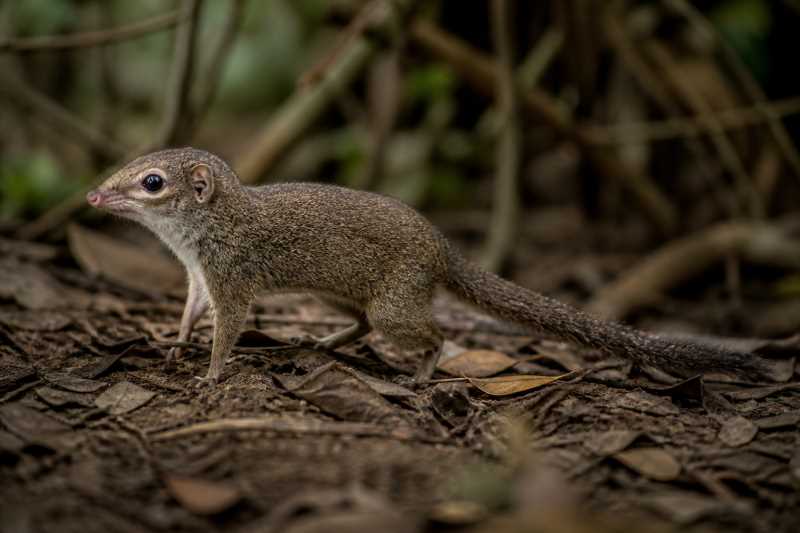
Horsfield’s Treeshrew is a small mammal, typically measuring between 16 to 21 centimeters in body length, with its tail adding another 12 to 19 centimeters. Weighing in at around 150 to 270 grams, this species is slightly larger than most shrews, yet it maintains a delicate build. The fur of the Horsfield’s Treeshrew is generally a mix of brown, grey, and olive shades, providing excellent camouflage in its natural habitat. Its coat is soft and dense, with a lighter ventral side. One of the distinctive features of this treeshrew is its elongated snout, which aids in foraging for insects and other small prey. Their large, expressive eyes are adapted for a life spent in the lower canopy and forest floor, where light can be scarce.
Range and Habitat
Horsfield’s Treeshrew is primarily found in Southeast Asia, with its range extending across the islands of Sumatra, Java, and Bali. These treeshrews inhabit a variety of forested environments, including primary and secondary rainforests, mangroves, and even plantations. They are highly adaptable and can often be found in disturbed habitats, although they prefer areas with dense undergrowth and ample tree cover. Altitudinally, Horsfield’s Treeshrews are found from lowland areas up to montane regions, typically at elevations of up to 1,500 meters.
Behavior and Diet
Horsfield’s Treeshrew is a diurnal creature, which means it is primarily active during daylight hours. This species is known for its high level of activity and agility in navigating the forest underbrush and lower canopy. Treeshrews are generally solitary, with each individual maintaining a territory that it defends aggressively from intruders. The diet of Horsfield’s Treeshrew is omnivorous, consisting of a variety of insects, small vertebrates, fruits, and seeds. They have been observed to consume a significant amount of nectar, which suggests they may play a role in pollination. Their foraging behavior is opportunistic, and they are known to exploit a wide range of food sources available in their environment.
Identification Tips (Field Recognition Cues)
Identifying Horsfield’s Treeshrew in the wild requires keen observation skills. One of the primary cues is their unique coloration, which blends shades of brown and olive, providing excellent camouflage against the forest floor. Their distinctive long snout and expressive eyes are also key identifiers. Observers should look for their active foraging behavior during the day, often characterized by quick, darting movements as they search for food. The presence of a relatively long tail, often held above the body, is another distinguishing feature. Vocalizations can also be a clue; while generally silent, they may emit chirps and whistles, particularly during territorial disputes or mating.
Conservation Status (with Threats and Protections)
Horsfield’s Treeshrew is currently classified as Least Concern by the International Union for Conservation of Nature (IUCN). However, like many species in Southeast Asia, it faces threats from habitat loss due to deforestation and agricultural expansion. The conversion of forest land into palm oil plantations poses a significant risk to their natural habitat. Additionally, hunting and capture for the pet trade, although not widespread, can impact local populations. Conservation efforts for Horsfield’s Treeshrew focus on habitat preservation through the establishment of protected areas and the enforcement of wildlife protection laws. Increasing awareness about the ecological importance of treeshrews is also vital in promoting their conservation.
Frequently Asked Questions
1. What is the primary diet of Horsfield’s Treeshrew? Horsfield’s Treeshrew is omnivorous, feeding on a mix of insects, small vertebrates, fruits, seeds, and nectar. Their diet is opportunistic, allowing them to adapt to available food sources.
2. How does Horsfield’s Treeshrew contribute to its ecosystem? Horsfield’s Treeshrew plays a role in seed dispersal and insect population control. Their consumption of nectar may also aid in pollination, benefiting plant diversity.
3. What are the main threats to the survival of Horsfield’s Treeshrew? The primary threats include habitat loss due to deforestation and agricultural expansion, as well as hunting and capture for the pet trade.
4. Where can Horsfield’s Treeshrew be found? They are found in Southeast Asia, particularly on the islands of Sumatra, Java, and Bali, inhabiting both primary and secondary forests and sometimes plantations.
5. Are Horsfield’s Treeshrews social animals? No, Horsfield’s Treeshrews are generally solitary creatures, with each individual maintaining and defending its own territory.
Related posts