Introduction
The Long-tailed Macaque, scientifically known as Macaca fascicularis, is a fascinating primate species that captivates both scientists and wildlife enthusiasts. Commonly found in Southeast Asia, this adaptable and intelligent mammal has intrigued researchers due to its complex social structures and interactions with humans. As a keystone species, the Long-tailed Macaque plays a critical role in its ecosystem, influencing both its natural habitat and the human communities nearby. This article delves into various aspects of the Long-tailed Macaque, including its physical characteristics, distribution, behavior, and conservation status, offering readers a comprehensive understanding of this remarkable species.
Physical Description
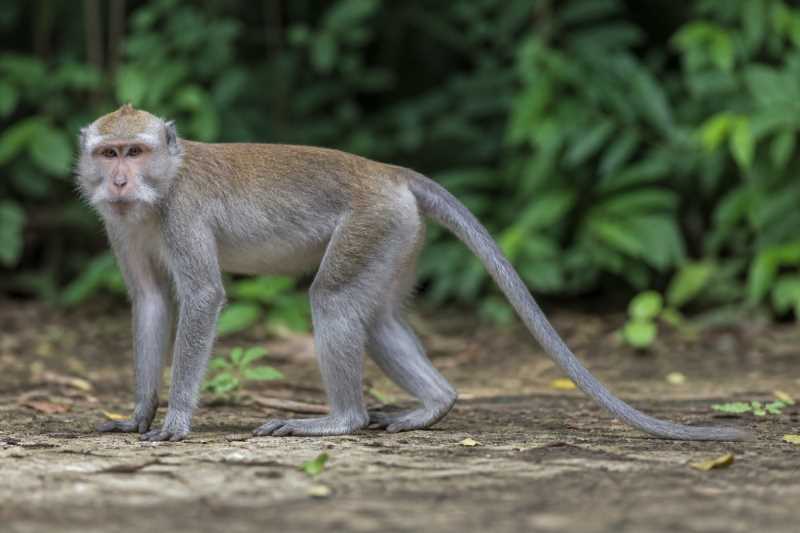
The Long-tailed Macaque is a medium-sized primate, easily recognized by its notably long tail, which can be longer than its body. Adult males typically measure between 40 to 60 cm (16 to 24 inches) in body length, with tails ranging from 40 to 65 cm (16 to 26 inches). Females are generally smaller, with body lengths averaging 38 to 55 cm (15 to 22 inches) and tail lengths similar to those of males.
Their fur is predominantly grey or brown, providing effective camouflage within their forest habitats. The face of a Long-tailed Macaque is hairless, with a pinkish tone that can vary slightly among individuals. They possess a rounded head, short muzzle, and cheek pouches, which are used for storing food. One of the distinct features of this species is the tuft of hair on top of the head, giving them a somewhat comical appearance.
Sexual dimorphism is evident in Long-tailed Macaques, with males being larger and more robust than females. Adult males also exhibit larger canine teeth, which are used for defense and in establishing dominance within social hierarchies.
Range and Habitat
The natural range of the Long-tailed Macaque extends across Southeast Asia, including countries such as Thailand, Malaysia, Indonesia, the Philippines, and parts of Vietnam and Cambodia. They are particularly prevalent in coastal and riverine forests, but their adaptable nature allows them to thrive in various habitats, including mangroves, swamps, and even urban areas.
Long-tailed Macaques are highly adaptable and can live in both primary and secondary forests. They are often found near water bodies, as these areas provide abundant food resources and protection from predators. In urban and suburban environments, they are frequently seen in parks, gardens, and temples, where they have learned to coexist with humans, sometimes leading to conflicts over food and space.
Behavior and Diet
Long-tailed Macaques are diurnal animals, spending most of their active hours foraging for food. Their diet is omnivorous, consisting primarily of fruits, seeds, leaves, and flowers. They are also known to consume insects, small vertebrates, and bird eggs when available.
Social structure in Long-tailed Macaque groups is complex and hierarchical. Troops can range from a few individuals to over 30 members, led by a dominant male. Females typically remain in their natal groups for life, while males disperse upon reaching maturity. Communication within the group is achieved through vocalizations, facial expressions, and body postures, allowing them to maintain social bonds and coordinate group activities.
These macaques are known for their intelligence and problem-solving abilities. They have been observed using tools, such as stones to crack open shellfish, and have even been seen washing food before consumption, a behavior that is relatively rare among non-human primates.
Identification Tips
Identifying Long-tailed Macaques in the field can be made easier by focusing on several key features:
- Tail Length: As their name suggests, the long tail is a distinctive feature that can often be seen trailing behind them as they move.
- Facial Features: Look for their expressive, pinkish face, which is hairless and contrasts with their fur-covered body.
- Body Build: They have a slender build compared to other macaque species, with long limbs that aid in their arboreal lifestyle.
- Behavior: Observing their social behavior, such as grooming and vocal communication, can also aid in identification.
Conservation Status
The Long-tailed Macaque is currently listed as Least Concern on the IUCN Red List. However, their populations are experiencing pressure from various threats, including habitat loss due to deforestation, hunting, and the illegal pet trade. In some areas, human-macaque conflicts arise from competition for food and space, leading to culling in extreme cases.
Conservation efforts are focused on protecting their natural habitats and promoting coexistence with human populations. Several protected areas have been established across their range, offering safe havens for these primates. Additionally, education and awareness programs aim to reduce human-wildlife conflicts and encourage sustainable practices that benefit both macaques and local communities.
Frequently Asked Questions
1. What do Long-tailed Macaques eat? Long-tailed Macaques have an omnivorous diet, primarily eating fruits, seeds, and leaves. They also consume insects, small vertebrates, and bird eggs when available.
2. How do Long-tailed Macaques communicate? These macaques communicate through a range of vocalizations, facial expressions, and body postures to maintain social bonds and coordinate activities within the group.
3. Where are Long-tailed Macaques found? They are native to Southeast Asia, inhabiting countries like Thailand, Malaysia, Indonesia, the Philippines, and parts of Vietnam and Cambodia, thriving in both forested and urban environments.
4. Are Long-tailed Macaques endangered? Currently, they are listed as Least Concern by the IUCN, but face threats from habitat loss, hunting, and human conflict, necessitating ongoing conservation efforts.
5. How do Long-tailed Macaques adapt to urban areas? Their adaptability allows them to thrive in urban environments by exploiting food resources, such as garbage and offerings at temples, though this often leads to conflicts with humans.
Related posts