Humboldt’s Sapphire: A Jewel of the Hummingbird World
In the vibrant world of hummingbirds, the Humboldt’s Sapphire (scientifically known as Chrysuronia humboldtii) stands out with its iridescent beauty and intricate ecological role. Native to the lush landscapes of South America, this species is a testament to the wonders of avian evolution and adaptation.
A Glimpse into Its Appearance
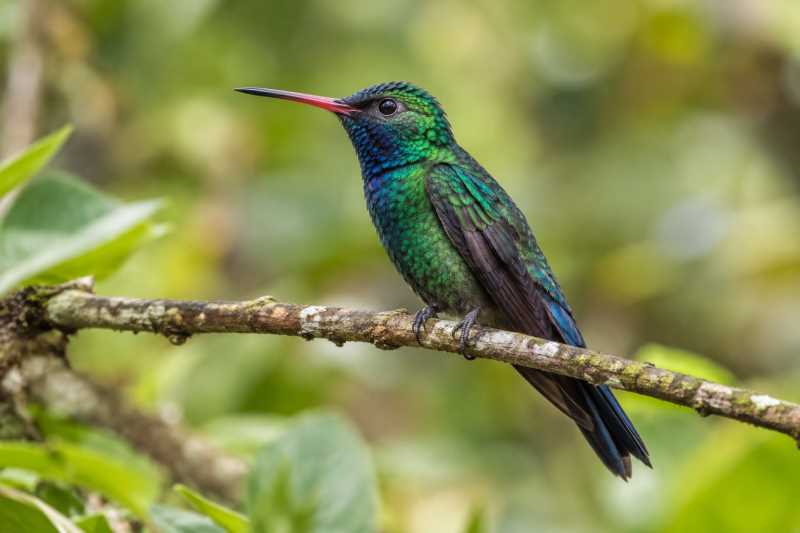
Humboldt’s Sapphire is renowned for its dazzling plumage, which can captivate any observer. The bird’s namesake, Alexander von Humboldt, would undoubtedly be pleased to see his namesake adorned in such splendor. The males boast a brilliant turquoise blue on their throat and head, which contrasts beautifully with their emerald green back and golden hues on the lower body. The females, while generally more subdued in coloration, share the same iridescent qualities, albeit with a more muted palette. This sexual dimorphism not only aids in mate attraction but also plays a role in camouflage and survival.
Habitat and Distribution
The species is primarily found in the northern regions of South America, with a distribution range that includes Colombia and parts of Venezuela. Humboldt’s Sapphire thrives in a variety of habitats, from humid lowland forests to montane regions. It is especially common in areas where flowering plants abound, providing the nectar that constitutes a significant portion of its diet.
Their preference for diverse habitats has implications for their conservation. As deforestation and habitat loss continue to threaten many areas of South America, understanding and preserving these environments is crucial for the survival of the Humboldt’s Sapphire.
Feeding Habits and Ecological Role
Humboldt’s Sapphires are nectarivores, primarily feeding on the nectar of flowering plants. Their long, specialized bills and extendable tongues allow them to access the deep flowers that are typical in their habitats. In doing so, they play an essential role as pollinators, aiding in the reproductive cycles of many plant species.
In addition to nectar, these hummingbirds consume small insects and spiders, which provide necessary proteins and nutrients. This omnivorous diet helps maintain a balance in their ecosystem, controlling insect populations and promoting plant diversity through pollination.
Breeding and Reproduction
The breeding season of Humboldt’s Sapphire is an intricate dance of courtship and construction. Males engage in aerial displays, showcasing their vibrant plumage to attract females. Once a pair has formed, the female takes on the responsibility of building the nest, usually a small cup made from plant fibers, spider webs, and other materials, carefully camouflaged among foliage.
After laying two tiny, white eggs, the female incubates them for about two weeks. Once hatched, the chicks are entirely dependent on the mother for warmth and food. The fledging period is relatively short, with young birds leaving the nest after three weeks, though they continue to rely on their mother for food as they learn to forage.
Conservation Status and Challenges
Currently, Humboldt’s Sapphire is classified as Least Concern by the International Union for Conservation of Nature (IUCN). However, this status does not mean the species is free from threats. Habitat destruction due to agriculture, logging, and urban expansion poses significant challenges. Additionally, climate change could alter the flowering patterns of the plants they rely on for nectar.
Conservation efforts must focus on habitat preservation and restoration. Protecting large tracts of forest and promoting sustainable land use practices are essential strategies. Moreover, creating awareness about the ecological significance of these birds can foster community support for conservation initiatives.
Cultural Significance
Hummingbirds have long fascinated humans, featuring prominently in the folklore and art of many cultures, particularly in the Americas. Humboldt’s Sapphire, with its vibrant appearance and dynamic behavior, symbolizes beauty and resilience. In regions where they are native, they are often seen as messengers of joy and renewal, embodying the spirit of nature’s wonders.
Conclusion
Humboldt’s Sapphire is more than just a visual spectacle; it is a critical component of its ecosystem, playing roles in pollination and insect control. Its survival hinges on the health of its environment, making the conservation of its natural habitats a priority. As stewards of the planet, it is crucial that we recognize the interconnectedness of these vibrant creatures with the broader ecological tapestry and work towards their preservation for future generations to marvel at.
In the shimmering flight of the Humboldt’s Sapphire, we see the delicate balance of nature, a reminder of the beauty and complexity inherent in our world.
Related posts