Introduction
The Common Treeshrew, scientifically known as Tupaia glis, is a fascinating small mammal that has intrigued researchers and nature enthusiasts alike. Despite its name, the Common Treeshrew is not a true shrew but belongs to the order Scandentia. This species is often studied for its unique evolutionary position and its resemblance to the ancestral lineage of primates. Found predominantly in Southeast Asia, the Common Treeshrew plays a vital role in its ecosystem, contributing to seed dispersal and insect population control. This article delves into the various aspects of the Common Treeshrew’s life, including its physical characteristics, habitat, behavior, and conservation status.
Physical Description
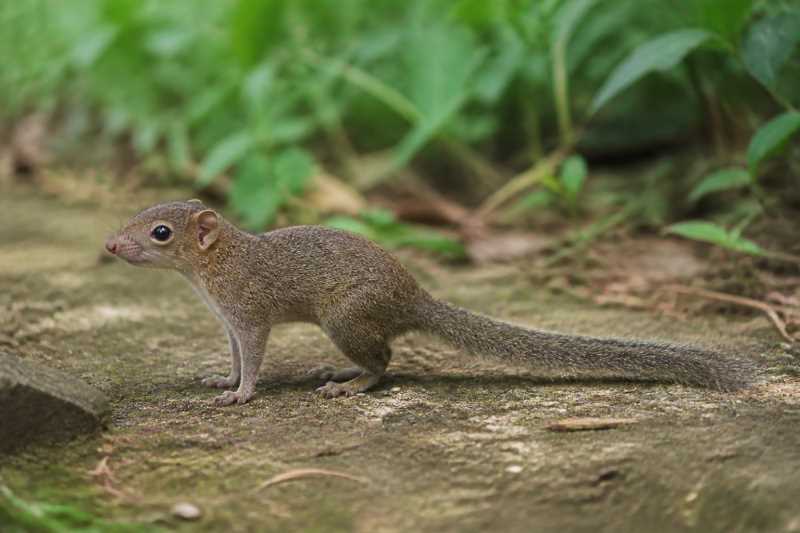
The Common Treeshrew is a small mammal, roughly the size of a squirrel, with a body length ranging from 16 to 21 centimeters (6 to 8 inches) and a tail that matches or slightly exceeds its body length. This gives it an overall length of 32 to 42 centimeters (12 to 16 inches). Weighing between 150 to 270 grams (5 to 9 ounces), it has a slim and agile body perfectly adapted for its arboreal lifestyle.
The fur of the Common Treeshrew is typically brown or gray-brown, which provides excellent camouflage in its forest habitat. Its underparts are usually lighter, offering a subtle contrast. The treeshrew’s eyes are large and prominent, an adaptation for its diurnal (daytime) activity pattern, providing excellent vision for spotting predators and prey. Its ears are small and rounded, while its snout is elongated, resembling that of a shrew.
Range and Habitat
The Common Treeshrew is native to the tropical forests of Southeast Asia, including the Malay Peninsula, southern Thailand, Sumatra, and some parts of Borneo and Java. These adaptable mammals thrive in various forest types, from primary rainforests to secondary growth and plantations.
Their preference for dense, humid forests with abundant undergrowth helps them avoid predators and find food. They are often found at elevations ranging from sea level to about 1,500 meters (4,900 feet), although they primarily inhabit lowland forests.
Behavior and Diet
Common Treeshrews are primarily diurnal, spending most of their active hours during the day. They are solitary creatures, with each individual maintaining a territory that they mark with scent glands. These territories are defended vigorously, especially by males.
The diet of the Common Treeshrew is omnivorous, consisting primarily of insects, small vertebrates, fruits, and seeds. They have been observed to consume a wide variety of invertebrates, including ants, beetles, and spiders, which they forage on the forest floor and in the trees. Their consumption of fruit makes them important seed dispersers, contributing to the health and regeneration of their forest habitats.
Identification Tips (Field Recognition Cues)
Identifying the Common Treeshrew in the wild can be a rewarding experience for wildlife enthusiasts. Here are some tips to help you recognize this elusive species:
- Size and Shape: Look for a small, squirrel-sized animal with a long tail and slender body.
- Coloration: Note the brown or gray-brown fur, with lighter underparts that can help distinguish it from similar species.
- Behavior: Observe their rapid, jerky movements as they scurry through the underbrush or climb trees.
- Vocalizations: Listen for their high-pitched chirps and chatters, which they use to communicate with others and defend their territories.
- Habitat: Search in dense forested areas, particularly in regions known to be within their range.
Conservation Status (With Threats and Protections)
The Common Treeshrew is currently listed as Least Concern by the International Union for Conservation of Nature (IUCN). While it is not considered to be at immediate risk of extinction, its populations are affected by habitat destruction and fragmentation due to logging, agriculture, and urban development.
Efforts to conserve the Common Treeshrew include protecting its natural habitats through the establishment of reserves and national parks. Additionally, research into its ecological role and population dynamics helps inform conservation strategies.
Frequently Asked Questions (FAQs)
1. What is the Common Treeshrew’s role in the ecosystem?
The Common Treeshrew plays a crucial role as both a predator of insects and a seed disperser. By controlling insect populations and aiding in plant regeneration, they contribute significantly to forest health.
2. How does the Common Treeshrew communicate?
Common Treeshrews communicate through a variety of vocalizations, including chirps and chatters, as well as through scent marking. These methods help them establish and defend territories and communicate with potential mates.
3. Are Common Treeshrews related to primates?
While not directly related, Common Treeshrews are considered to be closely related to the ancestral line that led to primates. Their evolutionary position makes them an important subject of study in understanding primate evolution.
4. What threats do Common Treeshrews face?
The primary threats to Common Treeshrews include habitat destruction and fragmentation due to human activities such as logging and agriculture.
5. Where can I observe Common Treeshrews in the wild?
To observe Common Treeshrews in their natural habitat, consider visiting protected areas within their range, such as national parks in Malaysia and Thailand, where they are more likely to be found.
Related posts