Noack’s Roundleaf Bat (Hipposideros ruber): A Detailed Overview
Introduction
Noack’s Roundleaf Bat, scientifically known as Hipposideros ruber, is a fascinating species of bat belonging to the family Hipposideridae. This small mammal is widely distributed across parts of Africa and is known for its distinctive roundleaf nose structure, which aids in echolocation. Bats are often misunderstood creatures, yet they play a crucial role in the ecosystem, particularly in pest control and pollination. This article delves into various aspects of Noack’s Roundleaf Bat, including its physical description, habitat, behavior, and conservation status.
Physical Description
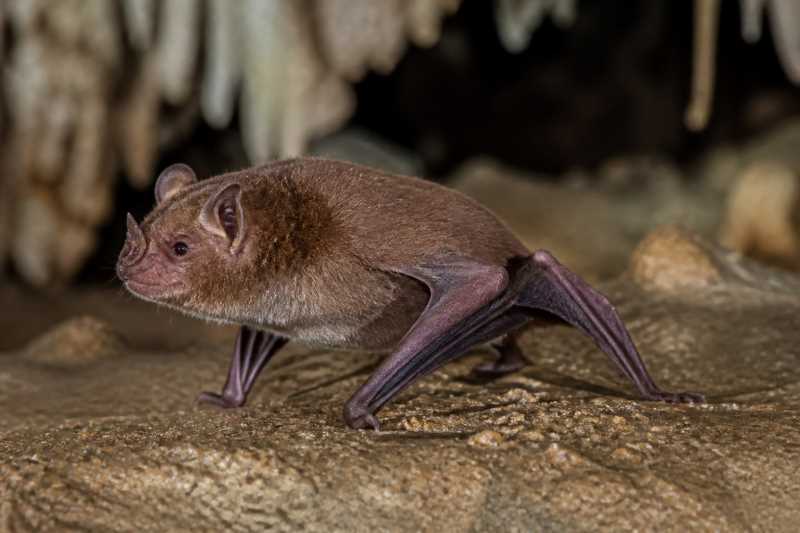
Noack’s Roundleaf Bat is a medium-sized bat species characterized by its unique noseleaf, which is a crucial adaptation for echolocation. The noseleaf is round and fleshy, aiding in the precise emission of sound waves to navigate and hunt in the dark. Adult bats typically have a body length ranging from 7 to 9 centimeters, with a wingspan of 30 to 34 centimeters. The fur is generally reddish-brown, although variations from gray to dark brown have been observed.
The ears of Hipposideros ruber are relatively large and pointed, enhancing their auditory capabilities. Their wings are long and narrow, optimized for agile flying in forested environments. The tail is short, which is typical for bats that rely more on maneuverability than speed.
Range and Habitat
Noack’s Roundleaf Bat is distributed across a broad range in sub-Saharan Africa. Its habitat includes a variety of ecosystems such as savannas, forests, and even human-altered landscapes. They are particularly abundant in West and Central Africa, with populations found in countries like Nigeria, Cameroon, and the Democratic Republic of Congo.
This species prefers roosting in caves, hollow trees, and man-made structures, often forming colonies that can range from a few individuals to several hundred. Their adaptability to different environments has played a significant role in their widespread distribution.
Behavior and Diet
Noack’s Roundleaf Bat is predominantly nocturnal, spending daylight hours roosting in dark, sheltered locations. At night, they emerge to feed, relying heavily on echolocation to detect and capture prey. Their diet primarily consists of insects, making them valuable allies in controlling insect populations.
These bats exhibit a fascinating hunting behavior, often flying close to the ground or through dense foliage to snatch up insects. The echolocation calls of Hipposideros ruber are ultrasonic, allowing them to pinpoint the location of prey even in complete darkness.
Socially, Noack’s Roundleaf Bats are known to be gregarious, often forming large colonies that provide them with protection from predators. Communication within these colonies is vital, with bats using a range of vocalizations to convey information and maintain social bonds.
Identification Tips
Identifying Noack’s Roundleaf Bat in the field involves several key recognition cues:
- Noseleaf Structure: The round, fleshy noseleaf is a distinctive feature that sets them apart from other bat species.
- Fur Color: Look for the reddish-brown fur, although variations exist.
- Echolocation Calls: Using a bat detector, listen for their ultrasonic calls, which are unique in frequency and pattern.
- Roosting Habits: They are commonly found in caves and hollow trees; spotting a colony can aid in identification.
Conservation Status
The conservation status of Noack’s Roundleaf Bat is currently listed as Least Concern by the International Union for Conservation of Nature (IUCN). However, like many bat species, they face threats from habitat destruction, human disturbance, and climate change.
Deforestation and the clearing of land for agriculture and urban development are significant threats, resulting in the loss of roosting and foraging habitats. Additionally, the use of pesticides impacts their food supply by reducing insect populations.
Conservation efforts for Hipposideros ruber include protecting key habitats, establishing protected areas, and promoting awareness of the ecological benefits of bats. Research and monitoring are also essential to understand population dynamics and implement effective conservation strategies.
Frequently Asked Questions
What is the primary diet of Noack’s Roundleaf Bat?
Noack’s Roundleaf Bat primarily feeds on insects, utilizing echolocation to hunt for prey during the night. Their diet includes moths, beetles, and other small insects, making them important for controlling pest populations.
How does Noack’s Roundleaf Bat use echolocation?
Echolocation in Noack’s Roundleaf Bat involves emitting ultrasonic calls through their noseleaf structure. The sound waves bounce off objects and return as echoes, allowing the bat to build a mental map of its surroundings and locate prey efficiently.
Where can Noack’s Roundleaf Bat be found?
This species is widely distributed across sub-Saharan Africa, with notable populations in countries such as Nigeria, Cameroon, and the Democratic Republic of Congo. They inhabit diverse environments, including forests, savannas, and urban areas.
What are the main threats to Noack’s Roundleaf Bat?
The primary threats to this species include habitat loss due to deforestation and agricultural expansion, disturbance of roosting sites, and the use of pesticides, which deplete their insect prey.
Are Noack’s Roundleaf Bats social animals?
Yes, they are highly social and often form large colonies. These social structures provide them with protection and facilitate communication through various vocalizations.
Related posts