Introduction
The Large Treeshrew (Tupaia tana) is a fascinating mammal that dwells in the dense forests of Southeast Asia. Despite its name, the Large Treeshrew is not actually a shrew but belongs to the order Scandentia. This intriguing creature is part of the Tupaiidae family and has become a subject of interest for many researchers due to its unique characteristics and behaviors. Known for its agility and tree-dwelling habits, the Large Treeshrew plays a significant role in its ecosystem, contributing to the biological diversity of its habitat.
Physical Description
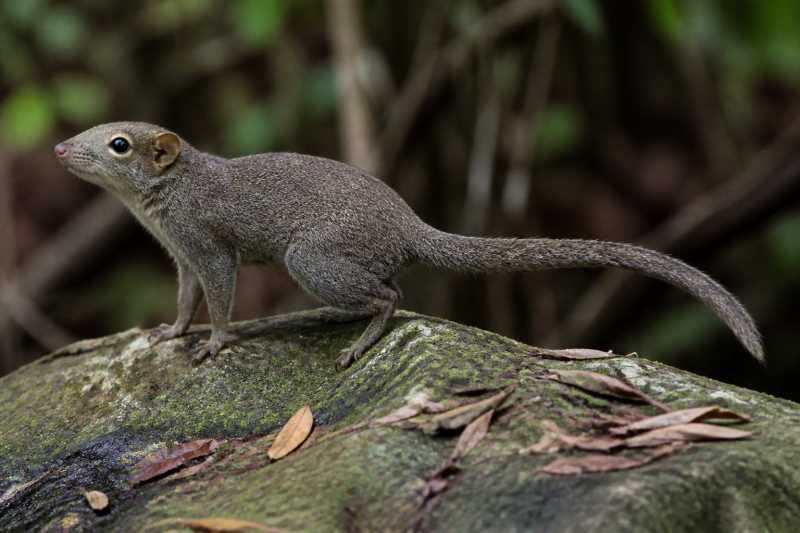
The Large Treeshrew is relatively larger than other treeshrew species, reflecting its name. It typically measures between 16 to 20 centimeters in body length, with a tail almost equal in length to its body, providing excellent balance as it navigates through the trees. The species weighs between 150 to 270 grams, with males generally larger than females.
The Large Treeshrew’s coat is a mix of gray and brown, with a slight reddish hue that blends seamlessly with the forest environment. Its fur is dense and soft, providing insulation against the tropical climate. Its snout is elongated, resembling that of a shrew, and it has sharp, beady eyes well-adapted for spotting prey and navigating through dense foliage. The ears are small and rounded, and its limbs are robust, equipped with sharp claws for climbing and foraging.
Range and Habitat
The Large Treeshrew is predominantly found in the tropical rainforests of Southeast Asia, with its range extending across the Malay Peninsula, Sumatra, Borneo, and some parts of the Philippines. These mammals thrive in lowland and montane forests, often near streams and rivers where food resources are abundant.
Their habitat preference includes dense, primary forests where the canopy offers protection from predators and fluctuating weather conditions. However, they can also adapt to secondary forests and disturbed areas, showcasing their resilience and adaptability.
Behavior and Diet
The Large Treeshrew is diurnal, meaning it is most active during the day. It is known for its high energy levels, spending much of its time foraging for food. Their diet is omnivorous, consisting of fruits, insects, small vertebrates, and occasionally, plant material. This varied diet allows them to be versatile in their eating habits, adapting to seasonal changes in food availability.
Socially, Large Treeshrews are mostly solitary, except during mating seasons. They communicate through vocalizations and scent markings, establishing territories that they defend vigorously from intruders. These mammals are also known for their quick and agile movements, which help them evade predators and navigate through their arboreal environment.
Identification Tips (field recognition cues)
Identifying the Large Treeshrew in the wild can be challenging due to their elusive nature. However, some key characteristics can aid in their recognition:
- Size and Shape: Look for a medium-sized mammal with a long, bushy tail and an elongated snout.
- Coloration: Note the grayish-brown fur with a reddish tinge, which helps them blend into the forest undergrowth.
- Behavior: Observe their active, quick movements during the day, often climbing trees or darting across the forest floor.
- Vocalizations: Listen for their distinctive calls, which are used for communication and territory marking.
Conservation Status (with threats and protections)
According to the IUCN Red List, the Large Treeshrew is currently categorized as Least Concern. However, like many other forest-dwelling species, they face several threats, primarily due to habitat loss and fragmentation caused by logging, agriculture, and urban development.
Conservation efforts are in place to protect their habitats, including establishing national parks and protected forest areas. These efforts aim to mitigate the impact of human activities and preserve the biodiversity of their natural environments.
Frequently Asked Questions
1. What is the lifespan of a Large Treeshrew in the wild? The average lifespan of a Large Treeshrew in the wild is approximately 5 to 7 years. However, factors such as predation and habitat conditions can influence their longevity.
2. Are Large Treeshrews endangered? Currently, the Large Treeshrew is not considered endangered. It is listed as Least Concern by the IUCN, but ongoing habitat destruction poses a potential threat to their populations.
3. How do Large Treeshrews communicate? Large Treeshrews communicate through a combination of vocalizations and scent markings. These methods help them establish territories and interact with other treeshrews.
4. What do Large Treeshrews eat? Large Treeshrews have an omnivorous diet, primarily feeding on fruits, insects, and small vertebrates. Their diet can vary depending on the availability of food resources.
5. Where can I observe Large Treeshrews in the wild? To observe Large Treeshrews, visit the tropical rainforests of Southeast Asia, particularly in the Malay Peninsula, Sumatra, and Borneo, where they are most commonly found.
Related posts