Stella Wood Mouse (Hylomyscus stella)
Introduction
The Stella Wood Mouse, scientifically known as Hylomyscus stella, is an intriguing small mammal that captures the interest of rodent enthusiasts and researchers alike. Belonging to the Muridae family, this mouse is notable for its elusive nature and adaptability to various forest habitats across Africa. Although not as well-known as some other rodent species, the Stella Wood Mouse plays a crucial role in the ecosystems it inhabits, contributing to seed dispersal and serving as prey for various predators. This article provides an in-depth look into the Stella Wood Mouse’s physical characteristics, habitat preferences, behavior, and conservation status, aiming to enhance our understanding and appreciation of this fascinating species.
Physical Description
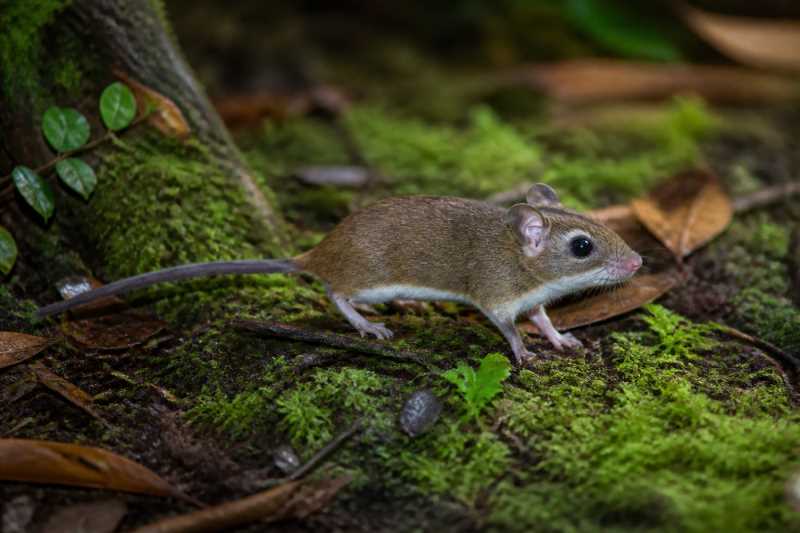
The Stella Wood Mouse is a small, agile rodent distinguished by its slender body and long tail. Adult mice typically weigh between 12 to 20 grams, with a body length ranging from 70 to 100 millimeters. The tail, which is often longer than the body, measures approximately 90 to 120 millimeters, aiding in balance and mobility through the dense forest undergrowth.
The fur of the Stella Wood Mouse is soft and dense, providing insulation and camouflage. The dorsal side displays a rich, reddish-brown color that helps it blend seamlessly with the forest floor, while the ventral side is a lighter grayish-white, providing a stark contrast. The ears are moderately large and rounded, enhancing their acute sense of hearing. The eyes are relatively large and prominent, indicating their adaptation to nocturnal activity.
Range and Habitat
The Stella Wood Mouse is endemic to Central and West Africa, with its range extending across countries such as Cameroon, Gabon, the Democratic Republic of the Congo, and Nigeria. It primarily inhabits tropical and subtropical moist broadleaf forests, thriving in both primary and secondary growth areas.
These mice are highly adaptable and can be found at varying altitudes, from lowland forests to montane regions. They prefer dense vegetation that provides cover from predators and ample food resources. The Stella Wood Mouse is also known to inhabit forest edges and clearings, demonstrating its versatility in utilizing disturbed habitats.
Behavior and Diet
The Stella Wood Mouse is primarily nocturnal, spending the daylight hours concealed within the forest underbrush or in burrows. At night, it becomes active, foraging for food and engaging in social interactions. This species is solitary except during the breeding season, when males and females come together for reproduction.
The diet of the Stella Wood Mouse is omnivorous, consisting mainly of seeds, fruits, and insects. It plays a vital role in seed dispersal, aiding in forest regeneration. The mouse’s sharp incisors are adept at cracking open hard seeds, while its keen sense of smell helps locate food sources.
Identification Tips (Field Recognition Cues)
Identifying the Stella Wood Mouse in the field requires attention to several key features:
- Tail Length: Look for a tail that exceeds the body length, typically ranging from 90 to 120 millimeters.
- Fur Coloration: Note the reddish-brown dorsal fur contrasting with the lighter, grayish-white ventral side.
- Ear Size: The moderately large, rounded ears are a distinguishing characteristic.
- Nocturnal Activity: Observe the mouse’s activity patterns, as they are primarily active at night.
- Habitat Preference: Confirm presence in dense forested areas or forest edges within its geographical range.
Conservation Status (with Threats and Protections)
The Stella Wood Mouse is currently listed as Least Concern on the IUCN Red List, largely due to its wide distribution and presumed large population. However, like many forest-dwelling species, it faces threats from habitat loss and degradation due to logging, agriculture, and human settlement expansion.
Conservation efforts focusing on preserving forest habitats are crucial for the continued survival of the Stella Wood Mouse. Protected areas and national parks within its range provide some level of safeguarding, yet ongoing monitoring and habitat management are necessary to mitigate the impacts of human activities.
Frequently Asked Questions
What is the lifespan of a Stella Wood Mouse?
The average lifespan of a Stella Wood Mouse in the wild is typically around 1 to 2 years. Factors influencing their lifespan include predation, availability of food resources, and environmental conditions.
How does the Stella Wood Mouse contribute to its ecosystem?
The Stella Wood Mouse plays a significant role in seed dispersal, aiding in forest regeneration. Its diet includes various seeds and fruits, which it helps distribute across the forest floor, promoting plant diversity and growth.
Is the Stella Wood Mouse endangered?
No, the Stella Wood Mouse is not currently endangered. It is classified as Least Concern by the IUCN due to its wide distribution and adaptability. However, habitat loss poses a potential threat that requires monitoring.
How can I identify a Stella Wood Mouse?
Key identification features include its long tail (longer than its body length), reddish-brown dorsal fur, large rounded ears, and activity during nighttime. Observing these characteristics in its natural forest habitat can help confirm its identification.
What are the main threats to the Stella Wood Mouse?
The primary threat to the Stella Wood Mouse is habitat destruction due to logging, agriculture, and human settlement expansion. Conservation efforts aimed at preserving forest habitats are crucial for its protection.
Related posts