The Enigmatic White-crowned Manakin: A Jewel of the Neotropics
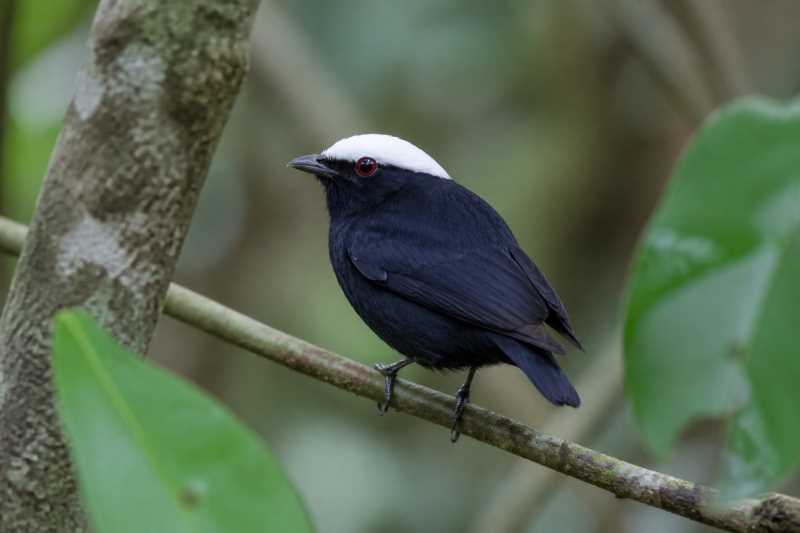
In the dense, vibrant forests of the Neotropics, a small but captivating bird flits through the underbrush with remarkable agility. This bird, the White-crowned Manakin (Pseudopipra pipra), is a striking example of the beauty and complexity of tropical ecosystems. With its stark black plumage contrasted by a brilliant white crown, the White-crowned Manakin captures the attention and admiration of ornithologists and birdwatchers alike.
Taxonomy and Distribution
The White-crowned Manakin belongs to the family Pipridae, which encompasses a variety of small, predominantly frugivorous birds known for their elaborate courtship displays. Pseudopipra pipra is widely distributed across the lowland tropical forests of Central and South America, ranging from Costa Rica and Panama down through the Amazon basin to northern Brazil and eastern Peru.
Its habitat preference includes humid forest edges, secondary growth, and mature forests, where it can often be spotted within the lower to mid-level canopy. The adaptability of the White-crowned Manakin to various forest types makes it a resilient species, although deforestation and habitat fragmentation pose ongoing threats.
Morphological Features
The most distinctive feature of the White-crowned Manakin is, undoubtedly, its plumage. Males are adorned with lustrous black feathers and a conspicuous white crown, which serves as a visual signal during courtship displays. Females, on the other hand, exhibit a more subdued olive-green coloration, providing effective camouflage against the forest backdrop. Both sexes possess short, rounded wings and a compact body, adaptations that facilitate their agile flight and maneuverability through dense foliage.
Behavioral Ecology
White-crowned Manakins are known for their fascinating lekking behavior, a form of communal display where males gather to perform elaborate courtship rituals to attract females. During these displays, males engage in acrobatic flights, wing snaps, and intricate dance moves, often accompanied by distinctive vocalizations. These displays not only showcase the physical prowess of the males but also serve to enhance their attractiveness to potential mates.
The lek system is highly competitive, with females selecting mates based on the quality and vigor of their displays. This selective pressure has driven the evolution of complex behaviors and striking sexual dimorphism in the species. Once mating occurs, females take on the responsibility of nest-building and rearing the young, often producing one or two eggs per clutch.
Diet and Foraging
The White-crowned Manakin primarily feeds on a diet of fruits and small insects, which it gleans from the forest understory. Its role as a frugivore is crucial for the dispersal of seeds, contributing to the regeneration of tropical forests. By consuming a variety of fruits, manakins help maintain the biodiversity and ecological balance of their habitat.
Their foraging behavior is characterized by short, quick flights between perches, where they meticulously inspect leaves and branches for food. This energy-efficient method of foraging allows them to exploit a wide array of food resources within their territory.
Conservation Status
Currently, the White-crowned Manakin is classified as a species of Least Concern by the International Union for Conservation of Nature (IUCN). However, like many tropical species, it faces threats from habitat destruction and fragmentation, particularly due to agricultural expansion and logging activities. Efforts to preserve intact forest habitats and establish protected areas are essential for ensuring the long-term survival of this enchanting bird.
Conservation strategies should also focus on maintaining the ecological integrity of the forests where the White-crowned Manakin resides, as well as promoting sustainable land-use practices that mitigate the impact of human activities on these ecosystems.
Research and Observation
The White-crowned Manakin continues to be a subject of interest for ornithologists and researchers studying avian behavior, ecology, and evolution. Its complex courtship displays provide valuable insights into sexual selection and the evolution of mating systems in birds. Additionally, ongoing research into its habitat requirements and population dynamics is crucial for informing conservation strategies and ensuring the preservation of this species and its habitat.
For birdwatchers and nature enthusiasts, the White-crowned Manakin offers a rewarding opportunity to observe one of nature’s most spectacular avian performers in its natural habitat. With patience and a keen eye, one can witness the intricate dances and vibrant plumage that make this bird a true gem of the Neotropics.
In conclusion, the White-crowned Manakin serves as a testament to the richness and diversity of tropical ecosystems. Its presence within the forests of Central and South America underscores the importance of conserving these habitats, not only for the manakins themselves but for the countless other species that share their environment. As we continue to explore and understand the complexities of these ecosystems, the White-crowned Manakin remains a symbol of the beauty and mystery of the natural world.
Related posts