The Elusive Black-breasted Wood Quail: A Closer Look at Odontophorus leucolaemus
The Black-breasted Wood Quail, scientifically known as Odontophorus leucolaemus, is a captivating avian species that inhabits the lush undergrowth of Central America’s cloud forests. Known for its secretive behavior and distinctive calls, this bird presents both a challenge and a delight to ornithologists and birdwatchers alike. With its unique adaptations and ecological significance, the Black-breasted Wood Quail plays a crucial role in the biodiversity of its habitat.
Habitat and Distribution
Endemic to the mountainous regions of Costa Rica and western Panama, the Black-breasted Wood Quail thrives in the dense, humid environment of cloud forests, typically at elevations ranging from 1,000 to 3,000 meters. These forests, characterized by persistent cloud cover at the canopy level, provide an ideal habitat rich in food resources and shelter. Within this ecosystem, the wood quail forages on the forest floor, relying on a diet consisting primarily of seeds, fruits, and small invertebrates.
The bird’s preference for these secluded and often inaccessible habitats has made detailed studies challenging. Nevertheless, its distribution is closely tied to regions that maintain the integrity of these forest systems, emphasizing the importance of conservation efforts in these areas.
Physical Characteristics and Behavior
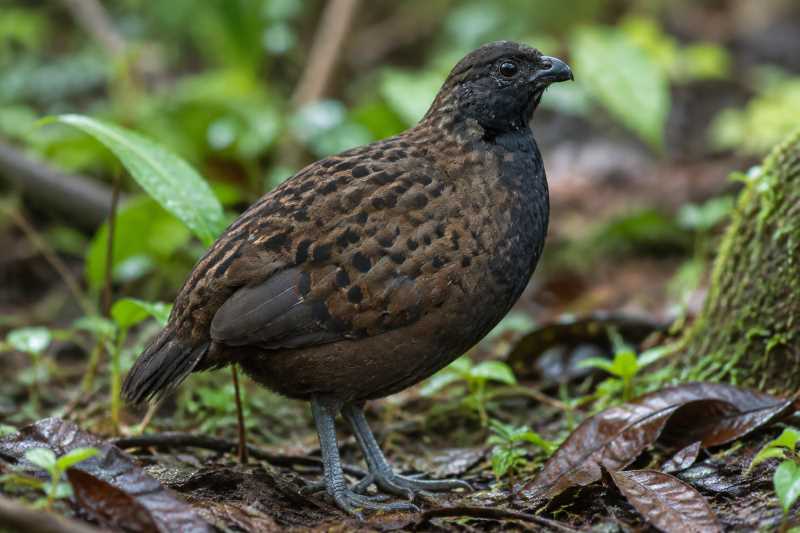
The Black-breasted Wood Quail is a medium-sized bird, measuring approximately 25 to 30 centimeters in length. Its plumage is predominantly dark, with a striking black breast and belly, which contrasts with the brown and gray hues of its back and wings. This coloration provides effective camouflage against the forest floor, helping it to evade predators.
Social and vocal, the wood quail is often found in small family groups, known as coveys, which typically consist of 5 to 10 individuals. These groups maintain a well-defined territory, which they defend vigorously against intruders. The birds are known for their distinctive calls, which serve as communication within the group and as a warning signal to potential threats.
Reproduction and Lifespan
The breeding season for the Black-breasted Wood Quail aligns with the rainy season, providing adequate resources for raising young. Nesting takes place on the ground, often in a shallow depression lined with leaves and vegetation. The female typically lays a clutch of 2 to 5 eggs, which she incubates with the help of the male.
Chicks are precocial and are able to leave the nest shortly after hatching. The family group provides extensive care to the young, teaching them foraging techniques and predator avoidance strategies. The lifespan of the Black-breasted Wood Quail in the wild is not well-documented, but similar species in captivity have been known to live up to 10 years.
Conservation Status and Threats
Currently, the Black-breasted Wood Quail is classified as Near Threatened by the International Union for Conservation of Nature (IUCN). The primary threat to this species is habitat loss due to deforestation and agricultural expansion. As cloud forests are cleared for timber and converted to farmland, the wood quail’s habitat becomes increasingly fragmented.
Conservation efforts are crucial to preserving the remaining cloud forests and ensuring the survival of this and other species that depend on them. Initiatives such as the establishment of protected areas and reforestation projects are vital. Additionally, ecotourism can play a significant role in conservation by providing economic incentives to preserve natural habitats.
Ecological Importance
The Black-breasted Wood Quail contributes significantly to the ecological balance of its environment. As a seed disperser, it aids in the propagation of various plant species, promoting forest regeneration. Its presence also indicates a healthy, functioning ecosystem, as it requires stable conditions to thrive.
Conclusion
The Black-breasted Wood Quail is a remarkable example of nature’s adaptability and resilience. Understanding and conserving this species is not only crucial for maintaining biodiversity but also for preserving the intricate web of life that sustains cloud forests. As we continue to uncover the mysteries of Odontophorus leucolaemus, we are reminded of the importance of protecting our planet’s precious natural habitats for future generations.
In the face of environmental challenges, the Black-breasted Wood Quail stands as a symbol of the delicate balance between human activity and wildlife conservation. Through continued effort and awareness, we can ensure that this enigmatic bird continues to grace the cloud forests of Central America for years to come.
Related posts