The Rosy Bee-eater: Nature’s Vibrant Artistry on Wings
In the lush, verdant landscapes of sub-Saharan Africa, where the skies stretch wide and the horizon shimmers with heat, there exists a bird that encapsulates the vibrancy and vitality of this rich ecosystem—the Rosy Bee-eater (Merops malimbicus). Known for its striking appearance and fascinating behavioral traits, this avian marvel is a testament to the splendor of biodiversity.
A Kaleidoscope of Colors
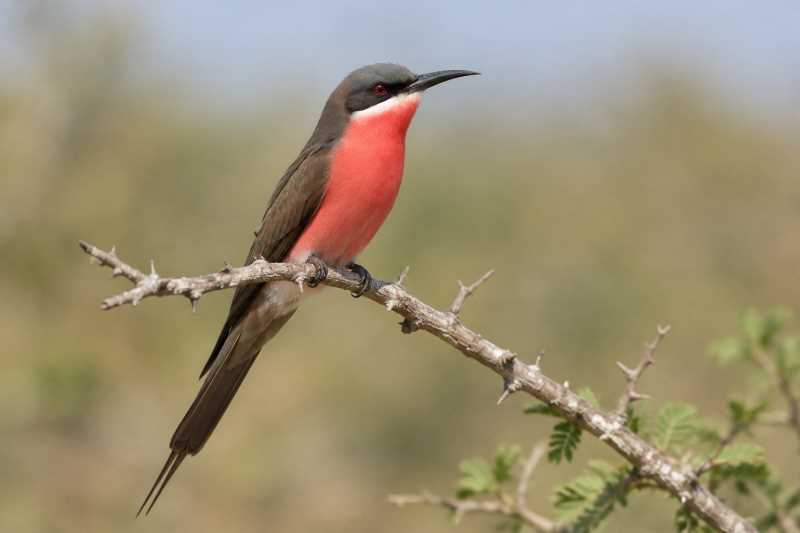
The Rosy Bee-eater boasts an exquisite palette of colors that make it instantly recognizable. With a predominantly rosy pink body, this bird adds a splash of warm hues to the African skies. Its wings and tail feathers are tinged with shades of green and blue, offering a beautiful contrast to the rosy undertones. The crown and throat are often a soft yellow, further accentuating its colorful appearance. This vivid coloration not only makes it a favorite among bird watchers but also plays a crucial role in social interactions and mating displays.
Habitat and Distribution
The Rosy Bee-eater is primarily found in the tropical regions of West and Central Africa. Countries such as Nigeria, Cameroon, and the Democratic Republic of the Congo provide ideal habitats, with their mixture of open woodlands, savannas, and grasslands. These environments offer ample opportunities for the bee-eater to hunt and nest. Unlike some of its more sedentary relatives, the Rosy Bee-eater is known to be somewhat nomadic, moving in response to the seasonal availability of food.
Dietary Habits
As its name suggests, the Rosy Bee-eater’s diet consists largely of bees and other flying insects. It is an adept aerial hunter, catching its prey mid-flight with remarkable precision. The bird’s keen eyesight allows it to spot insects from great distances, and its agile flight patterns enable it to execute swift, acrobatic maneuvers to capture them. Remarkably, the Rosy Bee-eater has developed a unique technique for handling stinging insects. After capturing a bee, it will return to a perch and deftly remove the stinger by rubbing the insect against a hard surface before consuming it.
Social Behavior and Breeding
Rosy Bee-eaters are highly social birds, often seen in large flocks that can number in the hundreds. These flocks not only facilitate increased feeding efficiency but also provide protection against predators. The birds communicate through a series of melodious calls, which serve to maintain flock cohesion and coordinate group movements.
Breeding is a communal affair, with colonies often established in sandy banks or flat ground near water sources. The birds excavate burrows where they lay their eggs, typically two to five per clutch. Both parents share the responsibility of incubating the eggs and feeding the chicks. The cooperative nature of Rosy Bee-eater colonies is a fascinating aspect of their behavior, with group members often assisting in the care of young that are not their own.
Conservation Status
Presently, the Rosy Bee-eater is classified as a species of Least Concern by the International Union for Conservation of Nature (IUCN). However, like many avian species, it faces threats from habitat destruction and climate change. Deforestation and agricultural expansion in parts of its range pose significant risks to its natural habitat. Conservation efforts are essential to ensure that these threats do not escalate, potentially endangering this vibrant species.
The Rosy Bee-eater in Culture
Beyond its ecological significance, the Rosy Bee-eater holds cultural value in many regions. In some African communities, it is associated with symbols of beauty and grace, often featured in local art and folklore. Its presence is celebrated by birdwatchers and nature enthusiasts who travel from around the world to witness its dazzling displays.
Conclusion
The Rosy Bee-eater serves as an exquisite example of nature’s artistry, with its vibrant plumage and dynamic lifestyle. Its presence in the ecosystems of Africa underscores the importance of conserving biodiversity. As we continue to learn more about this remarkable bird, it reminds us of the intricate connections between wildlife and their habitats and the ongoing need to protect them. Through continued research and conservation efforts, we can ensure that the Rosy Bee-eater remains a thriving symbol of the natural world’s beauty.
Related posts