The Enigmatic Bay-breasted Cuckoo: A Jewel of the Caribbean
The Bay-breasted Cuckoo, scientifically known as Coccyzus rufigularis, is a striking avian species endemic to the Caribbean. This elusive bird, often referred to locally as the "Parásito," is a subject of fascination and concern for ornithologists and conservationists alike. Its unique characteristics, coupled with its precarious conservation status, make it a compelling subject for study and protection efforts.
Physical Characteristics and Behavior
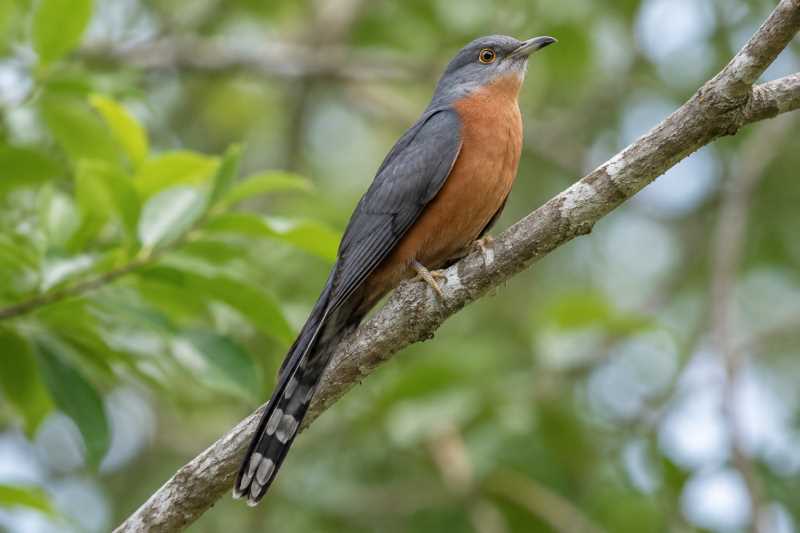
The Bay-breasted Cuckoo is noted for its distinctive physical appearance. As its name suggests, the bird features a rich bay or rust-colored breast and throat, which starkly contrasts with its otherwise grey and white plumage. It typically measures between 40 to 45 centimeters in length, making it one of the larger members of the Coccyzus genus.
This bird’s call is equally distinctive, often described as a series of sharp, repetitive notes that echo through its forest habitat. The Bay-breasted Cuckoo is known for its secretive nature, often remaining hidden in the dense canopy, which makes it a challenging subject for observation. Despite its elusive behavior, the species plays a critical role in its ecosystem, primarily through insect predation.
Habitat and Distribution
The Bay-breasted Cuckoo is a resident species of the island of Hispaniola, which comprises the nations of Haiti and the Dominican Republic. It predominantly inhabits subtropical or tropical moist lowland forests, and occasionally montane forests. The cuckoo’s preference for large tracts of undisturbed forest makes it particularly vulnerable to habitat degradation.
Deforestation and land conversion for agriculture and human settlement pose significant threats to its habitat. As a result, the Bay-breasted Cuckoo’s range has become increasingly fragmented, further exacerbating the challenges of conservation.
Conservation Status
The International Union for Conservation of Nature (IUCN) currently classifies the Bay-breasted Cuckoo as "Endangered". This status highlights the urgent need for conservation measures to ensure its survival. The primary threats to the species include habitat destruction, predation by introduced species, and human encroachment.
Conservation initiatives are in place to address these threats. Efforts include habitat restoration, legal protection of critical areas, and community engagement to foster sustainable land-use practices. Organizations are also working to increase awareness and appreciation for the species, which is crucial for garnering local and international support for its conservation.
The Role of Research and Monitoring
Ongoing research and monitoring are vital components of the Bay-breasted Cuckoo’s conservation strategy. Studies focusing on its ecology, breeding habits, and population dynamics provide essential data that inform conservation actions. One significant research avenue is the study of its breeding behavior, as understanding its nesting sites and requirements can aid in the development of targeted conservation plans.
Furthermore, monitoring programs are essential for assessing the effectiveness of conservation measures. These programs often involve collaboration between governmental agencies, non-governmental organizations, and local communities. By engaging local populations in monitoring efforts, conservationists can enhance the sustainability of their initiatives and foster a sense of stewardship among residents.
The Importance of Community Involvement
Community involvement is a cornerstone of successful conservation efforts. In the case of the Bay-breasted Cuckoo, empowering local communities to become active participants in conservation can yield significant benefits. Educational programs that highlight the importance of the species and its role in the ecosystem can cultivate a culture of conservation.
Eco-tourism presents another opportunity to involve communities in conservation efforts. By promoting responsible birdwatching and wildlife tours, locals can benefit economically while supporting conservation goals. Such initiatives not only raise awareness but also provide a financial incentive to preserve the natural environment.
Conclusion
The Bay-breasted Cuckoo stands as a symbol of both the unique biodiversity of the Caribbean and the challenges faced by endemic species in a rapidly changing world. Its conservation is a complex task requiring coordinated efforts across multiple fronts, from scientific research to community engagement and policy development.
By understanding the cuckoo’s ecological significance and addressing the threats it faces, we can ensure that future generations will continue to marvel at this remarkable bird. Protecting the Bay-breasted Cuckoo is not only about preserving a species but also about maintaining the ecological integrity of the Caribbean’s forests and protecting the rich biodiversity that calls these forests home.
In summary, the Bay-breasted Cuckoo is a vital part of its ecosystem, and its conservation is crucial for maintaining the ecological balance in its native habitat. The combined efforts of researchers, conservationists, policymakers, and local communities are essential in safeguarding the future of this captivating bird.
Related posts