Introduction
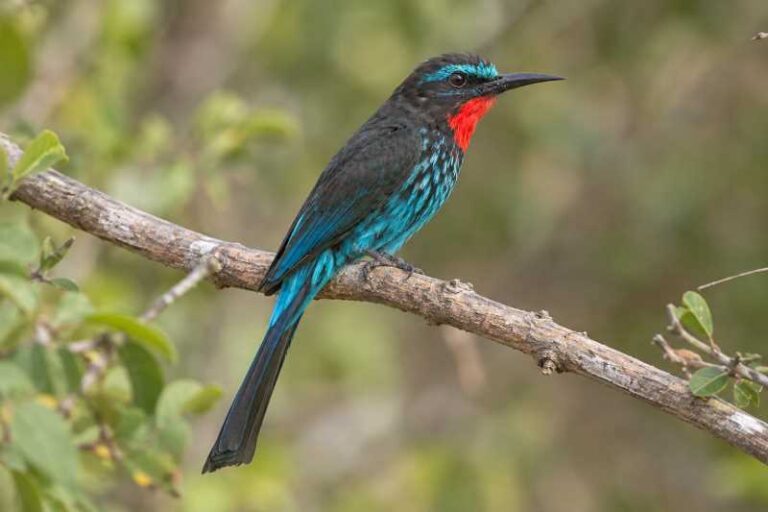
The Blue-breasted Bee-eater (Merops variegatus) is a small, vibrant bird that is a sight to behold. With its striking blue breast and green upperparts, this bird is a colorful spectacle in the African landscapes it calls home. Known for its agile flight and specialized diet, the Blue-breasted Bee-eater is a fascinating subject for ornithologists and bird watchers alike.
Taxonomy and Distribution
Belonging to the family Meropidae, the Blue-breasted Bee-eater is one of about 26 species of bee-eaters. These birds are primarily found in sub-Saharan Africa, with their range extending across various countries including Ethiopia, Uganda, Kenya, and the Democratic Republic of the Congo. They favor habitats such as open woodlands, savannas, and riverbanks, where they can find ample opportunities to hunt for their preferred prey.
Physical Description
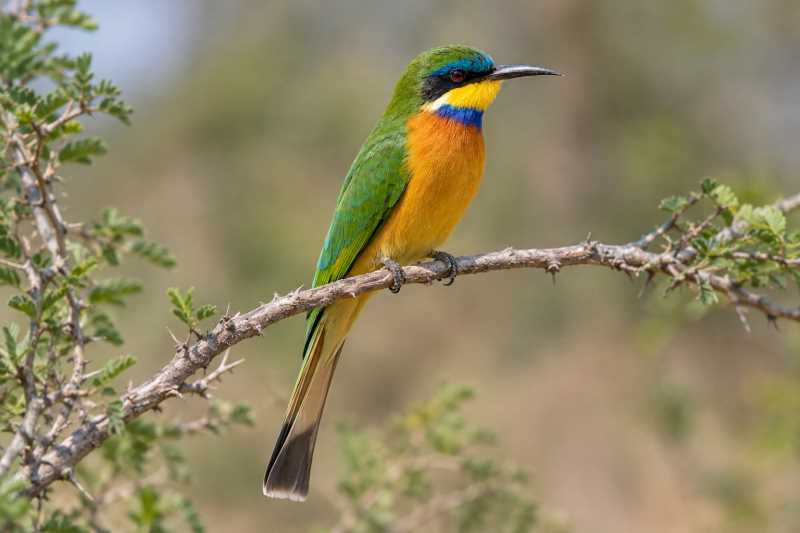
The Blue-breasted Bee-eater is a small to medium-sized bird, measuring approximately 19 to 21 centimeters in length. Its most distinctive feature is its vivid blue breast, which contrasts beautifully with its green upperparts and a striking black mask that runs through its eyes. The wings and tail are a mix of green and blue hues, while the underparts are a lighter shade of buff. The bird’s slender, down-curved bill is perfectly adapted for catching insects mid-flight.
Behavior and Diet
As their name suggests, bee-eaters predominantly feed on bees and other flying insects. They have developed a specialized hunting technique, which involves catching insects in mid-air. Once a bee is caught, the bee-eater will return to a perch to deftly remove the sting by repeatedly hitting the insect against the branch. This behavior showcases the bird’s remarkable adaptation to its environment and diet.
Blue-breasted Bee-eaters are social birds, often seen in small groups or pairs. They engage in cooperative breeding, where several members of the group assist in raising the young. They communicate through a series of soft, melodic calls, which are often heard during their aerial acrobatics.
Breeding and Nesting
The breeding season for the Blue-breasted Bee-eater varies depending on the region but generally coincides with the rainy season when food is most abundant. These birds are cavity nesters, typically excavating tunnels in sandy banks or flat ground to lay their eggs. The tunnels can be up to a meter long, ending in a chamber where the female lays a clutch of two to six eggs. Both parents are involved in incubating the eggs and feeding the chicks once they hatch.
Conservation Status
Currently, the Blue-breasted Bee-eater is listed as ‘Least Concern’ by the International Union for Conservation of Nature (IUCN). However, like many other species, they face threats from habitat destruction and the use of pesticides, which reduce the availability of their insect prey. Conservation efforts focused on preserving their natural habitats and promoting sustainable agricultural practices are essential for ensuring the long-term survival of this species.
Cultural Significance
Bee-eaters, including the Blue-breasted Bee-eater, hold a special place in the cultures of many African societies. They are often admired for their beauty and agility, and in some regions, they are considered symbols of good luck and prosperity. Their presence is a reminder of the rich biodiversity found in Africa and the intricate ecological connections that sustain it.
Conclusion
The Blue-breasted Bee-eater is a remarkable testament to the diversity and splendor of avian life. Its vibrant plumage, specialized hunting skills, and social behaviors make it a fascinating subject for study and admiration. As we continue to learn more about this species, it becomes increasingly clear that conservation efforts are vital to preserving not only the Blue-breasted Bee-eater but the delicate ecosystems they inhabit. By protecting these birds and their habitats, we ensure that future generations can enjoy the beauty and wonder of the natural world.
Related posts