Introduction
The Rufous Hare Wallaby, scientifically known as Lagorchestes hirsutus, is a fascinating and unique marsupial that inhabits the arid regions of Australia. Often referred to as the Mala, this species is a member of the macropod family, which also includes kangaroos and wallabies. The Rufous Hare Wallaby is renowned for its distinctive appearance and remarkable adaptability to harsh environmental conditions. As a nocturnal herbivore, it plays a crucial role in its ecosystem by contributing to seed dispersal and vegetation management. This article delves into the various aspects of the Rufous Hare Wallaby’s life, including its physical characteristics, habitat, behavior, and conservation status.
Physical Description
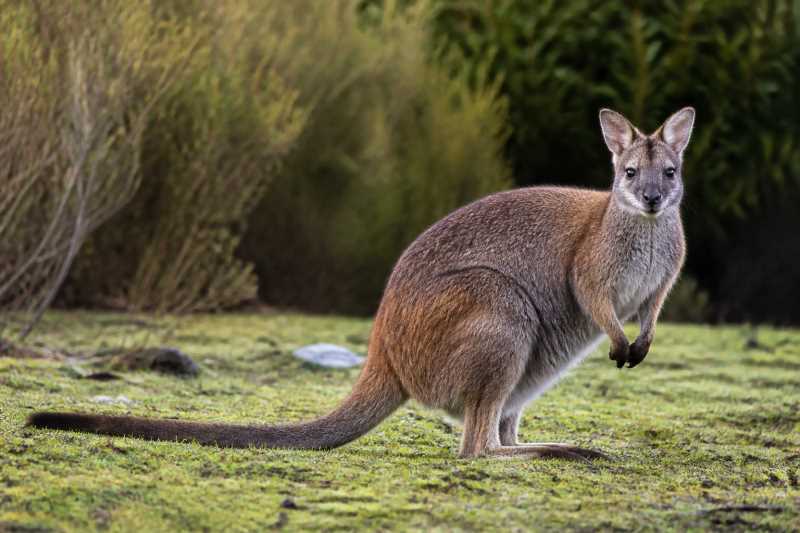
The Rufous Hare Wallaby is a small to medium-sized marsupial characterized by its distinctive rufous or reddish-brown fur, which provides excellent camouflage in its arid habitat. Adults typically weigh between 1.3 to 2.0 kilograms (2.9 to 4.4 pounds) and measure about 30 to 40 centimeters (11.8 to 15.7 inches) in body length, with a tail length of approximately 25 to 30 centimeters (9.8 to 11.8 inches). Their fur is soft and dense, with a paler underbelly that contrasts with the darker, reddish-brown dorsal surface.
The Rufous Hare Wallaby possesses long, slender hind legs that are adapted for hopping, a characteristic trait of macropods. Their forelimbs are relatively short, with sharp claws that are used for digging and foraging. They have large, rounded ears that enhance their hearing capabilities, and a keen sense of smell that aids in detecting predators and locating food sources. The eyes are positioned on the sides of the head, providing a wide field of vision that is essential for spotting threats in the open landscape.
Range and Habitat
Historically, the Rufous Hare Wallaby occupied a wide range across central and western Australia, thriving in spinifex grasslands and desert habitats. However, their distribution has drastically reduced due to various environmental and anthropogenic factors. Today, their presence is primarily restricted to a few isolated populations in predator-free environments, such as offshore islands and fenced reserves.
These marsupials prefer habitats with dense spinifex cover, which offers both food and protection from predators. The arid and semi-arid landscapes they inhabit are characterized by sparse vegetation, sandy soils, and minimal water sources. Despite these challenging conditions, the Rufous Hare Wallaby has adapted remarkably well, relying on its ability to extract moisture from its food and conserve water efficiently.
Behavior and Diet
The Rufous Hare Wallaby is a nocturnal creature, spending the daytime hours sheltering in the shade of spinifex clumps or in shallow burrows dug into the ground. This behavioral adaptation helps them avoid the extreme heat of the day and reduces water loss through evaporation.
Their diet primarily consists of a variety of grasses, seeds, and leaves, with a particular preference for spinifex grass. The wallaby’s digestive system is well-suited to processing fibrous plant material, allowing them to extract essential nutrients and moisture. During foraging, they use their sharp claws to dig for roots and tubers when necessary.
Socially, Rufous Hare Wallabies are generally solitary, although they may come together in small groups during the breeding season or when foraging in areas with abundant food resources. Communication is primarily through scent marking and vocalizations, used to establish territories and attract mates.
Identification Tips (Field Recognition Cues)
Identifying the Rufous Hare Wallaby in the wild requires keen observation skills and an understanding of their unique traits. Here are some key identification tips:
- Fur Coloration: Look for the characteristic rufous or reddish-brown fur, which is darker on the back and lighter on the belly.
- Size and Shape: Note their small to medium size, with a distinctive hopping gait facilitated by long hind legs.
- Habitat: Focus on areas with dense spinifex grass, as these are preferred habitats.
- Behavior: They are primarily nocturnal, so sightings are more common during dawn and dusk.
- Tracks and Signs: Look for small, kangaroo-like footprints and diggings near spinifex clumps.
Conservation Status (with Threats and Protections)
The Rufous Hare Wallaby is currently listed as vulnerable on the IUCN Red List, with certain populations classified as critically endangered due to their limited distribution and declining numbers. The primary threats to their survival include habitat loss, predation by introduced species (such as foxes and cats), and competition with livestock for food resources.
Conservation efforts have been implemented to safeguard remaining populations, including establishing predator-free reserves and captive breeding programs. Translocations to predator-free islands have shown promise, with several populations stabilizing and even increasing in size. Continued research and monitoring are essential to adapt conservation strategies and ensure the long-term survival of this unique marsupial.
Frequently Asked Questions
What is the Rufous Hare Wallaby’s primary habitat?
The Rufous Hare Wallaby primarily inhabits spinifex-dominated grasslands and arid desert regions in Australia. They rely on these areas for food and shelter.
How do Rufous Hare Wallabies conserve water in arid environments?
They extract moisture from their food and have adapted to reduce water loss by being nocturnal and resting in shaded areas during the hot daytime hours.
What conservation measures are in place for the Rufous Hare Wallaby?
Conservation measures include the establishment of predator-free reserves, captive breeding programs, and translocations to offshore islands to protect and stabilize populations.
Are Rufous Hare Wallabies social animals?
Generally solitary, Rufous Hare Wallabies may gather in small groups during breeding seasons or in areas with abundant food, but they primarily communicate through scent marking and vocalizations.
How can I identify a Rufous Hare Wallaby in the wild?
Look for their distinctive reddish-brown fur, small size, nocturnal behavior, and preference for spinifex grassland habitats.
Related posts