Understanding the Elusive Wood Snipe (Gallinago nemoricola)
The Wood Snipe, scientifically known as Gallinago nemoricola, is a bird species whose elusive nature has intrigued ornithologists and bird enthusiasts alike. Known for its secretive habits and distinctive vocalizations, the Wood Snipe is a remarkable member of the Scolopacidae family, which encompasses a variety of waders or shorebirds. This article delves into the habitat, behavior, conservation status, and significance of the Wood Snipe, providing a comprehensive overview of this fascinating avian species.
Habitat and Distribution
The Wood Snipe is predominantly found in the Eastern Himalayas, with sightings reported across Nepal, Bhutan, northeastern India, and parts of southern China. These birds prefer high-altitude temperate forests, typically ranging from 2,400 to 4,500 meters above sea level. They thrive in moist, dense undergrowth and are often associated with rhododendron and bamboo thickets. During the winter months, the Wood Snipe descends to lower altitudes, frequenting marshy grasslands and wet meadows.
The bird’s preference for dense forest habitats makes it challenging to spot, contributing to its reputation as an elusive species. The Wood Snipe’s range is influenced by seasonal migrations, although detailed migration patterns remain poorly understood due to the bird’s secretive nature.
Physical Characteristics
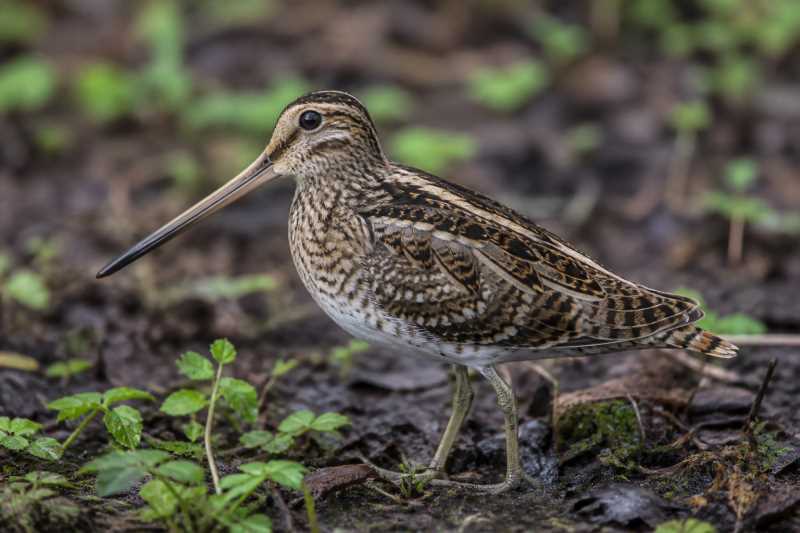
The Wood Snipe is a medium-sized bird, measuring approximately 28 to 32 centimeters in length. It is characterized by its cryptic plumage, which provides excellent camouflage against the forest floor. The bird’s upperparts are mottled brown with black and buff streaks, while the underparts are paler with darker barring. Its long, straight bill is an essential tool for probing soft ground in search of food.
The Wood Snipe’s eyes are set high on its head, providing a wide field of vision to detect predators. Its legs are relatively short, a common trait among waders adapted to forested environments. The bird’s flight is strong and direct, with rapid wingbeats followed by glides.
Behavior and Diet
Wood Snipes are primarily crepuscular, most active during dawn and dusk. They are known for their distinctive calls, which include a series of soft whistles and harsh grating sounds. These vocalizations play a crucial role in communication during the breeding season, as well as in territorial displays.
The diet of the Wood Snipe consists mainly of invertebrates, such as earthworms, insect larvae, and small mollusks. The bird uses its long bill to probe into soft soil and leaf litter, detecting prey through touch. This feeding behavior is typical of many snipe species, allowing them to exploit food resources in their forested habitats effectively.
Breeding and Reproduction
The breeding season of the Wood Snipe occurs from April to June, coinciding with the onset of the monsoon in the Himalayas. Nests are typically constructed on the ground, concealed within dense vegetation to protect against predators. The female lays a clutch of two to four eggs, which are incubated for approximately 20 to 25 days.
Both parents participate in rearing the young, with chicks leaving the nest shortly after hatching. The precocial young are capable of following their parents and foraging for food soon after birth. However, they remain dependent on parental care for protection and guidance during the early stages of life.
Conservation Status and Threats
The Wood Snipe is currently classified as Vulnerable on the IUCN Red List of Threatened Species. This designation is due to its declining population, estimated to be between 2,500 and 10,000 mature individuals. The primary threats to the Wood Snipe include habitat loss and degradation, driven by deforestation, agricultural expansion, and infrastructure development in its range.
Conservation efforts for the Wood Snipe focus on habitat protection and management, particularly in key breeding and wintering areas. Initiatives to promote sustainable land use practices and raise awareness about the species are crucial in mitigating the threats it faces. Additionally, further research is needed to better understand the species’ ecology and inform effective conservation strategies.
Significance and Conclusion
The Wood Snipe plays a vital role in its ecosystem as both a predator of invertebrates and a prey species for larger predators. Its presence is indicative of healthy, well-functioning forest ecosystems. As such, the conservation of the Wood Snipe is not only important for preserving biodiversity but also for maintaining the ecological balance of its habitat.
In conclusion, the Wood Snipe is a remarkable bird that continues to captivate those fortunate enough to observe it. While its elusive nature poses challenges for study and conservation, ongoing efforts to protect its habitat and understand its ecology are essential. By promoting awareness and engaging in targeted conservation actions, we can ensure that the Wood Snipe remains a thriving component of the Himalayan avifauna.
References
– BirdLife International. (2021). *Gallinago nemoricola*. The IUCN Red List of Threatened Species 2021.
– Grimmett, R., Inskipp, C., & Inskipp, T. (2011). *Birds of the Indian Subcontinent*. Oxford University Press.
– Rasmussen, P. C., & Anderton, J. C. (2005). *Birds of South Asia: The Ripley Guide*. Smithsonian Institution and Lynx Edicions.
Related posts