Introduction
The Putty-nosed Monkey (Cercopithecus nictitans) is a fascinating primate species belonging to the family Cercopithecidae. These monkeys are primarily found in the dense forests of Central and West Africa, where they play an integral role in the ecosystem. Known for their distinctive nasal coloration and complex vocal communication, Putty-nosed Monkeys have intrigued researchers and wildlife enthusiasts alike. This article delves into the various aspects of the species, including their physical characteristics, habitat preferences, behavior, and conservation status.
Physical Description
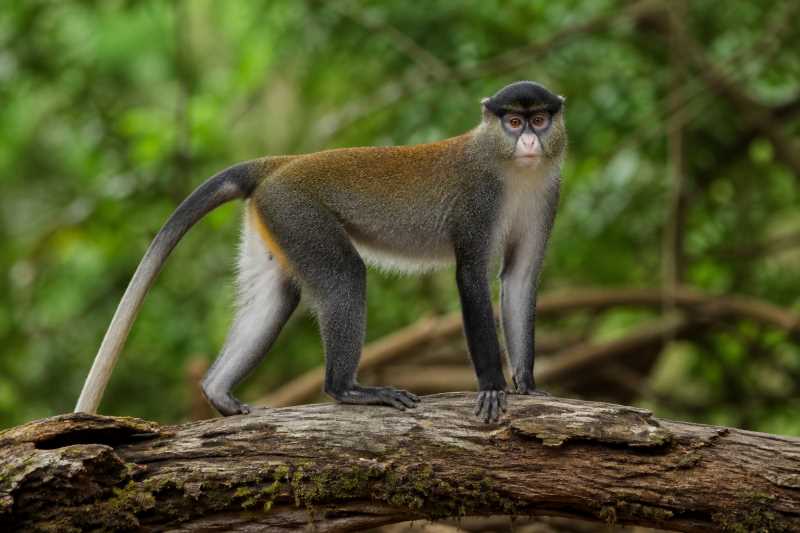
The Putty-nosed Monkey is easily recognizable by its distinctive facial markings. They possess a white nose patch that stands out against their otherwise dark fur. This feature is not just for show; it plays a critical role in social interactions within the species. Adult males typically weigh between 4 to 7 kilograms, while females are slightly smaller, weighing between 3 to 5 kilograms. Their body length ranges from 32 to 45 centimeters, with a tail that almost doubles their overall length, measuring between 60 to 80 centimeters.
Their fur is predominantly grey to black, with lighter underparts. The limbs are long and slender, adapted for an arboreal lifestyle. Their hands and feet are equipped with dexterous fingers and toes, allowing them to grasp branches firmly as they navigate the forest canopy.
Range and Habitat
The natural range of the Putty-nosed Monkey extends across several Central and West African countries, including Nigeria, Cameroon, Gabon, and the Democratic Republic of the Congo. These primates are highly adaptable and can thrive in various forest types, including lowland rainforests, swamp forests, and even secondary growth forests.
They are predominantly arboreal, spending most of their time in the forest canopy. This preference for high branches not only provides them with abundant food resources but also offers protection from ground-dwelling predators. However, they are occasionally seen on the ground, especially when foraging or moving between forest patches.
Behavior and Diet
Putty-nosed Monkeys are diurnal, meaning they are active during the day. They are social animals, typically living in groups of 10 to 30 individuals. These groups are usually composed of one dominant male, several females, and their offspring. Social bonds within the group are maintained through grooming and other affiliative behaviors.
One of the most intriguing aspects of their behavior is their complex vocal communication system. Males are known for their distinctive ‘pyow’ and ‘hack’ calls, which serve various purposes, including alerting the group to predators or coordinating group movements.
Their diet is primarily frugivorous, consisting mainly of fruits, seeds, and leaves. However, they are also known to consume insects and small invertebrates, especially when fruits are scarce. This varied diet helps them adapt to seasonal changes in food availability.
Identification Tips (field recognition cues)
Identifying Putty-nosed Monkeys in the field can be relatively straightforward if you know what to look for. Here are some tips to help you recognize them:
- Nasal Patch: Look for the distinctive white nose patch that contrasts sharply with their dark fur.
- Vocalizations: Listen for their unique ‘pyow’ and ‘hack’ calls, which are used for communication.
- Tail Length: Note their long, bushy tails, which are often used for balance as they move through the trees.
- Social Groups: They are often seen in groups, so if you spot one, there are likely more nearby.
- Habitat: They are usually found high in the trees, so scan the canopy when searching for them.
Conservation Status (with threats and protections)
The Putty-nosed Monkey is currently classified as Near Threatened on the IUCN Red List of Threatened Species. Several factors contribute to their vulnerability, including habitat destruction, hunting, and the illegal pet trade.
Threats:
- Deforestation: The primary threat to Putty-nosed Monkeys is habitat loss due to logging, agriculture, and human settlement expansion.
- Hunting: In some regions, they are hunted for bushmeat, which poses a significant threat to their populations.
- Pet Trade: Although less common, the illegal pet trade also affects their numbers.
Protections:
- Protected Areas: Some populations are found within national parks and reserves, which offer them some degree of protection from human activities.
- Conservation Programs: Various organizations are working to raise awareness and implement conservation strategies to protect these primates and their habitats.
Conservation efforts are crucial to ensuring the survival of the Putty-nosed Monkey, and support from local communities and international organizations is vital.
Frequently Asked Questions
What is the lifespan of a Putty-nosed Monkey?
In the wild, Putty-nosed Monkeys typically live for around 20 years. However, in captivity, where they are protected from predators and have a constant food supply, they can live into their late 20s.
How do Putty-nosed Monkeys communicate?
These monkeys communicate using a variety of vocalizations, including the well-known ‘pyow’ and ‘hack’ calls. These calls serve different purposes, such as warning about predators or coordinating group activities.
Are Putty-nosed Monkeys endangered?
Currently, Putty-nosed Monkeys are classified as Near Threatened. They face several threats, including habitat destruction and hunting, which could impact their populations if not addressed.
What do Putty-nosed Monkeys eat?
Their diet mainly consists of fruits, seeds, and leaves. They also consume insects and small invertebrates, especially when fruits are not readily available.
Where can I see Putty-nosed Monkeys in the wild?
Putty-nosed Monkeys are found in Central and West African countries, particularly in Nigeria, Cameroon, Gabon, and the Democratic Republic of the Congo. National parks and reserves in these regions are ideal places to observe them in their natural habitat.
Related posts