Introduction
The Smoky White-toothed Shrew, scientifically known as Crocidura fumosa, is a fascinating small mammal that belongs to the family Soricidae. This elusive creature is known for its distinctive dentition and its role in the ecosystem as an insectivore. Despite its small size, the Smoky White-toothed Shrew plays a significant role in controlling insect populations in its habitat. Due to its cryptic nature, much about this species remains shrouded in mystery, making it an intriguing subject for researchers and wildlife enthusiasts alike.
Physical Description
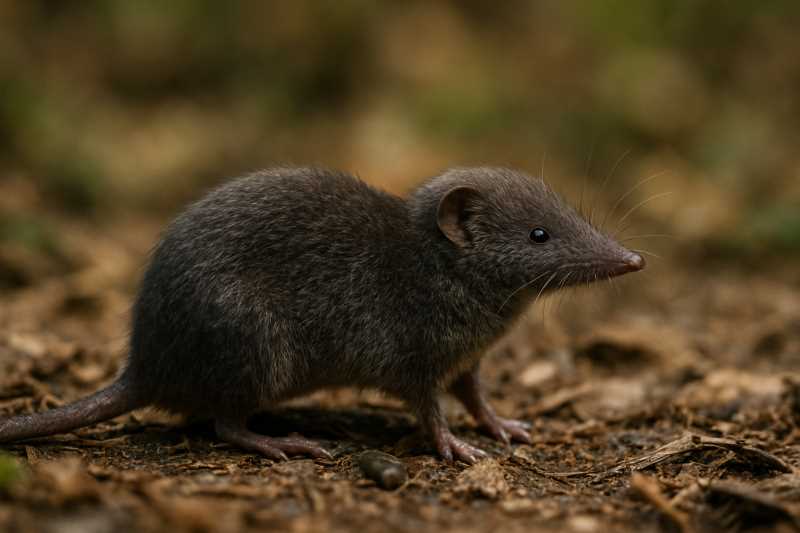
The Smoky White-toothed Shrew is characterized by its small stature, with an average body length ranging from 60 to 90 mm, excluding the tail. The tail itself adds an additional 40 to 60 mm. This shrew is aptly named for its smoky gray fur, which provides effective camouflage in its natural environment. The fur is soft and dense, offering insulation against the elements.
One of the most distinctive features of this species is its white teeth, which contrast sharply against its dark fur. Unlike rodents, the teeth of the Smoky White-toothed Shrew do not continue to grow throughout their life, which is a common trait among members of the Soricidae family. Their eyes are small and beady, adapted for their nocturnal lifestyle, while their ears are short and often hidden within the fur. The shrew’s slender body and pointed snout aid in navigating through dense underbrush and soil as they search for food.
Range and Habitat
The Smoky White-toothed Shrew is primarily found in East Africa, with populations concentrated in countries such as Kenya, Tanzania, and Uganda. It inhabits a range of environments, from lowland forests to higher altitude montane forests. This adaptability to different altitudes and forest types highlights the shrew’s ecological versatility.
Within these forests, the shrew typically resides in leaf litter and undergrowth, where it can easily find prey and remain concealed from predators. The rich biodiversity of these forests supports the shrew’s dietary needs, offering a plethora of insects and other invertebrates. The presence of moist and dense vegetation is crucial for the shrew’s survival, as it relies heavily on the cover provided by its habitat to evade predators.
Behavior and Diet
The Smoky White-toothed Shrew is predominantly nocturnal, emerging at night to hunt for food. Its diet is primarily composed of insects and other small invertebrates, including beetles, spiders, and worms. This shrew is known for its voracious appetite, consuming up to three times its body weight in food each day to sustain its high metabolism.
In addition to being insectivorous, the shrew may also consume small amounts of plant material, although this is not a primary component of its diet. The shrew’s foraging behavior involves using its keen sense of smell and hearing to detect prey within the leaf litter and soil. Once prey is detected, the shrew uses its sharp teeth to capture and consume it.
Socially, the Smoky White-toothed Shrew is a solitary animal, with individuals only coming together for mating. The breeding season generally coincides with periods of abundant food availability, ensuring that offspring have a higher chance of survival.
Identification Tips (Field Recognition Cues)
Identifying the Smoky White-toothed Shrew in the field can be challenging due to its elusive nature and nocturnal habits. However, there are several key features that can aid in its identification:
- Fur Color: Look for the characteristic smoky gray fur that provides excellent camouflage against forest floors.
- Size and Shape: Note the small body size, with a slender, elongated shape typical of shrews.
- Teeth: If observed closely, the white teeth are a distinguishing feature of this species.
- Habitat: The presence of dense leaf litter and underbrush in forested areas can indicate potential habitats.
- Behavior: Active primarily at night, sightings are more likely during dusk and dawn.
Conservation Status (With Threats and Protections)
The International Union for Conservation of Nature (IUCN) currently lists the Smoky White-toothed Shrew as a species of Least Concern. However, this status does not imply that the species faces no threats. Habitat loss due to deforestation and human encroachment poses significant challenges to its survival.
Forest degradation, driven by agricultural expansion and logging, reduces the available habitat for the shrew, leading to isolated populations that are more vulnerable to extinction. Additionally, climate change may alter the ecosystems on which the shrew depends, further exacerbating conservation challenges.
Conservation efforts aimed at preserving forest habitats are crucial for the long-term survival of the Smoky White-toothed Shrew. Protected areas and national parks in East Africa play a vital role in conserving the natural environments that support this species. Continued research and monitoring are essential to better understand the shrew’s population dynamics and to develop effective conservation strategies.
Frequently Asked Questions
1. What do Smoky White-toothed Shrews eat?
Smoky White-toothed Shrews primarily feed on insects and other small invertebrates, such as beetles, spiders, and worms. They are known for their high metabolic rate, which requires them to consume large quantities of food relative to their body size.
2. Where can the Smoky White-toothed Shrew be found?
This species is predominantly found in East Africa, particularly in countries like Kenya, Tanzania, and Uganda. They inhabit a variety of forest environments, from lowland forests to montane forests, depending on the availability of dense vegetation and leaf litter.
3. How does the Smoky White-toothed Shrew reproduce?
The shrew is a solitary animal that only comes together with others during the mating season. Breeding typically aligns with periods of abundant food supply, ensuring the offspring have a greater chance of survival.
4. Why is the Smoky White-toothed Shrew important?
As an insectivore, the Smoky White-toothed Shrew plays a crucial role in regulating insect populations, thus contributing to the ecological balance within its habitat. Its presence indicates a healthy ecosystem.
5. What are the main threats to the Smoky White-toothed Shrew?
The primary threats include habitat loss due to deforestation and human encroachment. Climate change also poses a significant risk by altering the ecosystems these shrews rely on.
Related posts