Introduction
The Whip-tailed Wallaby, scientifically known as Notamacropus parryi, is a fascinating marsupial found predominantly in eastern Australia. This distinct species is a member of the Macropodidae family, which includes kangaroos, wallabies, and their relatives. Renowned for their agility and unique tail structure, Whip-tailed Wallabies are an intriguing subject for wildlife enthusiasts and researchers alike. This comprehensive article delves into various aspects of their existence, including physical characteristics, habitat preferences, dietary habits, and conservation status.
Physical Description
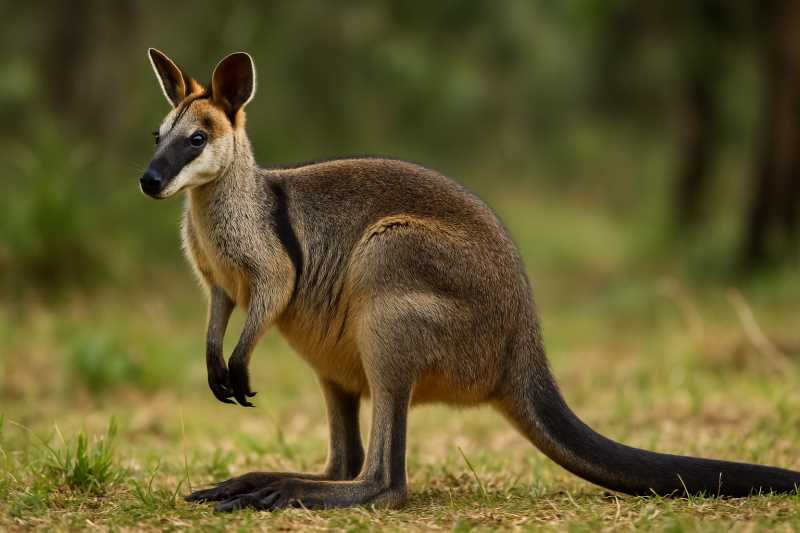
The Whip-tailed Wallaby is characterized by its sleek, slender build and a distinctive tail, which is long, thin, and whip-like, hence the name. Adult males typically weigh between 14 to 26 kilograms, while females are slightly smaller, weighing around 10 to 16 kilograms. Their body length ranges from 70 to 93 centimeters, with tails extending between 70 to 100 centimeters.
Their fur is generally grey with a yellowish tinge, complemented by a white stripe running along the cheek. The underbelly is lighter in color, often appearing white or cream. Their forelimbs are short compared to their robust hind legs, which are adapted for powerful hopping—a primary mode of locomotion for these marsupials.
Range and Habitat
The Whip-tailed Wallaby predominantly inhabits the eastern regions of Australia, from northern New South Wales to southeastern Queensland. They are generally found in a variety of environments, including eucalypt woodlands, open forests, and grassy areas. These wallabies are highly adaptable, thriving in both dry and wet sclerophyll forests.
Their preference for dense understory vegetation provides them with adequate cover from predators and harsh weather conditions. These habitats also offer a rich source of food, fulfilling their nutritional needs.
Behavior and Diet
Whip-tailed Wallabies are primarily crepuscular, meaning they are most active during dawn and dusk. This behavior helps them avoid the midday heat and reduces the risk of predation. They are social animals, often seen in small groups, commonly referred to as mobs.
Their diet primarily consists of grasses, herbs, and leaves, displaying a preference for young, tender shoots. During drought conditions, they may expand their diet to include bark and stems to survive. Their digestive system is highly specialized, allowing them to efficiently extract nutrients from fibrous plant material.
Identification Tips (Field Recognition Cues)
Recognizing a Whip-tailed Wallaby in the wild can be simplified by noting several key features:
- Tail: Look for a long, thin, whip-like tail, which is a primary distinguishing feature.
- Size and Shape: Observe the slender body and relatively small size compared to other wallaby species.
- Coloration: Grey fur with a yellowish tinge and a prominent white cheek stripe.
- Behavior: Note their hopping locomotion and tendency to form small groups.
Conservation Status (With Threats and Protections)
The Whip-tailed Wallaby is currently classified as a species of Least Concern by the International Union for Conservation of Nature (IUCN). However, they face several threats that could impact their population in the future.
Threats:
- Habitat Loss: Urbanization and agricultural expansion lead to habitat fragmentation and loss.
- Predation: Predators such as foxes and feral cats pose significant threats, especially to juvenile wallabies.
- Climate Change: Alterations in climate patterns can affect their food supply and habitat.
Protections:
Efforts to mitigate these threats include habitat restoration and protection, predator control programs, and public education initiatives to raise awareness about the species. Conservation organizations also monitor population trends to implement timely interventions.
Frequently Asked Questions
1. What is the lifespan of a Whip-tailed Wallaby?
Whip-tailed Wallabies have an average lifespan of 9 to 15 years in the wild. In captivity, where they are protected from predators and environmental stressors, they can live longer.
2. How do Whip-tailed Wallabies use their tails?
Their tails serve multiple purposes, including balance during locomotion, support when sitting, and as a counterbalance while hopping.
3. Are Whip-tailed Wallabies endangered?
Currently, Whip-tailed Wallabies are not endangered and are listed as Least Concern, but habitat destruction and predation pose ongoing threats.
4. What is the breeding season for Whip-tailed Wallabies?
Breeding can occur year-round, but there is a peak in spring and summer when food resources are more abundant, ensuring better survival chances for offspring.
5. How do Whip-tailed Wallabies communicate?
They communicate through a series of vocalizations, body language, and foot thumping, which can signal danger to other members of the mob.
Related posts