Introduction
The Mountain Beaver, scientifically known as Aplodontia rufa, is a unique and intriguing mammal that resides in the dense forests of the Pacific Northwest. Despite its name, this species is not a true beaver but belongs to its own family, Aplodontiidae, and is considered one of the most primitive living rodents. Known for their elusive nature, Mountain Beavers are seldom seen in the wild, yet they play a significant role in their ecosystem. This article explores the Mountain Beaver’s distinctive characteristics, habitat, behavior, and the conservation efforts aimed at preserving this fascinating creature.
Physical Description
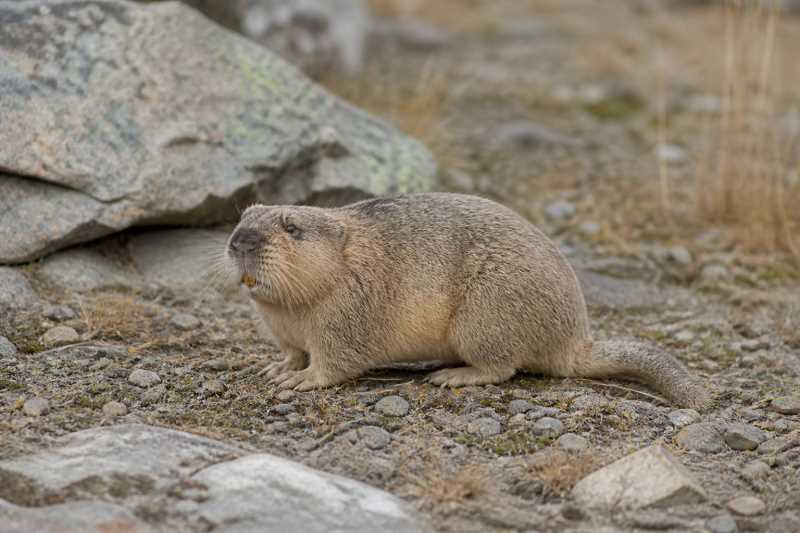
The Mountain Beaver is a small, stocky rodent with a robust body that measures between 30 and 50 centimeters in length, including its short tail, which is only about 2 to 3 centimeters long. These mammals weigh between 0.5 and 1.5 kilograms. Their dense, dark brown fur helps them blend into their forested environments, providing excellent camouflage from predators. They have small eyes and ears, which are adaptations to their subterranean lifestyle, where vision and hearing are less critical than the sense of touch.
One of the most distinctive features of the Mountain Beaver is its large, curved claws, which are perfectly adapted for digging. These claws enable them to excavate extensive burrow systems, which serve as both refuge and a storage space for food. Their incisors are sharp, continuously growing, and capable of gnawing through tough vegetation.
Range and Habitat
Mountain Beavers are primarily found along the Pacific coast of North America, from southern British Columbia in Canada to northern California in the United States. Their range extends inland to the western slopes of the Cascade Mountains. They prefer moist, forested environments with abundant undergrowth, such as temperate rainforests, where they can find ample food and cover.
These animals thrive in areas with well-drained soils, which facilitate the construction of their burrows. They are often found in regions with dense vegetation, including ferns and shrubs, which provide both food and protection. Due to their sensitivity to temperature extremes and dehydration, Mountain Beavers are typically limited to cooler, damp habitats.
Behavior and Diet
Mountain Beavers are primarily nocturnal, although they may be active during the day, especially in undisturbed areas. They are solitary creatures, with each individual maintaining its own burrow system. These burrows are complex and multi-chambered, featuring nesting areas, food storage sites, and numerous entrances and exits.
Their diet consists mainly of herbaceous vegetation, including ferns, grasses, and shrubs. They are known to clip vegetation and transport it back to their burrows, where they store it for later consumption. Mountain Beavers have a high metabolic rate and must eat frequently to sustain their energy levels.
Despite their solitary nature, Mountain Beavers communicate with one another through vocalizations and scent marking. They are known to make a variety of sounds, including whistles, clicks, and grunts, which serve as warnings or territorial calls.
Identification Tips (Field Recognition Cues)
Identifying a Mountain Beaver in the wild can be challenging due to their reclusive nature, but there are several field cues to look for:
- Burrows: Look for characteristic burrow entrances, which are typically about 15 to 20 centimeters in diameter and may be surrounded by piles of freshly dug soil.
- Trail Systems: These animals create well-worn trails leading to and from their burrow entrances.
- Gnawed Vegetation: Evidence of clipped or gnawed vegetation, particularly ferns and shrubs, is a strong indicator of Mountain Beaver activity.
- Vocalizations: Listen for their distinctive sounds, such as whistles and grunts, especially at dawn or dusk.
Conservation Status (With Threats and Protections)
The Mountain Beaver is currently listed as a species of least concern by the International Union for Conservation of Nature (IUCN), primarily because of its wide distribution and presumed large population. However, certain subspecies, such as the Point Arena Mountain Beaver (Aplodontia rufa nigra), are considered endangered due to habitat loss and fragmentation.
Threats to the Mountain Beaver include logging, urban development, and changes in land use, which lead to habitat destruction and degradation. Additionally, climate change poses a long-term threat by altering the moisture levels and temperature regimes of their habitats.
Conservation efforts focus on habitat protection and restoration. Some areas within their range have been designated as protected lands, and forest management practices are being adjusted to preserve critical habitat features. Public awareness and education are also crucial in ensuring the continued survival of this unique species.
Frequently Asked Questions
1. What is the difference between a Mountain Beaver and a true beaver?
Mountain Beavers are not true beavers. Unlike true beavers, which belong to the family Castoridae and are known for building dams, Mountain Beavers belong to their own family, Aplodontiidae, and do not construct dams. They are more primitive and have different ecological roles.
2. Why are Mountain Beavers considered primitive rodents?
Mountain Beavers are considered primitive because they retain many ancestral traits not found in more evolved rodents. For example, they have a simple digestive system and a unique jaw structure that reflects their early evolutionary lineage.
3. How do Mountain Beavers impact their ecosystem?
Mountain Beavers play a crucial role in their ecosystem by influencing vegetation patterns through their feeding habits and burrowing activities. Their burrows provide habitat for other species, and their foraging helps maintain plant diversity.
4. Can Mountain Beavers be found outside the Pacific Northwest?
Mountain Beavers are endemic to the Pacific Northwest and are not naturally found outside this region. Their specialized habitat requirements limit their distribution to specific areas within this range.
5. How do Mountain Beavers adapt to their environment?
Mountain Beavers adapt to their environment through several key traits, including their ability to dig extensive burrows for shelter and food storage, their nocturnal behavior to avoid predators, and their preference for moist habitats to prevent dehydration.
Related posts