Introduction
The Wisent, scientifically known as Bos bonasus, is the European bison and one of the continent’s most iconic mammals. Once widespread across Europe, the Wisent faced near extinction but has made a remarkable comeback through conservation efforts. This article explores the fascinating aspects of the Wisent, from its physical characteristics to its conservation status, providing a comprehensive overview of this majestic creature.
Physical Description
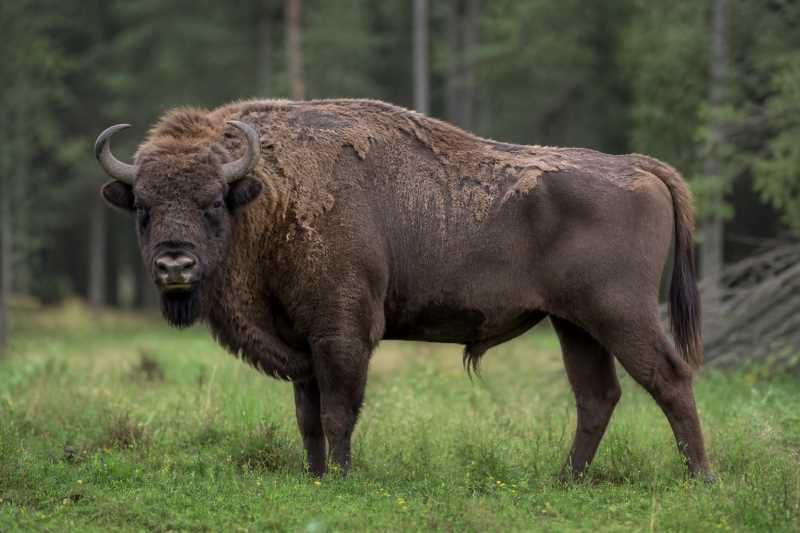
The Wisent is a robust mammal, characterized by its massive build and distinct features. Adult males typically weigh between 400 to 920 kilograms (880 to 2,030 pounds), while females are slightly smaller, weighing between 300 to 540 kilograms (660 to 1,190 pounds). Standing at a height of 1.8 meters (5.9 feet) at the shoulder, the Wisent is Europe’s heaviest land animal.
Their coat is a rich, dark brown, with a mane of longer hair running from the neck to the shoulders, giving them a distinct silhouette. The head is large and topped with a pair of upward-curving horns, which are present in both sexes. These horns are used in defense and during mating rituals.
Range and Habitat
Historically, the Wisent roamed much of Europe, from the Iberian Peninsula to the Caucasus. However, habitat loss and overhunting drastically reduced their numbers by the early 20th century. Today, the Wisent is mainly found in protected areas and reserves in Poland, Belarus, and Lithuania, with reintroduction programs extending their range to other parts of Europe, including Germany, Romania, and Spain.
The preferred habitat of the Wisent is deciduous and mixed forests. They thrive in areas with abundant undergrowth and open spaces for grazing. Seasonal movements are observed, with Wisents moving to lower altitudes or denser forests during the winter months to find food and shelter.
Behavior and Diet
Wisent are social animals, typically forming small herds comprising females and their offspring. Males are more solitary, joining the herds during the mating season. This species exhibits a diurnal activity pattern, being most active in the early morning and late afternoon.
The diet of the Wisent is primarily herbivorous, consisting of grasses, leaves, bark, and shrubs. During summer, they graze on lush meadow grasses, while in winter, they rely on woody plants and the bark of trees. Their diet is crucial for maintaining the open forest habitats they inhabit, as they help in controlling vegetation growth.
Identification Tips (Field Recognition Cues)
Identifying a Wisent in the wild can be a thrilling experience. Here are some tips to help you recognize this majestic creature:
- Size and Build: Look for a large, muscular animal with a distinct hump over the shoulders.
- Coat and Color: Observe the dark brown coat, which is thicker and longer around the neck and shoulders.
- Horns: Both males and females have curved horns, though more pronounced in males.
- Behavior: Wisents are typically seen in groups, especially females with calves.
Conservation Status (With Threats and Protections)
The Wisent is currently classified as "Near Threatened" on the IUCN Red List. Their population faced a critical decline in the early 20th century due to habitat loss, hunting, and disease. By 1927, the species was extinct in the wild, with only a few individuals remaining in captivity.
Conservation efforts, including captive breeding and reintroduction programs, have been instrumental in reviving Wisent populations. Key threats today include habitat fragmentation, human-wildlife conflict, and limited genetic diversity due to the small gene pool from which the current populations are derived.
Protected areas in countries like Poland’s Białowieża Forest and Belarus’s Belovezhskaya Pushcha play a vital role in safeguarding their habitats. Ongoing international collaboration aims to expand their range and ensure the long-term survival of the species.
Frequently Asked Questions
1. What is the difference between a Wisent and an American bison?
The Wisent, or European bison, differs from the American bison in several ways. Wisents have a more elongated body and longer legs, while American bison have a larger head and a distinctive shoulder hump. The habitats of the two species also differ, with Wisents preferring forested areas and American bison thriving in open plains.
2. How many Wisents are left in the wild?
As of recent estimates, there are approximately 6,000 Wisents in the wild, with populations scattered across various reserves in Europe. Conservation efforts continue to focus on increasing these numbers and expanding their range.
3. Can Wisents be dangerous to humans?
While generally peaceful, Wisents can be dangerous if threatened or provoked, particularly during the mating season or when protecting their young. It is essential to maintain a safe distance and respect their space in the wild.
4. How can I help in the conservation of Wisents?
Supporting organizations dedicated to wildlife conservation and habitat protection is a great way to help. Additionally, promoting awareness about the Wisent and advocating for policies that protect natural habitats can contribute positively to their conservation.
5. Are Wisents and domestic cattle related?
Yes, Wisents are related to domestic cattle as they both belong to the Bovidae family. However, they are distinct species, with Wisents being more closely related to the extinct steppe bison.
Related posts