Brown-necked Raven: The Adaptable Desert Dweller
The Brown-necked Raven, scientifically known as *Corvus ruficollis*, is a fascinating avian species that has carved out a niche for itself in some of the world’s most challenging environments. This remarkable bird, a member of the corvid family, is renowned not only for its intelligence but also for its adaptability to arid and semi-arid regions across North Africa and parts of the Middle East.
Physical Characteristics
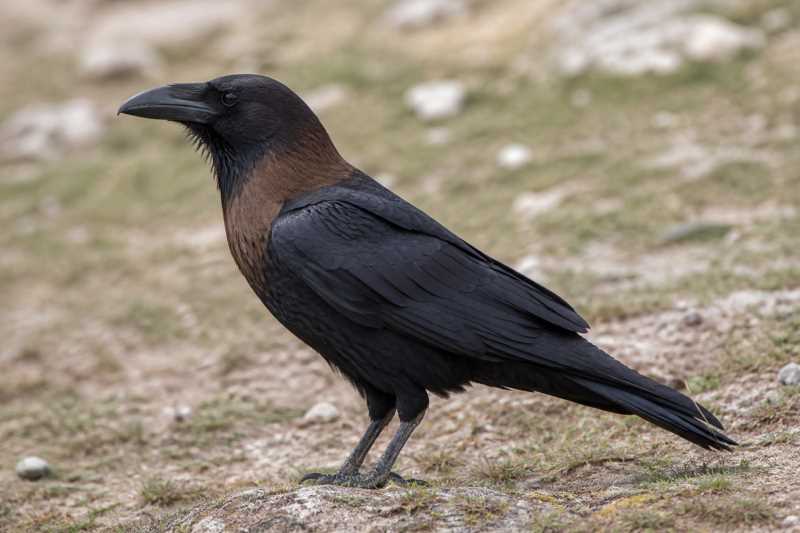
The Brown-necked Raven is medium-sized compared to other members of the raven family, measuring about 52 to 56 centimeters in length with a wingspan that can reach up to 1.2 meters. Its plumage is predominantly black, although it features a distinctive brownish hue around its neck and upper back, giving it its name. This coloration provides the bird with a perfect blend of camouflage against the rocky and sandy landscapes it inhabits.
One of the most striking features of the Brown-necked Raven is its robust, powerful bill, which is slightly curved and ideal for a varied diet. Its legs and feet are strong, enabling it to walk efficiently on the ground, where it spends a significant amount of time foraging.
Habitat and Distribution
The Brown-necked Raven is primarily found in desert regions, scrublands, and rocky landscapes. Its distribution includes the Sahara Desert, the Arabian Peninsula, and extends into parts of the Middle East, such as Israel and Jordan. The bird’s adaptability to desert life is remarkable; it can survive in areas with extreme temperature fluctuations and minimal water resources.
These ravens are often observed near human settlements, where they scavenge for food. They have also been known to follow nomadic tribes and livestock herders, taking advantage of potential food sources left behind. Their presence is often a common sight near roadsides, where they feed on roadkill.
Diet and Foraging Behavior
The Brown-necked Raven is an omnivorous scavenger, which means it has a highly varied diet. It feeds on carrion, insects, small mammals, and the eggs and young of other birds. Additionally, these ravens are known to consume plant materials, such as seeds and fruits, particularly when animal prey is scarce.
One of the most impressive aspects of their feeding behavior is their intelligence and problem-solving skills. Brown-necked Ravens have been observed using tools to obtain food, displaying behaviors such as dropping nuts onto rocks to crack them open or using sticks to extract insects from crevices. This adaptability not only makes them successful foragers but also highlights their cognitive abilities, which are on par with some of the most intelligent bird species.
Social Structure and Behavior
Brown-necked Ravens are known for their social nature. They typically form small family groups or pairs, although larger groups may congregate around abundant food sources. These social structures are important for mutual protection and cooperative foraging.
Communication among these ravens is sophisticated, involving a wide range of vocalizations and body language. Their calls can vary from harsh croaks to softer, more melodious sounds, which they use to maintain contact with each other, signal danger, or establish territory.
Breeding and Lifecycle
The breeding season for Brown-necked Ravens typically occurs between March and May, although it can vary depending on the region and environmental conditions. They are monogamous birds, forming long-term pair bonds. The nests are usually constructed on cliffs, rocky ledges, or in trees, and are made from twigs, sticks, and lined with softer materials such as wool or feathers.
A typical clutch consists of three to six eggs, which are incubated primarily by the female for about three weeks. Both parents share the responsibility of feeding the chicks, which fledge approximately 40 to 45 days after hatching. The young ravens often remain with their parents for several months before becoming independent.
Conservation Status
Currently, the Brown-necked Raven is listed as a species of least concern by the International Union for Conservation of Nature (IUCN). This status reflects its wide distribution and stable population numbers. However, like many wildlife species, it faces threats from habitat loss, climate change, and human activities. Conservation efforts aimed at preserving desert ecosystems indirectly benefit the Brown-necked Raven and other desert-adapted species.
Human Interaction and Cultural Significance
Throughout history, ravens have held various symbolic meanings in different cultures, often depicted as messengers, symbols of wisdom, or omens. In the regions where Brown-necked Ravens thrive, they are generally well-tolerated and even respected for their intelligence and adaptability. Farmers and herders often recognize the ecological role these birds play in controlling pest populations.
In conclusion, the Brown-necked Raven is a testament to the resilience and adaptability of wildlife in extreme environments. Its ability to thrive in harsh desert landscapes, combined with its intelligence and complex social behaviors, make it a remarkable and intriguing species worthy of appreciation and study.
As we continue to learn more about this fascinating bird, it reminds us of the intricate connections within ecosystems and the importance of preserving the natural habitats that sustain diverse forms of life.
Related posts