Schlegel’s Asity: An Enigmatic Jewel of Madagascar’s Rainforests
Madagascar, the world’s fourth-largest island, is renowned for its unique biodiversity and an array of species that are not found anywhere else on Earth. Among these is Schlegel’s Asity (Philepitta schlegeli), a captivating bird that intrigues ornithologists and nature enthusiasts alike. With its vivid plumage and intriguing behavior, Schlegel’s Asity stands as a testament to the evolutionary marvels found in isolated ecosystems.
Taxonomy and Nomenclature
Schlegel’s Asity belongs to the family Eurylaimidae, which is part of the suborder Tyranni. It was first described by Alfred Grandidier in 1875 and named after the German ornithologist Hermann Schlegel. The species name, schlegeli, honors Schlegel’s contributions to ornithology. Despite its vibrant appearance, Schlegel’s Asity is often overlooked due to its elusive nature and the dense habitats it occupies.
Physical Characteristics
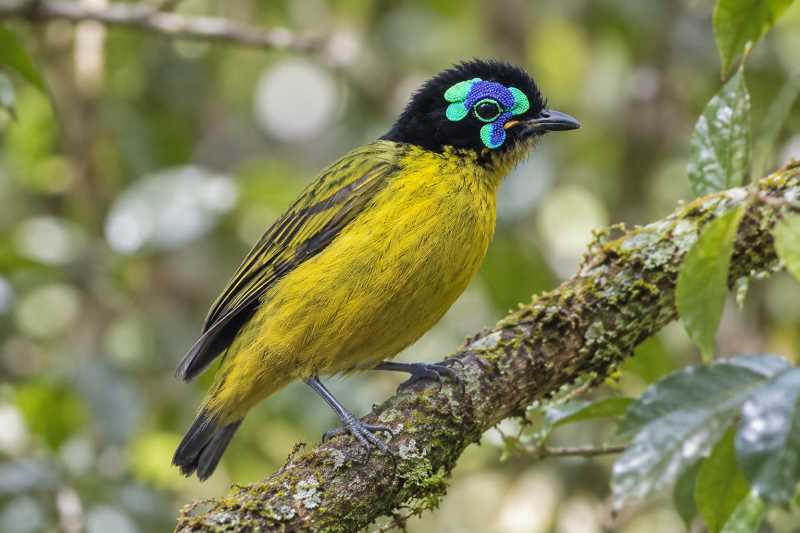
One of the most striking features of Schlegel’s Asity is its brilliant plumage. Males are particularly flamboyant, displaying a vivid green body with a striking blue crown and wattles. The wattles, located around the eyes, are a soft, velvet-like texture and can change color, turning a bright yellow during the breeding season. Females, in contrast, exhibit more subdued hues, primarily olive-green, which provides better camouflage in their forest habitat.
The bird measures approximately 13 to 16 centimeters in length and weighs around 30 to 40 grams. Its compact body and short tail are complemented by strong legs and feet, adapted for navigating the dense forest understory.
Habitat and Distribution
Schlegel’s Asity is endemic to the rainforests of Madagascar, primarily inhabiting the lowland and mid-elevation forests on the eastern side of the island. These birds thrive in humid, dense forest environments where they can remain relatively undisturbed by human activities. Unfortunately, due to deforestation and habitat fragmentation, their natural habitat has been increasingly threatened, raising concerns about their long-term survival.
Behavior and Diet
Schlegel’s Asity is known for its secretive behavior, often remaining hidden among the dense foliage. It is a solitary bird, primarily active during the early morning and late afternoon when it forages for food. The diet of Schlegel’s Asity consists mainly of fruits, berries, and insects, making it an important seed disperser within its ecosystem.
During the breeding season, males become more conspicuous as they engage in elaborate courtship displays to attract females. These displays include a series of calls and physical movements, showcasing the male’s vibrant plumage and colorful wattles. The species practices monogamy, with pairs working together to raise their offspring.
Breeding and Nesting
Breeding typically occurs during the rainy season when food resources are abundant. The female constructs a cup-shaped nest, usually positioned in the fork of a tree branch, using twigs, leaves, and other plant materials. She lays one to three eggs, which are incubated for approximately two weeks. Both parents participate in feeding and caring for the chicks until they are ready to fledge, which occurs about three weeks after hatching.
Conservation Status
The International Union for Conservation of Nature (IUCN) currently lists Schlegel’s Asity as Near Threatened. The primary threat to the species is habitat loss due to deforestation for agriculture, logging, and human settlement expansion. Conservation efforts in Madagascar are crucial to preserve the remaining forests and protect the diverse species that inhabit them.
Several conservation organizations are actively working to safeguard Madagascar’s unique biodiversity. These efforts include establishing protected areas, promoting sustainable land-use practices, and raising awareness about the importance of preserving the island’s natural heritage. Ecotourism also plays a role in conservation, providing economic incentives for local communities to protect their environment.
Conclusion
Schlegel’s Asity is a remarkable example of Madagascar’s rich natural tapestry. Its vibrant appearance and ecological role underscore the importance of preserving the island’s unique habitats. As researchers continue to study this enigmatic bird, there is hope that increased awareness and conservation action will ensure the survival of Schlegel’s Asity and the myriad other species that make Madagascar a global biodiversity hotspot.
In the face of ongoing environmental challenges, protecting Schlegel’s Asity requires concerted efforts from governments, conservationists, and local communities. By valuing and safeguarding the incredible diversity of life on Madagascar, we can help secure a future for Schlegel’s Asity and the countless other species that call this island home.
Related posts