Introduction
Marley’s Golden Mole, scientifically known as Amblysomus marleyi, is a fascinating and elusive creature that belongs to the Chrysochloridae family. These small, burrowing mammals are native to South Africa and are renowned for their unique adaptations to a subterranean lifestyle. Despite their name, golden moles are not closely related to true moles, which belong to the Talpidae family, but share a convergent evolutionary history. This article delves into the intriguing world of Marley’s Golden Mole, covering its physical characteristics, habitat, behavior, diet, and conservation status.
Physical Description
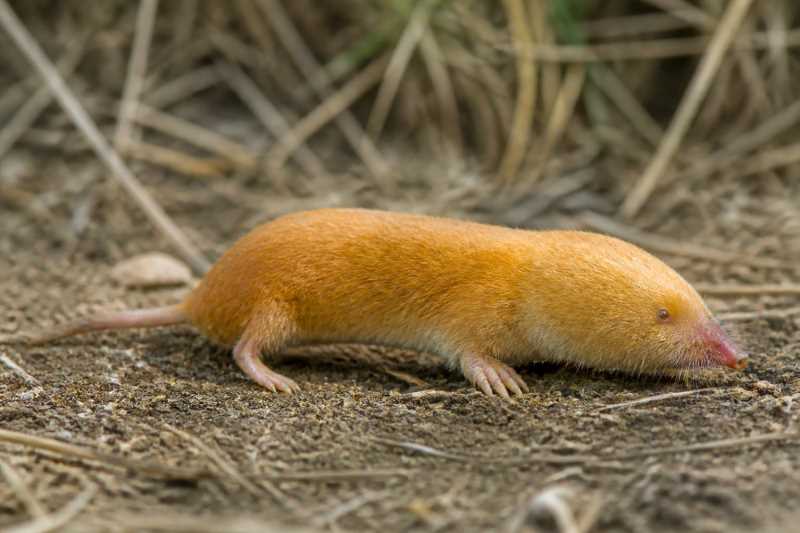
Marley’s Golden Mole is characterized by its small size and highly specialized adaptations for a life spent largely underground. Adults typically measure between 12 to 16 centimeters in length, with a weight ranging from 30 to 50 grams. Their bodies are cylindrical, streamlined, and covered with short, dense fur that is typically a golden or brownish hue, providing excellent camouflage in their sandy habitats.
One of the most distinctive features of Marley’s Golden Mole is its lack of external eyes and ears. Instead, these sensory organs are reduced and covered by skin and fur, adaptations that protect them from dirt and debris while burrowing. Despite their lack of external eyes, these moles are not entirely blind; they can detect light intensity changes, helping them determine day from night.
Their forelimbs are highly adapted for digging, featuring powerful claws that enable them to tunnel efficiently through the soil. The forefeet are equipped with enlarged, spade-like claws, while the hind feet are smaller and used primarily for pushing soil. Marley’s Golden Mole also possesses a leathery, wedge-shaped snout that helps in shoveling through the earth.
Range and Habitat
Marley’s Golden Mole is endemic to South Africa, with its range primarily concentrated in the eastern regions of the country, notably within the provinces of KwaZulu-Natal and Mpumalanga. These moles inhabit a variety of environments, including grasslands, savannas, and even cultivated lands, provided the soil is loose enough to allow for easy burrowing.
They prefer sandy or loamy soils, which facilitate their digging activities, and are often found in areas with a thick layer of leaf litter or grass cover. This cover not only assists in maintaining moisture levels in their subterranean tunnels but also provides insulation against temperature extremes. These habitats are crucial for their survival, as they offer both shelter and a steady supply of invertebrate prey.
Behavior and Diet
Marley’s Golden Mole is primarily nocturnal, spending the majority of the day underground in its burrow system. These burrows serve as protection from predators and harsh environmental conditions. They are solitary creatures, with each mole maintaining its own territory and only coming together for mating purposes.
Their diet primarily consists of insects and other small invertebrates, such as earthworms, termites, and beetle larvae. Marley’s Golden Mole uses its acute sense of hearing and touch to detect and capture prey, employing a hunting strategy that involves creating tunnels near the surface where these invertebrates are abundant.
During feeding, they exhibit a peculiar behavior known as "sand-swimming," where they move through loose soil in search of food. This activity not only helps them forage but also aerates the soil, benefiting the ecosystem by promoting nutrient cycling.
Identification Tips (Field Recognition Cues)
Identifying Marley’s Golden Mole in the wild can be challenging due to its subterranean lifestyle and elusive nature. However, there are several key field recognition cues that can aid in identification:
- Burrow Patterns: Look for characteristic tunnel systems with small, circular entrances. These are often found in sandy or loamy soils.
- Surface Tracks: Occasionally, these moles may leave tracks on the surface, especially after rains, which make the soil softer and easier to navigate.
- Fur Coloration: If sighted above ground, observe the golden or brownish fur, which distinguishes it from other subterranean mammals.
- Behavioral Signs: Listen for faint, rustling sounds in the soil, indicative of their foraging activity.
Conservation Status (with Threats and Protections)
The current conservation status of Marley’s Golden Mole is of concern, primarily due to habitat destruction and fragmentation. The International Union for Conservation of Nature (IUCN) lists this species as Near Threatened. As agricultural expansion and urbanization continue to encroach upon their natural habitats, the availability of suitable living conditions is diminishing.
Additionally, the use of pesticides and chemical fertilizers in farming can adversely affect their invertebrate prey, leading to food scarcity. Climate change also poses a threat by altering the microhabitats these moles rely on for survival.
Conservation efforts are focused on habitat preservation and the implementation of sustainable land-use practices. Protected areas and nature reserves in South Africa play a crucial role in safeguarding the remaining populations of Marley’s Golden Mole. Public awareness campaigns and research initiatives are also essential in fostering a better understanding of the species and its ecological importance.
Frequently Asked Questions
Q1: What adaptations help Marley’s Golden Mole live underground?
A1: Marley’s Golden Mole has several adaptations for subterranean life, including reduced eyes and ears covered by skin and fur to protect against dirt, powerful forelimbs with enlarged claws for digging, and a streamlined body that facilitates ease of movement through soil.
Q2: Where can I find Marley’s Golden Mole in the wild?
A2: This species is endemic to South Africa and is primarily found in the eastern regions, especially in provinces like KwaZulu-Natal and Mpumalanga. Look for them in sandy or loamy soils in grasslands, savannas, and occasionally cultivated lands.
Q3: How does Marley’s Golden Mole contribute to the ecosystem?
A3: By burrowing and "sand-swimming," Marley’s Golden Mole aerates the soil, promoting nutrient cycling and improving soil health. They also help control insect populations by feeding on various invertebrates.
Q4: What are the main threats to Marley’s Golden Mole?
A4: The primary threats include habitat destruction due to urbanization and agriculture, pesticide use affecting their prey, and climate change impacting their microhabitats.
Q5: Are there any conservation measures in place for Marley’s Golden Mole?
A5: Yes, conservation efforts focus on habitat preservation, sustainable land-use practices, and establishing protected areas. Public awareness and research initiatives are also crucial for their conservation.
Related posts