Introduction
The Amazon Naked-tailed Armadillo (Cabassous unicinctus) is a fascinating and elusive member of the armadillo family, Dasypodidae. Known for its unique defense mechanisms and distinctive physical characteristics, this species is primarily found in the dense, tropical regions of South America. With its specialized adaptations and ecological significance, the Amazon Naked-tailed Armadillo plays a vital role in its native habitats. This comprehensive guide delves into various aspects of this intriguing mammal, including its physical description, habitat, behavior, and conservation status.
Physical Description
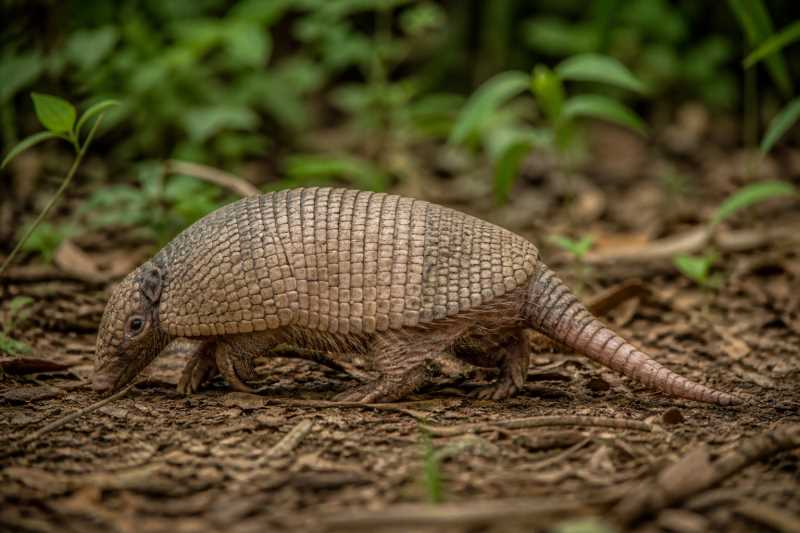
The Amazon Naked-tailed Armadillo is a medium-sized armadillo, typically measuring between 35 to 45 centimeters in length, with a tail that ranges from 10 to 15 centimeters. One of its most distinctive features is its armor, which is composed of bony plates covered by a tough, leathery skin. Unlike other armadillos, the Amazon Naked-tailed Armadillo has a noticeably naked tail, free of scales or armor, which is a key identifying characteristic.
Its armor is segmented, allowing flexibility and enabling the armadillo to curl up partially as a defense mechanism. The coloration of the armor can vary from a light tan to a darker brown, providing some camouflage in the forest floor. The armadillo’s limbs are short but strong, equipped with sharp claws that are ideal for digging.
Range and Habitat
The Amazon Naked-tailed Armadillo is native to the Amazon Basin, with a range that spans several South American countries, including Brazil, Colombia, Ecuador, Peru, and Venezuela. This species thrives in tropical rainforests, where it can find ample cover and food sources. They are typically found in lowland forests, but they can also inhabit savannas and grasslands adjacent to forested areas.
These armadillos prefer areas with soft, moist soil, which facilitates their digging habits. The dense vegetation of the rainforest provides both food and protection from predators, making it an ideal habitat for the Amazon Naked-tailed Armadillo.
Behavior and Diet
Amazon Naked-tailed Armadillos are primarily nocturnal creatures, spending the majority of the day in burrows that they dig themselves. These burrows serve as a refuge from predators and extreme weather conditions. At night, they emerge to forage for food.
Their diet consists mainly of insects and other invertebrates, such as ants, termites, and beetles. They use their keen sense of smell to locate prey and their strong claws to dig into the soil or decaying wood to uncover their meals. Occasionally, they may also consume small vertebrates and plant material, but these are not significant components of their diet.
Identification Tips (Field Recognition Cues)
Identifying the Amazon Naked-tailed Armadillo in the wild can be challenging due to their elusive nature and nocturnal habits. However, there are several cues that can aid in their recognition:
- Naked Tail: As their name suggests, look for the distinctive naked tail, which lacks the armor plating found in other armadillo species.
- Size and Shape: They are medium-sized with a compact, rounded body, typical of most armadillos.
- Coloration: Their armor is usually a light tan to dark brown, blending with the forest floor.
- Burrows: Look for characteristic burrows, which are often found at the base of trees or under dense vegetation.
- Foraging Signs: Evidence of digging or disturbed soil can indicate the presence of an armadillo.
Conservation Status (With Threats and Protections)
The conservation status of the Amazon Naked-tailed Armadillo is currently listed as "Least Concern" by the International Union for Conservation of Nature (IUCN). However, like many species in the Amazon, they face significant threats from habitat destruction and fragmentation due to deforestation.
Agricultural expansion, logging, and infrastructure development are primary drivers of habitat loss in the Amazon Basin. These activities not only reduce the available habitat but also increase human-wildlife conflicts and exposure to poachers.
Efforts to protect their habitat are crucial for the conservation of this species. Protected areas and national parks in the Amazon region offer some refuge, but more extensive conservation measures and sustainable land management practices are needed to ensure their long-term survival.
Frequently Asked Questions
1. What do Amazon Naked-tailed Armadillos eat? Amazon Naked-tailed Armadillos primarily feed on insects such as ants and termites. They use their strong claws to dig into the soil and leaf litter to find food.
2. Where can the Amazon Naked-tailed Armadillo be found? They are native to the Amazon Basin, including countries like Brazil, Colombia, and Peru, primarily inhabiting tropical rainforests and adjacent areas.
3. How does the Amazon Naked-tailed Armadillo protect itself from predators? They rely on their armored shell for protection and can partially curl up to shield their vulnerable underside. They also use burrows to hide from predators.
4. Are Amazon Naked-tailed Armadillos endangered? Currently, they are listed as "Least Concern" by the IUCN, but they face threats from habitat destruction and fragmentation due to deforestation.
5. How can I identify an Amazon Naked-tailed Armadillo in the wild? Look for their distinctive naked tail, rounded body, and tan to brown coloration. Evidence of burrows or digging may also indicate their presence.
Related posts