The Buff-bridled Inca Finch: A Jewel of the Peruvian Andes
The Buff-bridled Inca Finch (Incaspiza laeta), an intriguing bird species, is a testament to the rich biodiversity found in the Andean regions of Peru. This bird, notable for its striking appearance and unique behavioral traits, has piqued the interest of ornithologists and bird enthusiasts alike. In this article, we delve into the ecology, habitat, and conservation of the Buff-bridled Inca Finch, exploring what makes it a jewel of the highlands.
Taxonomy and Classification
Belonging to the family Thraupidae, the Buff-bridled Inca Finch is one of five finch species within the genus Incaspiza. This group of birds is endemic to the western slopes of the Andes in Peru, highlighting the region’s role as a critical hotspot for biodiversity. The specific epithet ‘laeta’ translates to ‘joyful’ or ‘happy,’ a fitting descriptor for this vibrant species.
Physical Characteristics
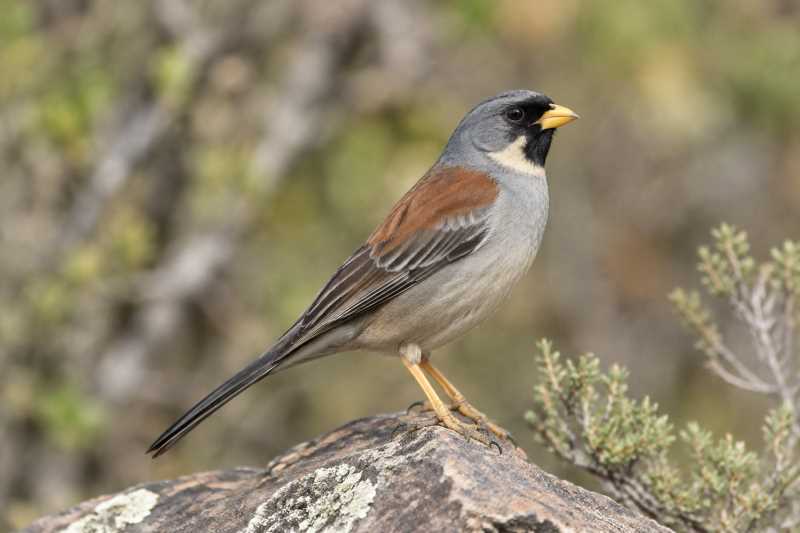
The Buff-bridled Inca Finch is renowned for its striking plumage. It is a small bird, measuring approximately 14 to 15 centimeters in length. Its most distinguishing feature is the buff or orange-brown band that runs across its forehead and cheeks, giving it the ‘bridled’ appearance that its name suggests. The rest of its body is adorned with a mix of gray and olive tones, with a paler underbelly. This coloration provides excellent camouflage against the rocky and arid landscapes it inhabits.
Habitat and Distribution
The Buff-bridled Inca Finch is endemic to Peru, primarily found on the western slopes of the Andes. Its preferred habitat includes arid montane scrub, rocky hillsides, and valleys at elevations ranging from 2,000 to 3,500 meters. This bird’s distribution is closely tied to the unique ecological conditions of the Peruvian Andes, where the dry, shrub-covered terrain provides both food and shelter.
Behavior and Diet
In terms of behavior, the Buff-bridled Inca Finch is known for its terrestrial habits. It is often observed foraging on the ground, sifting through leaf litter and underbrush in search of seeds and small insects. Its diet is omnivorous, consisting mainly of seeds, but also including insects and other small invertebrates, particularly during the breeding season when protein demand is high.
Despite its elusive nature, the Buff-bridled Inca Finch is often heard before it is seen. It is known for its melodious song, a series of clear, whistling notes that can be heard echoing through the valleys. This vocalization plays a key role in territory establishment and mate attraction.
Breeding and Reproduction
The breeding season for the Buff-bridled Inca Finch typically occurs during the austral summer, from November to March. Nesting usually takes place in low shrubs or among rocky crevices, where the female constructs a small cup-shaped nest. Clutch size generally consists of two to three eggs, which are incubated by the female for about two weeks.
Both parents participate in feeding and caring for the young, which fledge approximately two weeks after hatching. The high level of parental investment contributes to the survival of the offspring in the challenging Andean environment.
Conservation Status
The Buff-bridled Inca Finch is currently classified as a species of Least Concern by the International Union for Conservation of Nature (IUCN). However, its restricted range and specialized habitat make it vulnerable to environmental changes. Habitat degradation, driven by agricultural expansion and mining activities, poses a significant threat to its populations.
Conservation efforts are essential to safeguard this species and its habitat. Protecting the montane scrub and arid landscapes of the Peruvian Andes will not only benefit the Buff-bridled Inca Finch but also the myriad of other species that call this region home.
Cultural and Ecological Significance
Birds like the Buff-bridled Inca Finch hold cultural significance for local communities, often symbolizing the beauty and resilience of nature. Additionally, they play vital ecological roles as seed dispersers and insect regulators, contributing to the health and stability of their ecosystems.
Conclusion
The Buff-bridled Inca Finch is more than just a bird; it is a symbol of the rich biodiversity and ecological complexity of the Andes. Understanding and protecting this species requires a collaborative effort, involving local communities, scientists, and conservationists. Through concerted efforts, we can ensure that the Buff-bridled Inca Finch continues to thrive, echoing its joyful song across the highlands of Peru for generations to come.
Related posts