The Enigmatic Beauty of the Crimson-collared Grosbeak (Periporphyrus celaeno)
The avian world is replete with fascinating species that captivate ornithologists and bird enthusiasts alike. Among these is the striking Crimson-collared Grosbeak (Periporphyrus celaeno), a bird that, due to its vibrant appearance and intriguing behaviors, has become a subject of interest for many. This article delves into the intricate details of this remarkable bird, examining its habitat, behavior, diet, and conservation status, while highlighting its place within the broader ecosystem.
Description and Identification
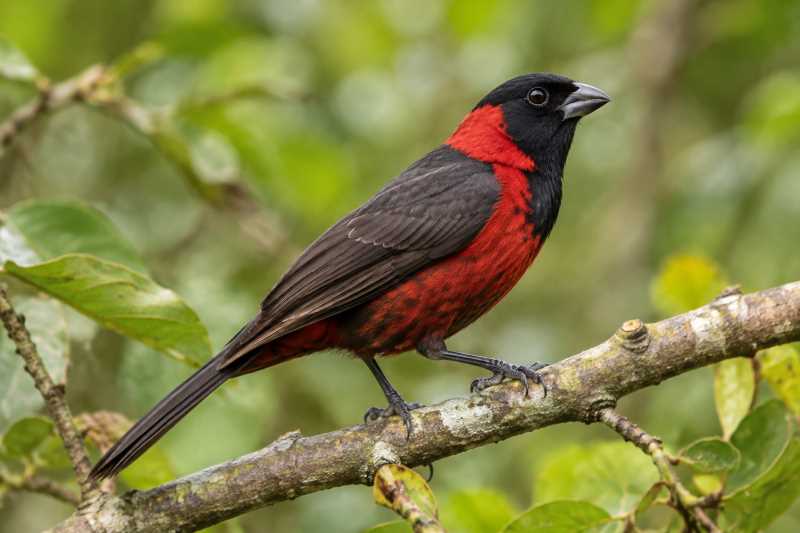
The Crimson-collared Grosbeak is a medium-sized bird belonging to the family Cardinalidae. It is celebrated for its vivid plumage, which is characterized by a glossy black body contrasted by a bright crimson collar that extends to its breast and nape. The males and females exhibit similar coloration, which is relatively uncommon among bird species, where sexual dimorphism often results in different plumage between genders. Their stout bills are adapted for their varied diet, and their robust physique allows them to navigate their dense forest habitats with ease.
These birds typically measure between 20 to 22 centimeters in length, and their wingspan ranges from 30 to 35 centimeters. Their striking appearance is complemented by their melodious and varied song, which adds to their allure among bird watchers and researchers.
Habitat and Distribution
Crimson-collared Grosbeaks are predominantly found in the lowland rainforests of Central America, with their range extending from southern Mexico to western Panama. They inhabit humid forest edges, secondary growths, and occasionally, plantations, which makes them somewhat adaptable to environmental changes, provided that sufficient forest cover remains.
Their preference for dense undergrowth and forest edges means they are often more heard than seen, as they utilize the cover of foliage to avoid predators and human observers. Despite their elusive nature, their striking coloration often gives them away when they venture into more open areas.
Diet and Feeding Behavior
The diet of the Crimson-collared Grosbeak is diverse, reflecting their adaptability and the richness of their habitat. They primarily feed on seeds, fruits, and insects, utilizing their powerful beaks to crack open tough seed shells and access the nutritious contents within. This varied diet allows them to play a crucial role in seed dispersal, aiding in the maintenance of their forest ecosystems.
Insects and other invertebrates form a significant part of their diet, especially during the breeding season when they require additional protein to rear their young. They are known to forage both in the canopy and closer to the forest floor, demonstrating their versatility in exploiting available food resources.
Breeding and Reproduction
The breeding behavior of the Crimson-collared Grosbeak is as fascinating as their appearance. These birds are monogamous, forming pair bonds that last throughout the breeding season. Courtship involves a series of displays where the male showcases his vibrant plumage and vocal abilities to attract a mate.
Nesting usually occurs during the rainy season when food resources are abundant. The nests are typically constructed in dense foliage, providing camouflage and protection from predators. The female lays a clutch of 2 to 4 eggs, which both parents incubate. Once hatched, the chicks are dependent on their parents for food and protection until they fledge and become independent.
Conservation Status
The conservation status of the Crimson-collared Grosbeak is currently classified as Least Concern by the International Union for Conservation of Nature (IUCN). However, like many forest-dependent species, they face threats from habitat loss due to deforestation and land-use changes. Conservation efforts aimed at preserving Central American rainforests are crucial for ensuring the long-term survival of this species.
Efforts to study and conserve these birds are ongoing, with various organizations working to protect critical habitats and raise awareness about the importance of biodiversity. These initiatives are vital, not only for the Crimson-collared Grosbeak but for the myriad of species that share their ecosystem.
Ecological Role and Importance
Beyond their aesthetic appeal, Crimson-collared Grosbeaks play an integral role in their ecosystems. As seed dispersers, they contribute to the regeneration of forest plants, promoting biodiversity and forest health. Their predation on insects helps control pest populations, maintaining a balance within their habitat.
Additionally, these birds serve as indicators of forest health. Their presence or absence can signal changes in the environment, providing valuable insights for conservationists and researchers working to protect these vital ecosystems.
Observational Opportunities
For bird enthusiasts looking to observe the Crimson-collared Grosbeak, several locations within their range offer excellent opportunities. National parks and reserves in countries such as Costa Rica and Panama provide guided tours and bird-watching excursions, where these birds can often be spotted.
Patience and a keen ear are essential for those hoping to catch a glimpse of this elusive species. Listening for their distinctive calls and watching for movement in forest edges can increase the chances of a successful sighting.
Conclusion
The Crimson-collared Grosbeak is a testament to the wonders of avian diversity and the intricate interconnections within ecosystems. As we continue to learn more about this species, it becomes increasingly clear that protecting their habitats is essential for preserving not only their future but the health of our planet’s ecosystems as a whole. By supporting conservation efforts and promoting sustainable practices, we can ensure that the vibrant song and striking plumage of the Crimson-collared Grosbeak continue to grace the forests of Central America for generations to come.
Related posts