Introduction
The Gray Slender Loris (Loris lydekkerianus) is a fascinating primate species native to the lush forests of South Asia. Known for its nocturnal and arboreal lifestyle, this small and agile creature has captivated the interest of scientists and wildlife enthusiasts alike. As a member of the Lorisidae family, the Gray Slender Loris shares its lineage with other lorises, all of which are characterized by their slow and deliberate movements. Despite its relatively small size, this primate plays a significant role in its ecosystem and has adapted well to various environments.
The species was first described by Richard Lydekker in the late 19th century, and it has since been the subject of numerous studies focusing on its behavior, ecology, and conservation status. The Gray Slender Loris is particularly notable for its unique physiological adaptations, which enable it to hunt insects efficiently and thrive in its habitat. This article delves into the various aspects of the Gray Slender Loris, including its physical description, range, habitat, behavior, diet, and conservation status.
Physical Description
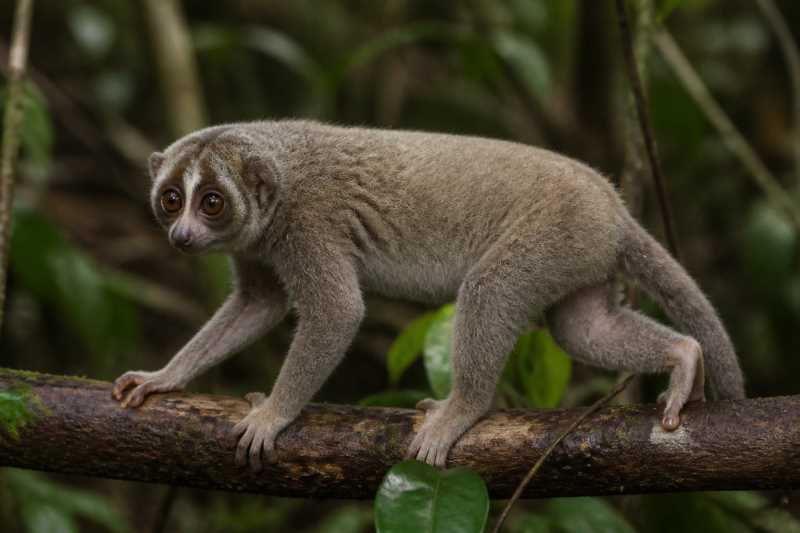
The Gray Slender Loris is a small primate, typically weighing between 85 to 350 grams and measuring about 18 to 26 centimeters in body length. Its most distinctive feature is its large, forward-facing eyes, which provide excellent night vision—a critical adaptation for its nocturnal lifestyle. The eyes are surrounded by a dark ring, which enhances its characteristic "spectacled" appearance.
Its body is covered with soft, dense fur that ranges in color from silvery gray to a more brownish hue, depending on the subspecies and environmental factors. The underbelly is usually lighter, often appearing white or cream-colored. The limbs of the Gray Slender Loris are slender, with hands and feet adapted for grasping branches. The fingers are long and dexterous, with a reduced index finger on each hand, allowing for a stronger grip and better manipulation of objects.
One of the most intriguing aspects of the Gray Slender Loris is its highly flexible neck, which allows it to turn its head nearly 180 degrees. This adaptation is particularly useful when scanning for predators or prey in the dense foliage of its habitat.
Range and Habitat
The Gray Slender Loris is predominantly found in the southern regions of India and Sri Lanka. Its range extends across a variety of ecosystems, including dry deciduous forests, wet evergreen forests, and scrublands. Within these habitats, the species is often associated with dense shrubbery and trees, which provide both food sources and protection from predators.
In India, the Gray Slender Loris is mostly found in the states of Tamil Nadu, Karnataka, and Kerala. In Sri Lanka, it inhabits both the lowland and montane forests, adapting to various altitudes and climatic conditions. The adaptability of this species to different forest types showcases its resilience and ability to exploit a range of ecological niches.
However, despite its adaptability, the Gray Slender Loris is increasingly threatened by habitat loss due to deforestation, agricultural expansion, and urban development. Conservation efforts are critical to preserving the natural habitats of this unique primate and ensuring its survival.
Behavior and Diet
The Gray Slender Loris is primarily nocturnal, spending the daylight hours resting in the safety of dense foliage. At night, it becomes active, engaging in foraging and social interactions. The species is known for its slow and deliberate movements, which are energy-efficient and reduce the risk of detection by predators.
Its diet is omnivorous but heavily leans towards insectivory. The Gray Slender Loris feeds on a variety of insects, including beetles, ants, and termites, which it skillfully captures using its quick reflexes and precise hand movements. It also consumes other small prey, such as lizards and bird eggs, as well as plant matter like fruits and leaves when available.
Socially, the Gray Slender Loris is generally solitary, though it is known to form loose social groups. Communication occurs through vocalizations, olfactory signals, and tactile interactions. The species displays a range of vocal calls, from soft chirps to louder whistles, which are used to maintain contact and signal distress.
Identification Tips (Field Recognition Cues)
Identifying the Gray Slender Loris in the wild can be challenging due to its elusive nature and preference for dense habitats. However, there are several key features to look for:
- Large, reflective eyes: Due to their nocturnal nature, the eyes of the Gray Slender Loris are large and emit a noticeable shine when caught in torchlight at night.
- Coloration: Look for the characteristic silvery-gray to brownish fur, with a lighter underbelly.
- Behavior: Observe the animal’s slow, deliberate movements and its tendency to cling to branches with its strong, grasping hands and feet.
- Vocalizations: Listen for the species’ distinctive calls, which can include soft chirps and whistles.
Spotting a Gray Slender Loris requires patience and a keen eye, as it often blends seamlessly into its environment.
Conservation Status (With Threats and Protections)
The Gray Slender Loris is currently classified as "Least Concern" on the IUCN Red List of Threatened Species. However, this designation does not imply that the species is free from threats. Habitat loss, primarily due to deforestation and agricultural expansion, poses a significant risk to its populations.
In addition to habitat destruction, the Gray Slender Loris faces threats from hunting and illegal wildlife trade. In some areas, it is captured for use in traditional medicine or as an exotic pet, further threatening its numbers in the wild.
Conservation efforts are underway to protect the Gray Slender Loris and its habitat. These include establishing protected areas, promoting reforestation, and raising awareness about the species and its ecological importance. International and local organizations are working together to implement strategies that mitigate human-wildlife conflict and support sustainable land use practices.
Frequently Asked Questions
Why is this species unique?
The Gray Slender Loris is unique due to its nocturnal and arboreal lifestyle, which is supported by adaptations such as large eyes for night vision and a flexible neck that allows it to scan its environment efficiently. Its slow, deliberate movement distinguishes it from other primates and helps it avoid detection by predators.
What are the main threats to the Gray Slender Loris?
The primary threats to the Gray Slender Loris include habitat loss due to deforestation and agricultural expansion, as well as hunting and illegal wildlife trade. Conservation efforts are crucial to addressing these challenges and ensuring the species’ survival.
How can I help in the conservation of the Gray Slender Loris?
You can help by supporting conservation organizations that work to protect the habitats of the Gray Slender Loris and other wildlife. Raising awareness about the species and its ecological role can also contribute to its preservation. Additionally, advocating for policies that promote sustainable land use and forest conservation can make a significant impact.
What role does the Gray Slender Loris play in its ecosystem?
The Gray Slender Loris plays an important role as both a predator and prey within its ecosystem. By feeding on insects and small animals, it helps control their populations, contributing to ecological balance. Its presence also indicates a healthy forest environment.
Related posts