
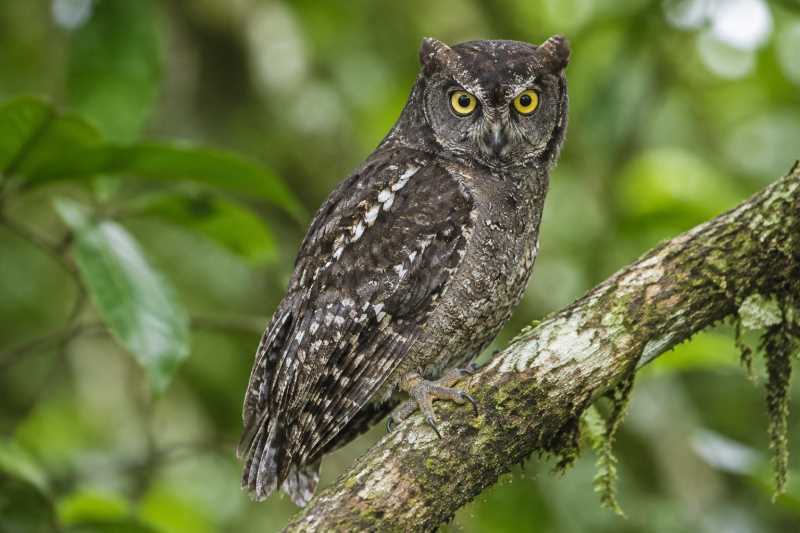
The Enigmatic Biak Scops Owl: A Jewel of Indonesian Avifauna
The Biak Scops Owl (Otus beccarii) is a testament to the marvels of biodiversity found within Indonesia’s archipelagic embrace. This elusive bird, endemic to the Biak Island located in the northern part of Papua, Indonesia, is a species that continues to capture the fascination of ornithologists and birdwatching enthusiasts alike. As with many island species, the Biak Scops Owl offers insights into evolutionary processes and conservation challenges that are both unique and urgent.
Taxonomy and Description
The Biak Scops Owl is a member of the Strigidae family, which encompasses a diverse range of owl species globally. First described by Italian ornithologist Tommaso Salvadori in 1874, it is named in honor of Odoardo Beccari, an Italian botanist and explorer known for his extensive work in Borneo and New Guinea.
This small owl is characterized by its distinctive appearance, which includes mottled brown plumage that provides excellent camouflage against the forest backdrop. Its facial disc is well-defined, with subtle rufous tones, and it possesses tufts of feathers that resemble small ears, a common trait within the Otus genus. The eyes of the Biak Scops Owl are strikingly large and dark, adapted for its nocturnal lifestyle, which involves hunting primarily at night.
Habitat and Ecology
The Biak Scops Owl is strictly endemic to Biak Island, a region known for its rich biodiversity and complex ecosystems. This small island, part of the Schouten Islands, is covered with lowland tropical forests, the primary habitat of the owl. These forests provide a haven for the owl, offering abundant prey, including insects and small vertebrates.
The owl’s reliance on this specific habitat underscores the importance of conservation efforts aimed at preserving the island’s natural environments. The loss of forested areas due to logging, agriculture, and developmental pressures poses significant threats to the owl and other endemic species. As a result, understanding the ecology and habitat requirements of the Biak Scops Owl is crucial for developing effective conservation strategies.
Behavior and Diet
Primarily nocturnal, the Biak Scops Owl is most active during the night, utilizing its acute senses to navigate and hunt in the dark. Its diet consists mainly of insects, which it deftly captures with its talons and sharp beak. The owl’s hunting techniques are a combination of stealth and surprise, often perching silently before swooping down on unsuspecting prey.
During the day, the Biak Scops Owl roosts in dense foliage, remaining still and blending into its surroundings to avoid predators. Its call, a series of soft hoots, is often heard during the night, serving as a means of communication with potential mates and territorial marking.
Conservation Status and Challenges
The Biak Scops Owl is currently listed as Near Threatened on the IUCN Red List, primarily due to habitat destruction and fragmentation. Biak Island, though relatively small, faces significant environmental pressures, including deforestation for timber and agricultural expansion, which encroach upon the owl’s natural habitat.
Conservation efforts are critical to ensuring the survival of this species. Protecting remaining forest areas, promoting sustainable land-use practices, and raising awareness about the owl’s plight are essential steps in safeguarding its future. Furthermore, scientific research into the owl’s population size, distribution, and ecological needs will provide valuable data to inform conservation actions.
The Importance of the Biak Scops Owl
The Biak Scops Owl is more than just an avian curiosity; it is an integral part of the island’s ecological tapestry. As a predator, it plays a vital role in controlling insect populations, thus maintaining the balance within its ecosystem. Its presence also signifies the health of its habitat, serving as an indicator species for the broader environmental condition of Biak Island.
Moreover, the owl holds cultural significance for local communities, often featured in folklore and traditional beliefs. Protecting the Biak Scops Owl thus aligns with preserving the cultural heritage and natural history of the region.
Conclusion
The Biak Scops Owl, with its unique adaptations and restricted range, is a symbol of the intricate biodiversity found on Biak Island. As conservationists and researchers work to protect this enigmatic species, the owl serves as a reminder of the delicate balance between human activity and the natural world. The survival of the Biak Scops Owl hinges on our collective efforts to prioritize conservation, ensuring that this remarkable bird continues to thrive for generations to come.
Related posts


