The Enigmatic Sula Scops Owl: A Hidden Gem of the Indonesian Archipelago
The Sula Scops Owl (Otus sulaensis) is a small, elusive species of owl that is endemic to the Sula Islands, an enchanting cluster of islands located in Indonesia. Known for its cryptic plumage and distinctive call, the Sula Scops Owl remains one of the lesser-known members of the Strigidae family, which includes about 200 species of owls worldwide. Despite its elusive nature, this species offers a fascinating glimpse into the diversity and complexity of avian life in the Indonesian archipelago.
Taxonomy and Description
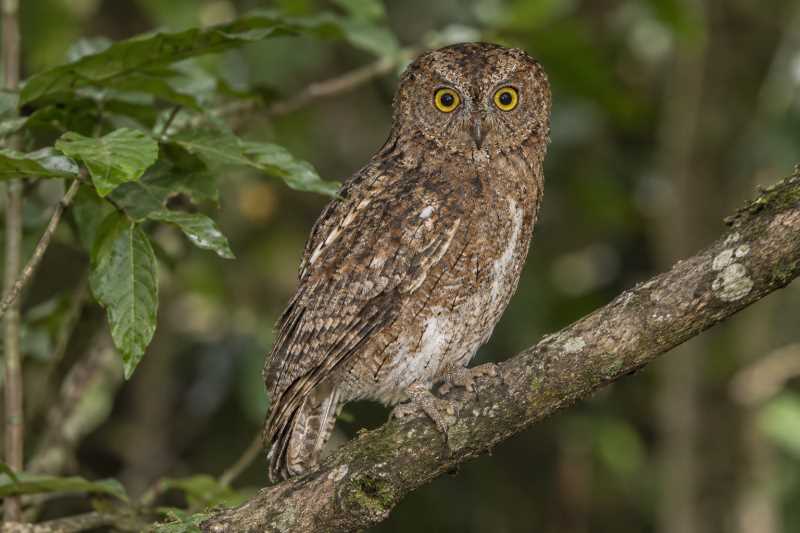
First described by Meyer and Wiglesworth in 1898, the Sula Scops Owl is part of the genus Otus, which encompasses a variety of scops owls known for their small size and characteristic ear tufts. The Sula Scops Owl is particularly noted for its compact body, measuring approximately 19 to 21 centimeters in length. Its plumage is predominantly brown with intricate patterns of streaks and mottles that provide excellent camouflage against the bark of trees in its forest habitat.
One of the owl’s most striking features is its large, forward-facing eyes, which are adapted for nocturnal hunting. These eyes, combined with its acute hearing, make the Sula Scops Owl a proficient predator of the night. Its diet primarily consists of insects and small vertebrates, which it captures with remarkable precision using its sharp talons.
Habitat and Distribution
The Sula Scops Owl is endemic to the Sula Islands, notably found on the islands of Taliabu, Mangole, and Sanana. These islands are part of a unique biogeographical region known as Wallacea, which is characterized by a mix of Asian and Australasian flora and fauna. The owl inhabits subtropical or tropical moist lowland forests, a habitat that offers ample opportunities for hunting and nesting.
Unfortunately, like many species with limited geographic ranges, the Sula Scops Owl faces threats from habitat loss due to deforestation and land conversion for agriculture. The Sula Islands’ forests are undergoing rapid changes, highlighting the need for conservation efforts to ensure the survival of this endemic species.
Behavior and Ecology
The behavior of the Sula Scops Owl is typical of many scops owls. It is primarily nocturnal, spending the daylight hours roosting in the dense foliage of trees. At night, it becomes active, using its keen vision and hearing to hunt for food. The owl’s call, a series of short, consistent hoots, is often the only indication of its presence in the dense forest.
Breeding habits of the Sula Scops Owl are not well-documented, but it is believed to follow patterns similar to other species within the Otus genus. These owls typically nest in tree cavities or abandoned nests of other birds, where they lay a small clutch of eggs. Both parents are involved in rearing the young, providing food and protection until the fledglings are ready to leave the nest.
Conservation Status
The Sula Scops Owl is currently listed as Least Concern by the International Union for Conservation of Nature (IUCN), but this classification does not imply that the species is free from threats. The owl’s limited range makes it particularly susceptible to environmental changes and habitat loss. Conservationists emphasize the importance of preserving the natural habitats of the Sula Islands to safeguard the future of this and other endemic species.
Efforts to protect the Sula Scops Owl and its habitat are ongoing, with initiatives aimed at promoting sustainable land use practices and raising awareness about the unique biodiversity of the Sula Islands. These measures are crucial not only for the survival of the Sula Scops Owl but also for the broader ecological health of the region.
Conclusion
The Sula Scops Owl stands as a testament to the rich biodiversity found in the Indonesian archipelago. Despite its relatively low profile compared to other avian species, it plays a vital role in the ecosystem of the Sula Islands. As with many island species, its future hinges on the delicate balance between human activity and conservation efforts.
To ensure that future generations can marvel at the beauty and mystery of the Sula Scops Owl, it is imperative that we continue to prioritize conservation and research in this region. By doing so, we not only protect a unique species but also preserve an irreplaceable part of our planet’s natural heritage.
Related posts