The Enigmatic Mindoro Scops Owl: A Jewel of Philippine Biodiversity
The Philippines, an archipelago rich in biodiversity, is home to a myriad of unique wildlife species. Among its avian treasures is the Mindoro Scops Owl (Otus mindorensis), a small, elusive bird that continues to captivate ornithologists and bird enthusiasts alike. Endemic to the island of Mindoro, this owl is not only a symbol of the island’s rich natural heritage but also a significant subject in conservation efforts due to its vulnerable status.
Description and Characteristics
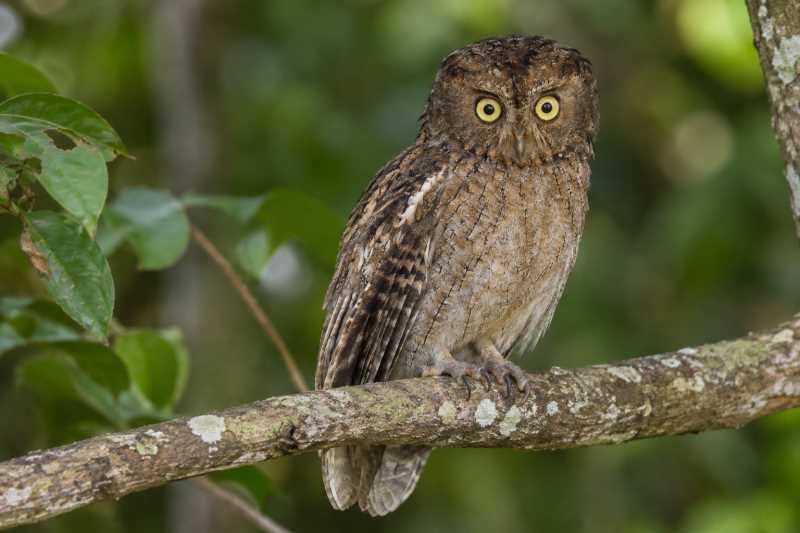
The Mindoro Scops Owl is a relatively small owl, measuring about 20-25 centimeters in length. It exhibits a striking plumage that blends seamlessly with its forest habitat. The bird’s upperparts are predominantly brown with intricate patterns of darker streaks and spots, providing excellent camouflage among the trees. Its facial disc is well-defined with a border of darker feathers, and it possesses prominent ear tufts that give it a distinctive, alert appearance.
This species’ eyes are large and piercing, adapted for its nocturnal lifestyle, allowing it to hunt effectively at night. Its call, a series of soft hoots, is often the only indication of its presence in the dense foliage. These vocalizations are crucial for communication during the breeding season, helping to establish territory and attract mates.
Habitat and Distribution
The Mindoro Scops Owl is exclusively found in the humid tropical forests of Mindoro, an island located in the western part of the Philippines. It inhabits both primary and secondary forests, often favoring areas with dense canopy cover that offer abundant prey and ample nesting sites. Unfortunately, these habitats are increasingly under threat from human activities, including logging, agriculture, and urban development.
Historically, Mindoro was covered in lush forests, home to a wide variety of flora and fauna. However, deforestation has significantly reduced these forested areas, leading to habitat fragmentation and posing a severe threat to the island’s endemic species, including the Mindoro Scops Owl.
Diet and Behavior
Primarily nocturnal, the Mindoro Scops Owl is a skilled predator, feeding on a diet that includes insects, small mammals, and other small vertebrates. Its hunting strategy relies on stealth and surprise, aided by its excellent hearing and silent flight. The owl’s ability to rotate its head up to 270 degrees allows it to locate prey with precision even in low-light conditions.
During the day, the owl roosts quietly in dense foliage, relying on its cryptic plumage for protection against potential predators. Socially, the Mindoro Scops Owl is largely solitary outside of the breeding season, which typically occurs during the dry months. Nests are often situated in tree cavities or dense thickets, where the female lays a clutch of one to two eggs.
Conservation Status and Efforts
The International Union for Conservation of Nature (IUCN) currently lists the Mindoro Scops Owl as Vulnerable, primarily due to habitat loss and fragmentation. The ongoing deforestation on Mindoro Island is a critical concern, as it not only limits the available habitat for the owls but also isolates populations, reducing genetic diversity and increasing the risk of inbreeding.
Conservation efforts are underway to protect the remaining forest habitats on Mindoro. Local and international organizations are working to establish protected areas and promote sustainable land-use practices. Public awareness campaigns aimed at highlighting the importance of preserving Mindoro’s unique biodiversity are crucial for garnering support from both local communities and policymakers.
The Importance of Conservation
Protecting the Mindoro Scops Owl is not just about preserving a single species; it is about maintaining the ecological balance within its habitat. As a predator, the owl plays a vital role in controlling the populations of its prey, contributing to the health and stability of the forest ecosystem.
Moreover, the Mindoro Scops Owl serves as an ambassador for the island’s rich natural heritage, drawing attention to the broader conservation challenges faced by Mindoro and the Philippines as a whole. By prioritizing the protection of endemic species like the Mindoro Scops Owl, conservationists are safeguarding the intricate web of life that sustains the island’s ecosystems.
In conclusion, the Mindoro Scops Owl is a testament to the unique biodiversity of the Philippines and a reminder of the urgent need to protect our natural world. Through concerted conservation efforts and increased awareness, there is hope that this enigmatic bird will continue to thrive in its native forest home for generations to come.
Related posts