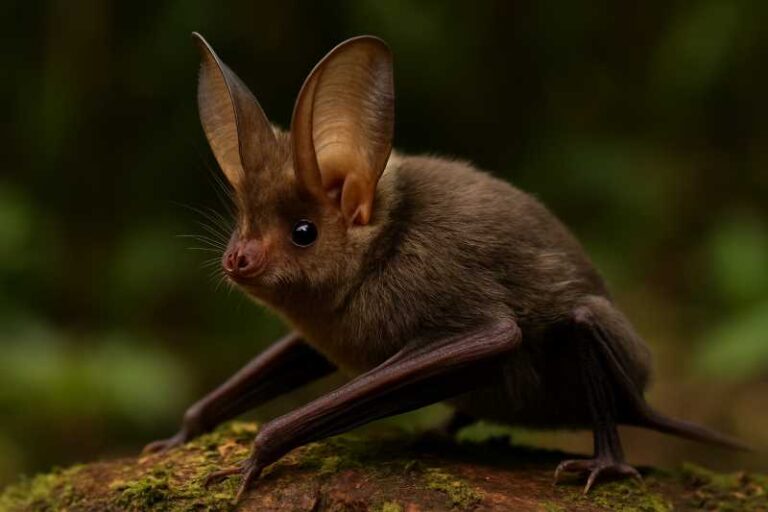
Caracal (Caracal caracal)
Introduction
The caracal (Caracal caracal) is a fascinating and agile member of the feline family that has captured the interest of wildlife enthusiasts and researchers alike. Known for its striking appearance and remarkable adaptability, the caracal is a medium-sized wild cat that inhabits various landscapes across Africa, the Middle East, and parts of Asia. This article delves into the various aspects of the caracal’s life, including its physical characteristics, habitat, behavior, diet, and conservation status. By understanding these elements, we can appreciate the uniqueness of this species and the importance of its preservation in the wild.
Physical Description
The caracal is distinguished by its sleek, athletic build, which facilitates its prowess as a hunter. Typically weighing between 8 to 19 kilograms (18 to 42 pounds) and measuring 40 to 50 centimeters (16 to 20 inches) at the shoulder, the caracal is larger than a domestic cat but smaller than a lynx. Its most distinctive features are its long, tufted black ears, which can grow up to 5 centimeters (2 inches) in length. These tufts aid in communication and are thought to enhance hearing by funneling sound into the ears.
The caracal’s coat varies in color from tawny-brown to reddish-brown, providing excellent camouflage in its natural habitat. The underparts are lighter, and some individuals may have faint spots on their bellies. The face is adorned with striking facial markings, including a pale chin and a line of black that extends from the eyes to the nose. The eyes themselves are a piercing golden or copper color, with pupils that contract to vertical slits.
Range and Habitat
Caracals are widely distributed across sub-Saharan Africa, the Middle East, Central Asia, and parts of India. They are highly adaptable and can thrive in a variety of environments, including savannas, woodlands, semi-deserts, and scrub forests. Although they prefer areas with some degree of cover, such as bushes or tall grass, they can also be found in more arid regions where vegetation is sparse.
Their adaptability to diverse habitats is largely due to their opportunistic hunting practices and ability to survive with limited water. They tend to avoid dense forests and true deserts, as these environments pose challenges to their hunting strategies and survival.
Behavior and Diet
Caracals are solitary and primarily nocturnal, although they may be active during the early morning or late afternoon. These cats are territorial, with males typically covering larger ranges than females. They communicate through scent markings, vocalizations, and visual signals.
The caracal’s diet is varied, consisting mainly of small to medium-sized mammals, birds, and reptiles. Their agility allows them to leap up to 3 meters (10 feet) in the air to catch flying birds. Rabbits, hares, and small antelope are common prey, but caracals have been known to take down animals as large as adult springbok. They are adept at scavenging and will also consume carrion when available.
Identification Tips (Field Recognition Cues)
Recognizing a caracal in the wild involves noting several key features:
- Ears: Look for long, black tufted ears that are distinctive and unique to the species.
- Coloration: Observe the uniform tawny to reddish-brown coat, with lighter underparts.
- Facial Markings: Check for the characteristic black markings on the face, especially the line extending from the eyes to the nose.
- Size: Note the caracal’s size, which is larger than a domestic cat but smaller than a lynx.
- Behavior: Watch for solitary behavior and agile movements, particularly in areas with available cover.
Conservation Status (with Threats and Protections)
The caracal is currently classified as Least Concern by the International Union for Conservation of Nature (IUCN). However, regional populations may face threats that could affect their survival. Habitat loss due to agricultural expansion, urban development, and deforestation is a significant threat. Additionally, caracals are sometimes hunted or trapped in retaliation for preying on livestock.
Conservation efforts include legal protection in several countries, habitat preservation, and initiatives to mitigate human-wildlife conflict. Public awareness and education programs are also crucial to ensuring the long-term survival of this species.
Frequently Asked Questions
- What is the lifespan of a caracal in the wild?
Caracals typically live for about 12 years in the wild. In captivity, they can live up to 17 years due to controlled environments and veterinary care.
- How do caracals communicate with each other?
Caracals communicate through vocalizations such as growls, hisses, and purrs, as well as through scent markings and body language, including ear movements and tail flicks.
- Are caracals dangerous to humans?
Caracals are generally not dangerous to humans and prefer to avoid contact. They may become defensive if cornered or threatened, but attacks on humans are extremely rare.
- How do caracals hunt their prey?
Caracals rely on their stealth, speed, and powerful hind legs to stalk and ambush prey. They are capable of leaping high into the air to catch birds and use their sharp claws and teeth to capture and kill animals.
- What adaptations help caracals survive in arid environments?
Caracals have adaptations such as the ability to tolerate high temperatures and survive on minimal water intake. They obtain moisture from their prey and can conserve water by producing concentrated urine.
By understanding these aspects of the caracal’s life, we can appreciate this remarkable species and the role it plays in its ecosystem. Conservation efforts are vital to ensuring that caracals continue to thrive in the wild, maintaining the biodiversity of their habitats.
Related posts