Introduction
The Asian Golden Cat (Catopuma temminckii) is a fascinating and elusive wild cat species native to the forests of Southeast Asia. Named in honor of Dutch zoologist Coenraad Jacob Temminck, this medium-sized felid is a vital component of its ecosystem, playing a pivotal role as both predator and prey. Despite its striking appearance and ecological significance, the Asian Golden Cat remains relatively understudied compared to other felids, largely due to its secretive nature and the dense habitats it occupies.
In this comprehensive article, we explore the various facets of the Asian Golden Cat’s life, from its physical characteristics and behavior to its conservation status. This information is not only of interest to wildlife enthusiasts and researchers but also critical for informing conservation efforts aimed at preserving this enigmatic species.
Physical Description
The Asian Golden Cat is a medium-sized wild cat that exhibits considerable variation in color and patterning. Typically, its fur ranges from a rich golden hue to a more subdued gray or brown, depending on the geographic location and individual genetics. Some individuals even display melanistic forms, appearing almost entirely black, which is thought to provide advantages in their shadowy forest habitats.
Adult Asian Golden Cats generally weigh between 9 to 16 kilograms (20 to 35 pounds) and measure up to 105 centimeters (about 41 inches) in body length, excluding the tail, which itself can add an additional 40 to 57 centimeters (16 to 22 inches). The species is characterized by a sturdy build, with a muscular body and strong limbs adapted for climbing and hunting.
Noteworthy features include a relatively small head with rounded ears, and a distinctive white line running from the eyes to the top of the head. The eyes are large and set forward, indicative of the cat’s predatory lifestyle. Its retractable claws and sharp teeth further underline its role as a formidable hunter.
Range and Habitat
The Asian Golden Cat’s range spans across several Southeast Asian countries, including India, Nepal, Bhutan, Bangladesh, Myanmar, Thailand, Malaysia, Laos, Cambodia, Vietnam, and southern China. Its presence in these regions is, however, patchy and often limited to protected areas due to habitat loss and human encroachment.
This species primarily inhabits tropical and subtropical forests, ranging from lowland rainforests to montane forests at elevations of up to 3,000 meters (9,800 feet). It prefers dense forest cover, which provides ample opportunities for stealth and ambush hunting. The Asian Golden Cat is also known to inhabit secondary forests and occasionally ventures into more open habitats like grasslands or shrublands, particularly when searching for food.
Behavior and Diet
Asian Golden Cats are predominantly solitary animals, with individuals maintaining large home ranges that they mark with scent markings and vocalizations. They are known to be both crepuscular and nocturnal, though they may also be active during daylight hours, depending on prey availability and environmental conditions.
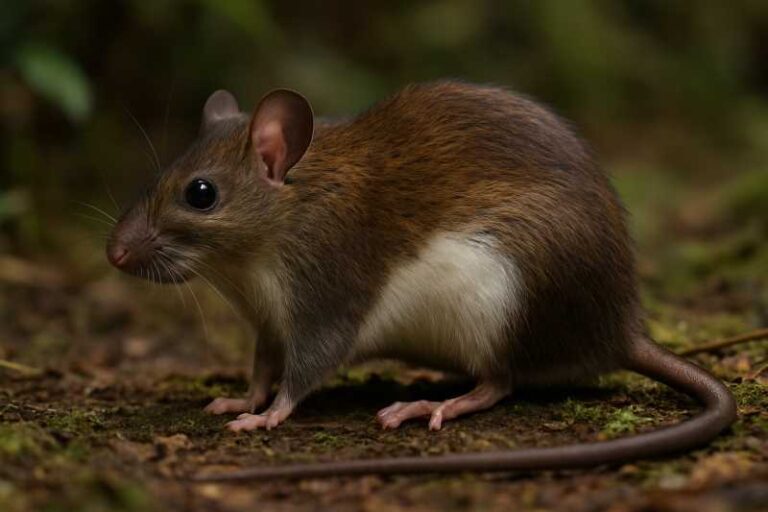
Their diet is diverse and opportunistic, consisting mainly of small to medium-sized mammals such as rodents, hares, and small deer. Birds, reptiles, and insects also form part of their diet. They are skilled hunters, employing a combination of stealth, patience, and power to capture prey, often from a hidden vantage point.
The species is well adapted to climbing and can pursue arboreal prey, though it primarily hunts on the ground. Its powerful hind limbs allow it to make significant leaps, both horizontally and vertically, aiding in capturing agile prey.
Identification Tips (Field Recognition Cues)
Identifying the Asian Golden Cat in the wild can be challenging due to its elusive nature and the variability in its coat color. However, there are several key features and behaviors that can aid in its identification:
- Color Variability: Look for the characteristic golden to grayish-brown coat, though be aware of potential melanistic individuals.
- Distinct Markings: Note the white lines running from the inner corners of the eyes to the top of the head, a key distinguishing feature.
- Size and Build: Observe the medium size, robust build, and relatively short tail compared to other wild cats.
- Habitat: Focus search efforts in dense forests and along forest edges, particularly in the early morning or late afternoon when the cat is most active.
- Behavior: Stay alert for signs of scent marking or vocalizations, which can indicate the presence of an Asian Golden Cat in the vicinity.
Conservation Status (with Threats and Protections)
The International Union for Conservation of Nature (IUCN) currently lists the Asian Golden Cat as "Near Threatened". The primary threats to the species include habitat destruction due to logging and agricultural expansion, poaching for the illegal wildlife trade, and human-wildlife conflict.
Deforestation is particularly detrimental, as it reduces the available habitat and prey base for the Asian Golden Cat. Poaching is driven by demand for its beautiful pelt, as well as body parts used in traditional medicine. Additionally, as human populations expand into forested areas, encounters between humans and Asian Golden Cats become more frequent, often leading to retaliatory killings.
Conservation efforts are focused on habitat protection and restoration, as well as increasing awareness and education about the species. Enforcement of wildlife protection laws is crucial, as is the establishment of more protected areas within the cat’s range. Research into the species’ ecology and behavior is also essential for informing effective conservation strategies.
Frequently Asked Questions
1. What does the Asian Golden Cat eat?
The Asian Golden Cat is a carnivorous predator, primarily feeding on small to medium-sized mammals such as rodents, hares, and small deer. It also consumes birds, reptiles, and insects, depending on availability. The cat employs a combination of stealth and power to capture its prey.
2. Where can the Asian Golden Cat be found?
The Asian Golden Cat is native to Southeast Asia, with a range that includes countries like India, Nepal, Bhutan, Bangladesh, Myanmar, Thailand, Malaysia, Laos, Cambodia, Vietnam, and southern China. It prefers dense tropical and subtropical forests but can also be found in secondary forests and occasionally in more open habitats.
3. How can you identify an Asian Golden Cat?
Identifying an Asian Golden Cat involves looking for its characteristic golden to grayish-brown coat, white facial markings, and medium-sized, robust build. It is typically found in dense forests and is most active during dawn and dusk. Observing its behavior, such as scent marking and vocalizations, can also aid in identification.
4. Is the Asian Golden Cat endangered?
The Asian Golden Cat is classified as "Near Threatened" by the IUCN. It faces threats from habitat destruction, poaching, and human-wildlife conflict. Conservation efforts are underway to protect its habitat and reduce poaching through legal enforcement and education.
5. What are the main threats to the Asian Golden Cat?
The primary threats to the Asian Golden Cat include habitat loss due to deforestation and agricultural expansion, poaching for its pelt and use in traditional medicine, and conflicts with humans as their habitats overlap. Conservation strategies focus on habitat protection and law enforcement to mitigate these threats.
Related posts