African Golden Cat: A Fascinating Felid of the African Rainforests
Introduction
The African Golden Cat (Caracal auratus) is a mysterious and elusive feline species native to the African continent. Despite its striking appearance and significant role in the ecosystem, it remains relatively understudied compared to other big cats. This species is primarily found in the dense rainforests of Central and West Africa, where it plays a crucial role as a top predator. Due to its secretive nature and the challenging terrains it inhabits, much about the African Golden Cat remains shrouded in mystery, making it a fascinating subject for both researchers and wildlife enthusiasts.
Physical Description
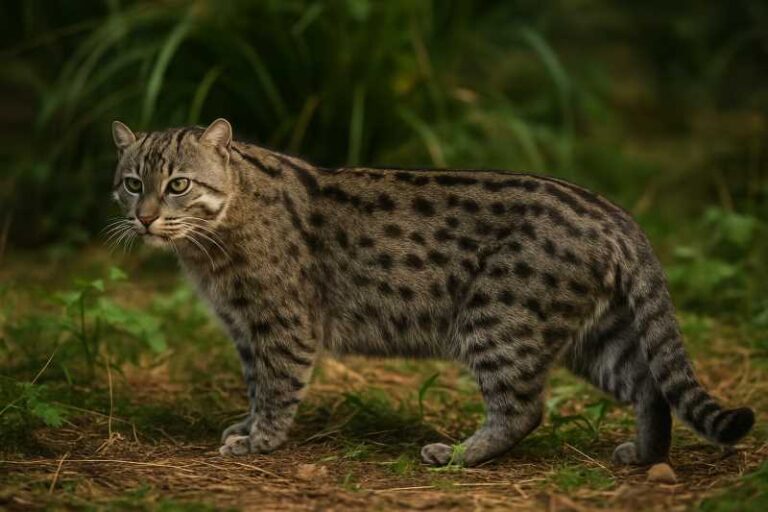
The African Golden Cat is a medium-sized feline, roughly twice the size of a domestic cat, weighing between 5.5 to 16 kilograms (12 to 35 pounds) and measuring about 61 to 101 centimeters (24 to 40 inches) in length, excluding the tail, which adds another 16 to 46 centimeters (6.3 to 18 inches). Its coat varies in color from reddish-brown to grey, with some individuals exhibiting spots or stripes, particularly on the belly and legs. The fur is dense and soft, providing insulation against the cool and humid forest environment.
A notable feature of the African Golden Cat is its robust and muscular build, which aids in hunting. It has a broad head, short rounded ears with black tips, and large, expressive eyes that enhance its nocturnal vision. The species exhibits sexual dimorphism, with males typically being larger than females.
Range and Habitat
The African Golden Cat is endemic to the equatorial forests of Africa, with its range extending from Senegal and Sierra Leone in the West to Uganda and Kenya in the East. It thrives in a variety of forested habitats, including lowland rainforests, montane forests, bamboo forests, and sometimes in gallery forests bordering savannas. The species shows a strong preference for areas with dense undergrowth, which provides cover for hunting and protection from larger predators.
The cat’s habitat selection is closely linked to the presence of primary prey species, such as rodents and small antelopes, as well as the availability of water sources. However, habitat fragmentation and deforestation pose significant threats to its range, leading to isolated populations that may face increased risks of inbreeding and local extinction.
Behavior and Diet
The African Golden Cat is predominantly solitary and territorial, with individuals marking their territories using scent markings and vocalizations. It is primarily crepuscular and nocturnal, although it may be active during the day, especially in undisturbed areas.
This feline is an opportunistic carnivore, with a diet that includes a wide array of prey species. It predominantly hunts rodents, small antelopes like duikers, birds, and even reptiles. The African Golden Cat is known for its stealth and agility, using a combination of stalking and pouncing techniques to capture its prey. Its powerful build allows it to take down animals larger than itself, and it occasionally scavenges carrion.
Identification Tips (Field Recognition Cues)
Identifying an African Golden Cat in the wild can be challenging due to its elusive nature and the dense habitats it occupies. However, certain features can aid in its recognition:
- Coat Color and Pattern: Look for a solid-colored coat ranging from reddish-brown to grey, sometimes with faint spots or stripes.
- Size and Build: Note the medium size and muscular build, which is more robust than a domestic cat.
- Ears and Eyes: The short, rounded ears with black tips and large eyes are distinctive features.
- Behavior: Observing solitary or secretive behavior, especially in dense forest areas, can indicate its presence.
Conservation Status (with Threats and Protections)
The African Golden Cat is currently classified as Near Threatened by the International Union for Conservation of Nature (IUCN). The main threats to its survival include habitat loss due to logging, agriculture, and human settlement expansion, as well as hunting and poaching for bushmeat and traditional medicine.
Conservation efforts for the African Golden Cat focus on habitat protection and anti-poaching measures. Protected areas within its range, such as national parks and wildlife reserves, play a crucial role in safeguarding its habitat. Additionally, raising awareness and promoting community-based conservation initiatives are vital for ensuring the species’ long-term survival.
Frequently Asked Questions
- What is the African Golden Cat’s primary habitat?
The African Golden Cat primarily inhabits dense rainforest regions in Central and West Africa, preferring areas with thick undergrowth that provide cover for hunting and protection.
- Are African Golden Cats endangered?
The African Golden Cat is classified as Near Threatened, facing threats from habitat loss and poaching. Conservation efforts focus on habitat preservation and anti-poaching initiatives.
- How can you identify an African Golden Cat in the wild?
Identifying an African Golden Cat involves looking for its medium size, muscular build, solid-colored coat with potential spots or stripes, and its preference for dense, forested areas.
- What does the African Golden Cat eat?
Primarily a carnivore, the African Golden Cat’s diet includes rodents, small antelopes, birds, and reptiles, showcasing its opportunistic hunting behavior.
- Why is the African Golden Cat important to the ecosystem?
As a top predator, the African Golden Cat plays a crucial role in maintaining the balance of its ecosystem by controlling prey populations and contributing to biodiversity.
Related posts