The White-tufted Grebe: A Fascinating Dive into Its Ecology and Conservation
The White-tufted Grebe, scientifically known as Rollandia rolland, is a captivating aquatic bird that belongs to the family Podicipedidae. This bird species is predominantly found in the southern regions of South America, particularly in Argentina, Chile, Uruguay, and the Falkland Islands. Known for its striking appearance and remarkable diving abilities, the White-tufted Grebe plays a crucial role in the biodiversity of its habitats.
Description and Identification
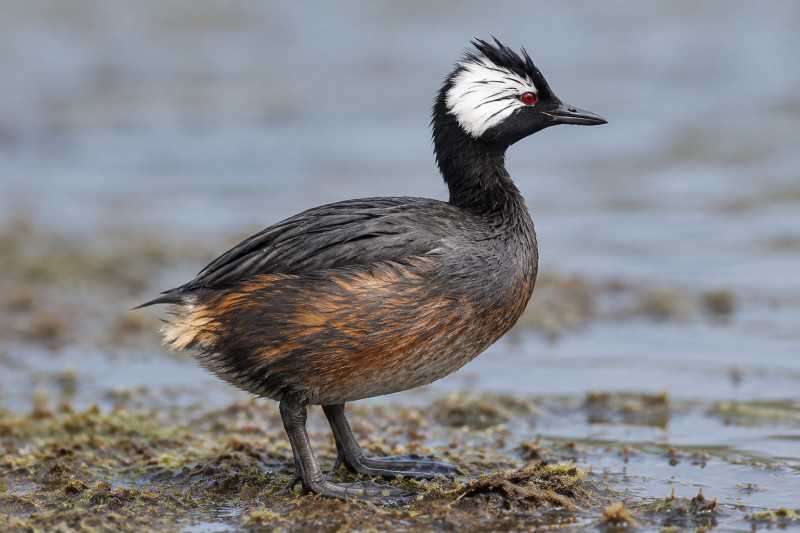
The White-tufted Grebe is a small waterbird, measuring approximately 28 to 32 centimeters in length. It features a distinctive plumage that makes it easily identifiable among birdwatchers and researchers alike. The adult grebe displays a unique black and white coloration with a glossy black head and neck. The most notable feature, however, is the conspicuous white tufts located on each side of its head, which often appear as striking white patches in contrast to its darker plumage. The back and wings of the bird are predominantly dark brown to black, while the underparts are white, providing an elegant contrast.
Its red eyes and sharply pointed beak contribute to its distinctive appearance, making it a favorite subject for photographers and bird enthusiasts. Juvenile grebes, on the other hand, tend to have duller plumage, with less pronounced white tufts and a browner coloration, gradually acquiring the adult plumage as they mature.
Habitat and Distribution
The White-tufted Grebe is primarily a freshwater bird, thriving in a variety of aquatic environments such as lakes, marshes, and slow-moving rivers. It tends to prefer habitats with abundant aquatic vegetation, which offers both food resources and protection from predators. These grebes are highly adaptable and can be found at altitudes ranging from sea level to high Andean lakes.
In terms of geographical distribution, the species is widely spread across South America. It is commonly sighted in the Patagonian region, the Andes, as well as in the wetlands of the Pampas. The species is also present on the Falkland Islands, showcasing its preference for both mainland and island habitats.
Behavior and Ecology
White-tufted Grebes are highly skilled divers, utilizing their specialized lobed feet to propel themselves underwater in search of food. Their diet mainly consists of aquatic invertebrates, small fish, and occasionally plant matter. These birds are known for their remarkable ability to stay submerged for extended periods, which not only aids in foraging but also in evading predators.
Breeding typically occurs during the spring and summer months, with the construction of floating nests using vegetation. These nests are often anchored to reeds or other aquatic plants to prevent them from drifting away. The grebes are attentive parents, with both males and females participating in incubation and rearing of the young. The chicks are precocial, meaning they are relatively mature and mobile from the moment they hatch, allowing them to leave the nest shortly after birth.
Conservation Status and Threats
The International Union for Conservation of Nature (IUCN) currently classifies the White-tufted Grebe as a species of Least Concern. Despite this relatively stable status, the species faces several threats that could impact its population in the future. Habitat destruction, primarily due to agricultural expansion, urban development, and pollution, poses a significant risk to their freshwater environments.
Additionally, climate change is a growing concern, as it may lead to alterations in water levels and temperature, affecting the availability of suitable habitats. Conservation efforts are crucial to mitigating these threats and ensuring the long-term survival of the species. Protecting wetland habitats and promoting sustainable land use practices are vital steps in preserving the ecological balance of the regions where these birds reside.
Conclusion
The White-tufted Grebe is an intriguing species that enriches the biodiversity of South America’s aquatic ecosystems. With its striking appearance and adept diving skills, it captures the fascination of bird enthusiasts and researchers alike. While currently not at immediate risk, proactive conservation measures are essential to safeguarding its habitats against the growing threats of habitat destruction and climate change. By understanding and supporting the ecological needs of the White-tufted Grebe, we can help ensure the continued presence of this remarkable bird in our natural world.
"The White-tufted Grebe: A Fascinating Dive into Its Ecology and Conservation" serves not only as an exploration of this species but also as a call to action for preserving the delicate balance of ecosystems that these birds call home.
Related posts