Asian Elephant (Elephas maximus): A Comprehensive Guide
Introduction
The Asian elephant (Elephas maximus) is a majestic creature revered in various cultures across Asia. As a keystone species, it plays a crucial role in maintaining the biodiversity of its natural habitat. This article delves into the various aspects of the Asian elephant, from its physical characteristics and behavior to its current conservation status.
Physical Description
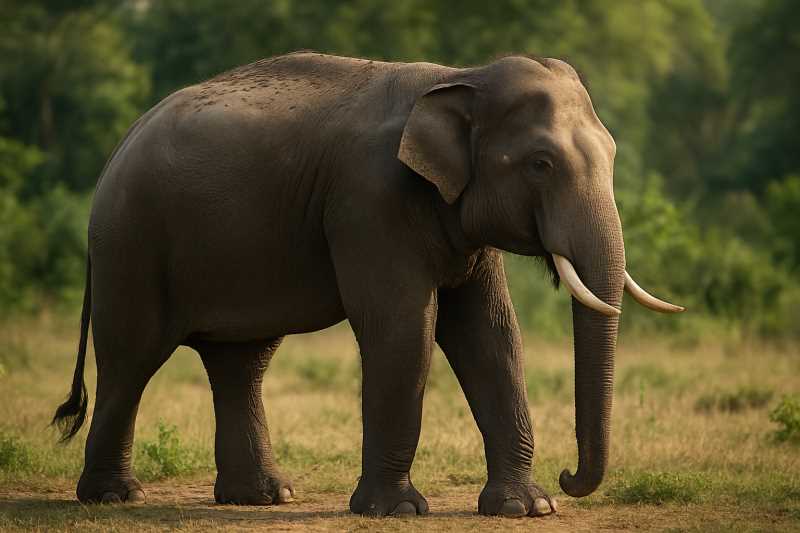
Asian elephants are the largest land mammals in Asia, distinguished by several unique features. While smaller than their African relatives, Asian elephants exhibit a more rounded body and smaller, rounded ears. Males typically stand between 2.5 to 3 meters tall at the shoulder and weigh between 2,700 to 4,000 kilograms. Females are generally smaller. One of the most notable characteristics is the single finger-like projection on the upper lip of their trunk, which differs from the two projections found in African elephants.
Their skin is generally gray with patches of pink on the forehead, ears, and trunk, attributed to depigmentation. Asian elephants’ trunks are highly versatile, serving as a tool for feeding, drinking, and social interactions. Unlike African elephants, only some male Asian elephants grow tusks, known as "tuskers." Females and many males have tiny tusks or none at all, known as "tushes."
Range and Habitat
Asian elephants are distributed across 13 countries in South and Southeast Asia, including India, Sri Lanka, Nepal, Bhutan, Bangladesh, Myanmar, Thailand, Laos, Cambodia, Vietnam, Malaysia, Indonesia, and China. They inhabit diverse environments, ranging from grasslands and dry deciduous forests to tropical evergreen forests.
These elephants require significant space for foraging and migration, often traveling long distances to find food and water. Unfortunately, habitat fragmentation due to agricultural expansion, urbanization, and infrastructure development has severely impacted their traditional range and movement patterns.
Behavior and Diet
Asian elephants are highly social animals, living in matriarchal herds typically consisting of related females and their offspring. Male elephants, or bulls, often live solitary lives or form small bachelor groups. Communication among elephants is complex, involving vocalizations, body language, and even seismic signals through ground vibrations.
Their diet is herbivorous, consisting of grasses, fruits, bark, and roots. Elephants spend a significant portion of their day feeding, consuming up to 150 kilograms of vegetation daily. They also play a vital role in seed dispersal, contributing to forest regeneration and ecosystem health.
Identification Tips (Field Recognition Cues)
Identifying Asian elephants in the wild can be an exhilarating experience. Here are some tips for recognizing them:
- Size and Shape: Look for a large, rounded body with relatively smaller ears compared to African elephants.
- Trunk Features: Notice the single finger-like projection on the trunk’s tip.
- Skin Texture: Observe the gray skin with pinkish depigmented patches, especially on the forehead and ears.
- Tusks: Spot the presence or absence of tusks. Remember, tusks are more common in males.
- Social Structure: Note the group composition, usually family herds led by a matriarch.
Conservation Status (With Threats and Protections)
Asian elephants are classified as "Endangered" on the IUCN Red List, with an estimated population of 20,000 to 40,000 individuals in the wild. The primary threats to their survival include habitat loss, human-elephant conflict, and poaching for ivory and other body parts.
Conservation efforts are underway across their range, focusing on habitat restoration, anti-poaching measures, and community engagement to mitigate human-elephant conflicts. Protected areas and wildlife corridors are crucial for their conservation, facilitating safe movement and access to resources. International cooperation and strict enforcement of wildlife protection laws are also vital in ensuring their survival.
Frequently Asked Questions
How do Asian elephants communicate?
Asian elephants communicate through a combination of vocalizations, body language, and seismic signals. They produce low-frequency rumbles that can travel long distances, enabling them to communicate with distant herd members.
What are the main threats to Asian elephants?
The main threats include habitat loss due to human activities, human-elephant conflict, poaching for ivory and other parts, and climate change impacts on their habitat.
Why are tusks less common in Asian elephants?
Unlike their African counterparts, Asian elephants have evolved with fewer tusks due to natural selection pressures such as poaching, where tuskless individuals have a survival advantage.
How can we help conserve Asian elephants?
Supporting conservation organizations, promoting sustainable land-use practices, and raising awareness about the importance of elephants in ecosystems are crucial steps in aiding their conservation.
What role do elephants play in their ecosystem?
Elephants are keystone species, aiding in seed dispersal, maintaining forest health, and creating water holes used by other animals, significantly contributing to biodiversity.
Related posts