Giovanni’s Big-eared Bat (Micronycteris giovanniae): A Comprehensive Guide
Introduction
Giovanni’s Big-eared Bat, scientifically known as Micronycteris giovanniae, is a fascinating species within the Phyllostomidae family. The discovery and naming of this species pay homage to Giovanni, a contributor to the study of these enigmatic creatures. With its distinctive large ears and unique ecological niche, the bat stands out as a subject of interest for researchers and nature enthusiasts alike. This article delves into the various aspects of this bat species, including its physical characteristics, habitat preferences, behavior, diet, and conservation status, providing a comprehensive resource for understanding Giovanni’s Big-eared Bat.
Physical Description
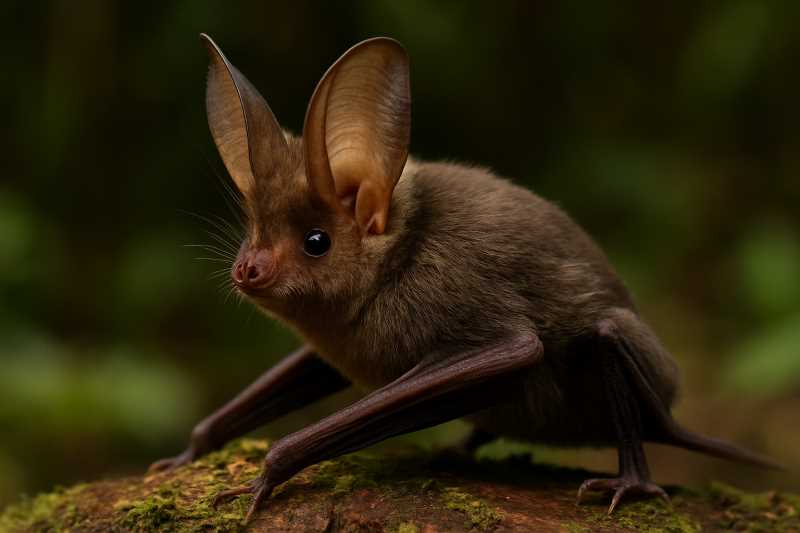
Giovanni’s Big-eared Bat is aptly named for its oversized ears, which are among the most prominent features distinguishing it from other bat species. These ears not only contribute to its appearance but also play a crucial role in its echolocation abilities. The bat’s body measures approximately 40-50 mm, with a wingspan ranging from 250 to 300 mm, making it a relatively small member of the big-eared bat family. Its fur is typically a dark brown to grayish color on the back, with a lighter underbelly, providing effective camouflage in its natural habitat.
The facial structure of Micronycteris giovanniae includes a pronounced nose leaf, which is an essential adaptation for its echolocation and feeding habits. The wings are long and narrow, facilitating agile flight through dense forest canopies. Its tail is short, not extending beyond the uropatagium, which is the membrane that stretches between its legs. These physical adaptations make Giovanni’s Big-eared Bat a well-equipped nocturnal predator.
Range and Habitat
Giovanni’s Big-eared Bat is primarily found in the neotropical regions of Central and South America. Its range extends from southern Mexico down through parts of Brazil, Peru, and Bolivia. The species thrives in a variety of habitats, including lowland rainforests, montane forests, and occasionally in dry forest regions.
The bat prefers areas with dense vegetation and proximity to water sources, such as rivers and streams, which are abundant in its natural range. These habitats provide ample foraging opportunities and roosting sites. Roosting occurs in hollow trees, caves, and sometimes in man-made structures that provide the darkness and seclusion needed for daytime rest. The presence of Giovanni’s Big-eared Bat in a region is often indicative of a healthy, biodiverse ecosystem.
Behavior and Diet
Micronycteris giovanniae exhibits nocturnal behavior, emerging at dusk to forage for food. Its diet is primarily insectivorous, consisting of a wide range of insects such as moths, beetles, and other small arthropods. The bat’s echolocation system is highly refined, allowing it to detect and capture prey with remarkable precision even in complete darkness.
Social behavior in Giovanni’s Big-eared Bat is characterized by roosting in small colonies. These colonies are typically composed of several individuals, which may include related females and their offspring. Males may roost separately or in mixed groups, depending on the season and availability of resources. Communication within these groups is facilitated by a series of vocalizations and ear movements, which play a role in social bonding and coordination during foraging.
Identification Tips
Identifying Giovanni’s Big-eared Bat in the field requires careful observation of several key features:
- Ears: Look for the characteristic large ears, which are much larger relative to the body size compared to other bat species.
- Nose Leaf: The presence of a pronounced nose leaf distinguishes this bat from similar species without this feature.
- Fur Coloration: Note the dark brown to grayish coloration on the back and lighter underbelly.
- Flight Pattern: Observe the agile and acrobatic flight, often near vegetation where insects are plentiful.
These identification tips are useful for researchers and enthusiasts conducting field studies or casual observations.
Conservation Status
The conservation status of Giovanni’s Big-eared Bat is currently classified as Near Threatened, with certain populations facing pressures from habitat loss and degradation. Deforestation for agriculture and urban development poses significant threats to the bat’s natural habitat. Additionally, the use of pesticides in agricultural areas can reduce the availability of insect prey, impacting food resources for the species.
Conservation efforts focus on habitat preservation and restoration, along with public awareness campaigns to reduce human impact. Protected areas and reserves are critical for the survival of this species, providing sanctuaries where they can thrive without the pressures of human encroachment. International cooperation is essential to address the cross-border nature of their range and ensure effective conservation measures.
Frequently Asked Questions
What is the primary diet of Giovanni’s Big-eared Bat?
Giovanni’s Big-eared Bat primarily feeds on insects, including moths, beetles, and other small arthropods. Its echolocation abilities enable it to hunt effectively in darkness.
Where can Giovanni’s Big-eared Bat be found?
This bat species is found in the neotropical regions of Central and South America, including countries such as Mexico, Brazil, Peru, and Bolivia. It inhabits lowland rainforests, montane forests, and sometimes dry forests.
How does Giovanni’s Big-eared Bat contribute to its ecosystem?
As an insectivorous species, Giovanni’s Big-eared Bat plays a crucial role in controlling insect populations, contributing to the balance of its ecosystem. Its presence indicates a healthy, biodiverse environment.
What are the main threats to Giovanni’s Big-eared Bat?
The primary threats include habitat loss due to deforestation and agricultural expansion, as well as the use of pesticides that reduce insect prey availability.
How can we help protect Giovanni’s Big-eared Bat?
Supporting conservation efforts, promoting habitat preservation, and raising awareness about the species are key ways to help protect Giovanni’s Big-eared Bat. Advocacy for sustainable agricultural practices can also mitigate some threats.
Related posts