Introduction
The Cape York Rock Wallaby (Petrogale coenensis) is a remarkable marsupial endemic to the Cape York Peninsula in Queensland, Australia. Known for its agile movement across rocky terrains and distinct appearance, this species has intrigued researchers and wildlife enthusiasts alike. Despite its elusive nature, the Cape York Rock Wallaby plays a crucial role in its ecosystem, contributing to the biodiversity of the region. Understanding more about this species is essential for its conservation and the maintenance of the ecological balance in its natural habitat.
Physical Description
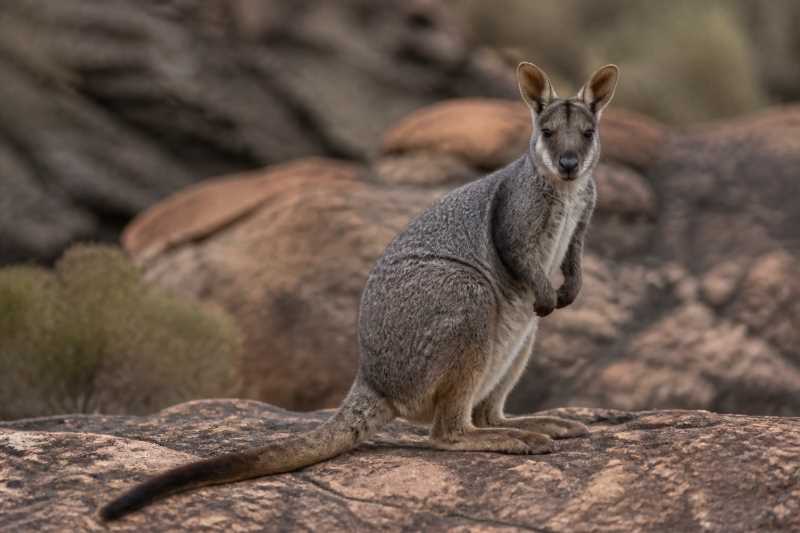
The Cape York Rock Wallaby is a small to medium-sized marsupial, characterized by its strong hind limbs and agile physique. Adult wallabies typically weigh between 3.5 to 7.8 kilograms and measure around 50 to 60 centimeters in body length, with a tail extending another 50 to 70 centimeters. The tail is often bushy and provides balance during swift movements across rocky landscapes.
This species exhibits a soft, dense coat that is predominantly grey-brown, with a paler underbelly. Distinctive facial markings include a white stripe across the cheek and a dark stripe down the midline of the face. The ears are relatively large and rounded, aiding in acute hearing, which is essential for detecting predators and communicating with other wallabies.
Range and Habitat
The Cape York Rock Wallaby is endemic to the Cape York Peninsula, a remote and rugged region in northern Queensland. This species is predominantly found in rocky outcrops, escarpments, and gorges, where it utilizes the rocky terrain for shelter and protection. These habitats provide ample crevices and overhangs that serve as refuges from predators and harsh weather conditions.
The distribution of the Cape York Rock Wallaby is limited to several isolated populations across the peninsula. These populations are often separated by vast expanses of unsuitable habitat, which restricts movement and gene flow between groups. Consequently, the wallaby’s range is highly fragmented, making it vulnerable to environmental changes and human activities.
Behavior and Diet
Cape York Rock Wallabies are primarily crepuscular, meaning they are most active during the early morning and late afternoon. This behavior helps them avoid the midday heat and reduces the risk of predation. During the day, they seek shelter in rocky crevices, emerging in the cooler hours to forage for food.
Their diet consists mainly of grasses, leaves, and shrubs, with a preference for young, tender foliage. The wallabies’ ability to survive in arid environments is supported by their efficient water metabolism, enabling them to extract sufficient moisture from their plant-based diet.
Socially, the Cape York Rock Wallaby is generally solitary, although they may form small groups when foraging or during the breeding season. Males establish territories and engage in displays of aggression to deter rivals, particularly during mating periods.
Identification Tips (Field Recognition Cues)
Identifying the Cape York Rock Wallaby in the field requires careful observation of its distinguishing features. Key identification tips include:
- Facial Markings: Look for the characteristic white cheek stripe and dark facial line.
- Body Size: Note the medium size, with a body length of 50-60 cm and a bushy tail of similar length.
- Coat Coloration: The grey-brown body with a pale underbelly helps in distinguishing it from other wallaby species.
- Habitat: Spotting these wallabies is more likely in rocky areas of the Cape York Peninsula.
- Behavior: Observe their crepuscular activity patterns and solitary nature.
Conservation Status (with Threats and Protections)
The conservation status of the Cape York Rock Wallaby is currently listed as Near Threatened by the International Union for Conservation of Nature (IUCN). The primary threats facing this species include habitat destruction due to mining, agriculture, and infrastructure development. Additionally, introduced predators like feral cats and foxes pose significant risks to their populations.
Climate change also threatens their habitat by altering the availability of food resources and increasing the frequency of extreme weather events. The fragmentation of their populations further exacerbates their vulnerability, as genetic diversity is reduced and local extinctions become more likely.
Conservation efforts for the Cape York Rock Wallaby focus on habitat protection, predator control, and research to better understand their ecology and population dynamics. Protected areas within the Cape York Peninsula play a crucial role in safeguarding their habitats, while community engagement and education aim to reduce human impacts on their populations.
Frequently Asked Questions
1. What is the primary habitat of the Cape York Rock Wallaby?
The Cape York Rock Wallaby primarily inhabits rocky outcrops, escarpments, and gorges within the Cape York Peninsula. These environments provide the necessary shelter and protection from predators.
2. How does the Cape York Rock Wallaby adapt to its environment?
The wallaby’s adaptations include strong hind limbs for agile movement across rocky terrain, a bushy tail for balance, and a diet that allows them to extract moisture from plant material, aiding in survival in arid conditions.
3. Why is the Cape York Rock Wallaby considered Near Threatened?
The species is considered Near Threatened due to habitat destruction, predation by introduced species, and the impacts of climate change. These factors contribute to population fragmentation and reduced genetic diversity.
4. What conservation measures are in place for the Cape York Rock Wallaby?
Conservation measures include habitat protection, predator control, and research initiatives. Protected areas and community involvement are also critical components of their conservation strategy.
5. When are Cape York Rock Wallabies most active?
Cape York Rock Wallabies are most active during the early morning and late afternoon, aligning with their crepuscular nature to avoid the heat and reduce predation risks.
Related posts