Introduction
The Yellow-tailed Woolly Monkey (Lagothrix flavicauda), an enigmatic and rare primate, is one of the most fascinating species in the world. Endemic to Peru, this species is characterized by its unique appearance and intriguing behaviors. Despite its status as an endangered species, it remains relatively understudied, fueling conservationists’ and researchers’ efforts to understand and protect this remarkable animal. This article delves into various aspects of the Yellow-tailed Woolly Monkey, from its physical characteristics to its habitat, behavior, and conservation status.
Physical Description
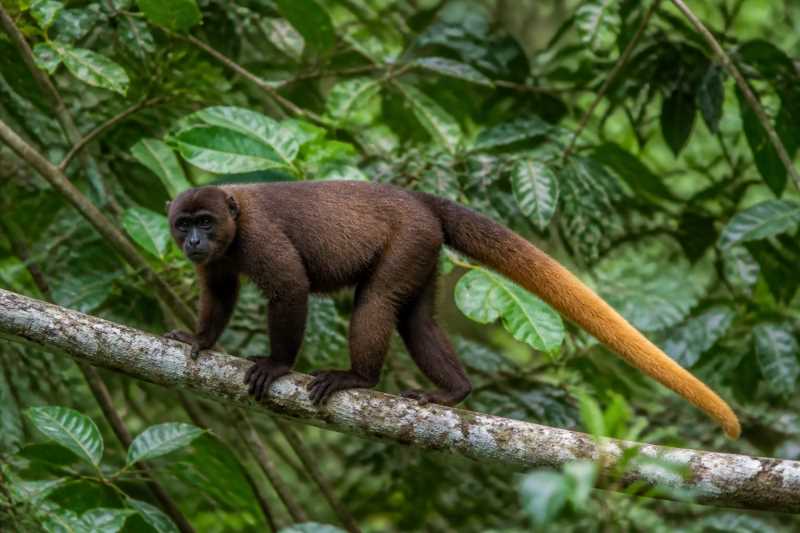
The Yellow-tailed Woolly Monkey is a large and striking primate, easily recognizable by its lush, woolly fur and distinct coloration. Adults typically weigh between 8 to 11 kilograms and measure about 50 to 60 centimeters in body length, with their long, prehensile tails adding an additional 60 to 70 centimeters. The species is named for the yellowish fur that adorns the underside of its tail, contrasting sharply with its dark, reddish-brown or black body fur. This tail is not only a prominent identification feature but also a crucial adaptation for arboreal life, aiding in balance and grasping.
The face of the Yellow-tailed Woolly Monkey is another distinctive feature, often featuring a bare, pinkish or blackish face with expressive, large eyes. The facial features are surrounded by a thick mane of fur, giving them a woolly appearance that contributes to their common name. Their limbs are strong and muscular, facilitating efficient movement through the dense canopy of their native forests.
Range and Habitat
The geographic range of the Yellow-tailed Woolly Monkey is confined to the montane cloud forests of the Peruvian Andes, specifically in the northeastern regions of the country. These forests are characterized by high humidity, frequent cloud cover, and a rich diversity of flora, providing an ideal environment for the species. The primate is primarily found in the departments of Amazonas, San Martín, and La Libertad, thriving at elevations ranging from 1,500 to 2,700 meters above sea level.
These forests offer a complex structure with multiple canopy layers, which the monkeys expertly navigate. They rely heavily on intact, mature forests with abundant fruit-bearing trees, which play a crucial role in their diet and overall survival. The Yellow-tailed Woolly Monkey’s preference for these specific habitats underscores the importance of forest conservation in the region.
Behavior and Diet
Yellow-tailed Woolly Monkeys are diurnal and arboreal, spending the majority of their lives in the trees. They live in social groups that can range from small family units to larger troops of up to 23 individuals, displaying a complex social structure with evident hierarchies and social bonds. These groups are typically led by a dominant male.
Their diet is primarily frugivorous, consisting mainly of fruits, which are abundant in their forest habitat. However, they are also known to consume leaves, flowers, seeds, and occasionally insects, which provides a balanced nutritional intake. The reliance on a fruit-heavy diet means that they play an essential role in seed dispersal, contributing to the health and regeneration of their forest ecosystem.
Identification Tips (field recognition cues)
Identifying the Yellow-tailed Woolly Monkey in the field requires attention to several key features. Observers should look for the following characteristics:
- Distinctive Tail: The underside of their tail is yellow, which is a standout feature. This is visible even from a distance when the monkey is moving through the trees.
- Woolly Appearance: Their dense, woolly fur gives them a unique texture and makes them appear larger than they actually are.
- Facial Features: A bare, expressive face with large eyes surrounded by a mane of thick fur.
- Loud Vocalizations: They are known for their loud, guttural calls, which can be heard echoing through the forest canopy.
Conservation Status (with threats and protections)
The Yellow-tailed Woolly Monkey is classified as Critically Endangered on the IUCN Red List. Habitat destruction, primarily due to deforestation for agriculture, logging, and human settlement, poses the most significant threat to their survival. As their forest habitat continues to shrink, so does their population.
Hunting also poses a threat, as they are sometimes hunted for food or captured for the illegal pet trade. Conservation efforts are underway to mitigate these threats, focusing on habitat protection, legal enforcement, and community education.
Several protected areas have been established within their range, including the Alto Mayo Protected Forest and the Rio Abiseo National Park, which provide some refuge for the species. Conservation organizations are actively working to enhance these efforts through reforestation projects and sustainable land-use practices that benefit both local communities and wildlife.
Frequently Asked Questions
What is the primary diet of the Yellow-tailed Woolly Monkey?
The Yellow-tailed Woolly Monkey primarily feeds on a diet rich in fruits, supplemented with leaves, flowers, seeds, and occasionally insects. Their frugivorous diet makes them important seed dispersers within their ecosystem.
Where can you find the Yellow-tailed Woolly Monkey?
This species is endemic to the montane cloud forests of northeastern Peru, specifically in the departments of Amazonas, San Martín, and La Libertad, at elevations between 1,500 and 2,700 meters.
How do Yellow-tailed Woolly Monkeys communicate?
They communicate through a variety of vocalizations, including loud, guttural calls that can echo across the forest canopy. These calls play a crucial role in group cohesion and territorial defense.
What are the main threats to the Yellow-tailed Woolly Monkey?
The primary threats include habitat destruction due to deforestation for agriculture, logging, and human settlement, alongside hunting pressures and the illegal pet trade.
How can we help conserve the Yellow-tailed Woolly Monkey?
Supporting conservation initiatives that focus on habitat protection, reforestation, and community education can help preserve the species. Advocating for sustainable land-use practices and supporting legal enforcement against illegal hunting and logging are also vital.
Related posts