White-throated Sparrow: A Comprehensive Overview
The White-throated Sparrow (Zonotrichia albicollis) is a bird species that captivates ornithologists and bird enthusiasts alike with its distinctive appearance and melodious song. Native to North America, this sparrow is a staple of woodlands and gardens, offering a glimpse into the vibrant world of avian life. This article delves into the ecology, behavior, and conservation of the White-throated Sparrow, providing a detailed look at what makes this bird so fascinating.
Physical Characteristics
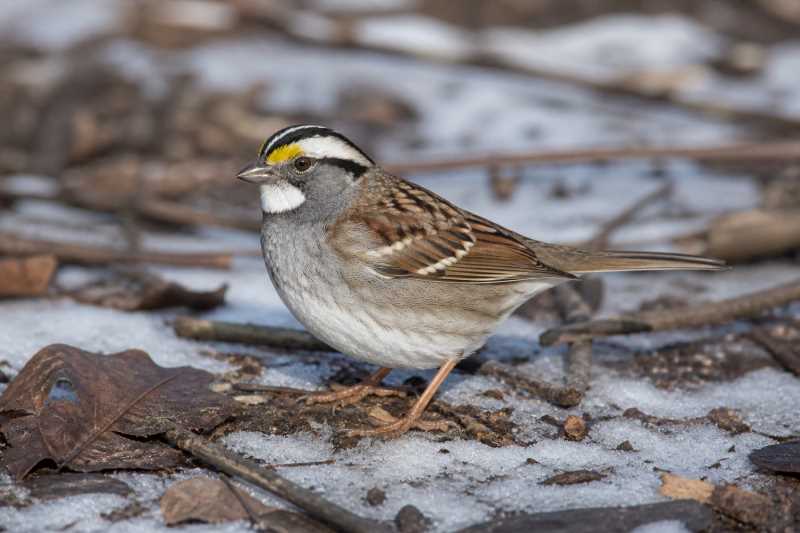
The White-throated Sparrow is easily recognizable due to its striking plumage. Adults typically measure between 15 to 19 centimeters in length, with a wingspan ranging from 21 to 23 centimeters. Their most distinguishing features include a bright white throat patch and yellow lores, the small area between the eyes and bill. The species exhibits two color morphs: the white-striped and the tan-striped forms. These morphs differ in the color of the crown stripes, with the white-striped form having more pronounced white markings, while the tan-striped form displays brownish tones.
Habitat and Distribution
This sparrow species is primarily found in the northeastern regions of North America, extending from Canada down into the northern United States. During the breeding season, they inhabit boreal forests, dense thickets, and shrubby areas, favoring environments with a mix of coniferous and deciduous trees. In the winter months, they migrate southward, residing in the eastern and southern United States, where they adapt to a variety of habitats, including suburban gardens and parks.
Behavior and Diet
White-throated Sparrows are ground foragers, primarily feeding on a diet of seeds, insects, and berries. During the breeding season, their diet shifts towards protein-rich insects, which are vital for the growth of their young. They are known for their distinctive "Old Sam Peabody, Peabody, Peabody" song, which echoes through the forests and is a key component of their mating rituals. This song not only attracts mates but also serves as a territorial call to ward off competitors.
Breeding and Reproduction
The breeding season for White-throated Sparrows occurs from late spring to early summer. They are monogamous birds, with pairs forming during the breeding season. The females are primarily responsible for nest building, creating cup-shaped nests made of twigs, grasses, and leaves. These nests are usually situated close to the ground in dense vegetation. Females typically lay a clutch of three to five eggs, which they incubate for about 11 to 14 days. Once hatched, both parents participate in feeding the chicks, which fledge approximately 9 to 12 days after hatching.
Conservation Status and Threats
Currently, the White-throated Sparrow is classified as a species of Least Concern by the International Union for Conservation of Nature (IUCN). However, like many bird species, they face threats from habitat loss and fragmentation, particularly due to urban development and deforestation. Climate change also poses a significant risk, potentially altering their migratory patterns and breeding habitats. Conservation efforts focus on preserving critical habitats and promoting biodiversity to ensure the survival of these sparrows.
Research and Studies
The White-throated Sparrow is a subject of extensive scientific research, particularly in the fields of behavioral ecology and genetics. Studies have explored the genetic basis of their plumage morphs, revealing a fascinating case of balanced polymorphism, where both color morphs are maintained within the population due to selective advantages. Additionally, research on their vocalizations has contributed to a broader understanding of avian communication and its evolutionary implications.
Human Interaction and Cultural Significance
These sparrows have a long-standing presence in North American culture, often featured in literature and music. Their distinctive song is a familiar sound to many, symbolizing the onset of spring and the beauty of nature. Birdwatchers and backyard enthusiasts alike enjoy observing these sparrows, making them a popular subject for nature photography and birdwatching activities.
Conclusion
The White-throated Sparrow is more than just a common bird; it is a remarkable species that offers insights into the complexity of avian life. From its unique song to its adaptive behaviors, this sparrow continues to intrigue scientists and bird lovers. As we strive to protect their habitats and understand their ecological roles, the White-throated Sparrow serves as a reminder of the intricate connections within our natural world.
Preserving the White-throated Sparrow requires a commitment to conservation and an appreciation for the delicate balance of ecosystems. Through continued research and public awareness, we can ensure that future generations will also experience the joy of hearing their beautiful song echoing through the forests.
Related posts