The Sedge Wren: A Small Wonder of the Wetlands
The Sedge Wren (Cistothorus stellaris) is one of the lesser-known avian inhabitants of North America’s wetlands, yet it holds a unique niche in these ecosystems. This small, elusive bird, part of the Troglodytidae family, has adapted remarkably well to its habitat, offering a fascinating subject for ornithologists and bird enthusiasts alike.
Physical Characteristics
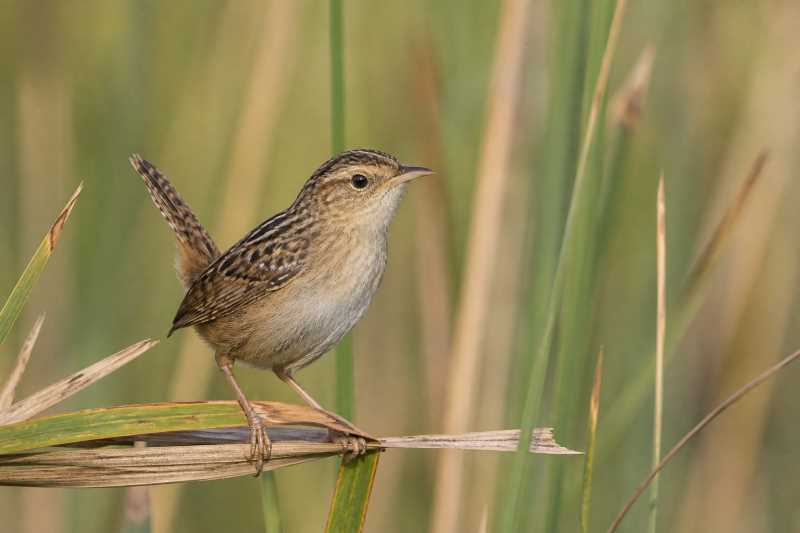
Measuring a mere 10 to 12 centimeters in length, the Sedge Wren is a diminutive bird with a characteristically short tail and a slender bill. It is distinguishable by its brownish plumage, streaked with black and white, which provides excellent camouflage among the sedges and grasses of its habitat. Its underparts are lighter, usually a pale buff or white, and its wings and back are marked with fine, dark barring.
Habitat and Distribution
The Sedge Wren primarily inhabits wet meadows, marshes, and other damp areas with dense, grassy vegetation. Its range extends across the eastern United States and southern Canada during the breeding season, migrating to the southeastern United States and parts of Central America for the winter. This bird’s preference for less accessible habitats often makes it difficult to spot, contributing to its mysterious allure.
Behavior and Diet
The Sedge Wren is an active and agile forager, feeding on a diet primarily composed of insects and arachnids. It hunts by moving stealthily through the grass, using its thin bill to glean prey from leaves and stems. This bird is also known for its distinctive and melodious song, which consists of a series of rapid, chattering notes. Males sing persistently during the breeding season to establish territory and attract mates.
Breeding and Nesting
Breeding typically occurs from late spring to early summer. The Sedge Wren is a polygynous species, with males often mating with multiple females. Nests are artfully constructed globes of grasses and sedges, usually positioned low to the ground in dense vegetation. The female is primarily responsible for building the nest and incubating the clutch of 4-6 eggs. After hatching, both parents take an active role in feeding and caring for the young until they fledge.
Conservation Status
Despite its elusive nature, the Sedge Wren is currently listed as a species of Least Concern by the International Union for Conservation of Nature (IUCN). However, due to its specific habitat requirements, it is vulnerable to the loss and degradation of wetlands. Conservation efforts aimed at preserving wetland habitats are crucial for ensuring the survival of this and other wetland-dependent species.
Conclusion
The Sedge Wren, with its tiny frame and enchanting song, is a testament to the diversity and complexity of wetland ecosystems. While it may not be as well-known as some other birds, its role in the ecological tapestry is significant. Protecting the habitats it relies on not only aids the Sedge Wren but also supports a myriad of other species that depend on these precious environments.
As we continue to study and understand the needs of the Sedge Wren, we gain valuable insights into the health of our wetlands and the broader environmental challenges we face. For bird watchers and conservationists, the Sedge Wren remains an emblem of the delicate balance within nature, reminding us of the importance of preserving biodiversity for future generations.
Related posts