An In-Depth Look at the Andean Lapwing (Vanellus resplendens)
The Andean Lapwing (Vanellus resplendens) is a captivating bird species that graces the high-altitude regions of South America, particularly the Andes Mountains. Known for its striking appearance and unique behaviors, the Andean Lapwing has become a subject of interest for ornithologists and bird enthusiasts alike. This article delves into the biology, habitat, behavior, and conservation status of this remarkable bird.
Physical Characteristics
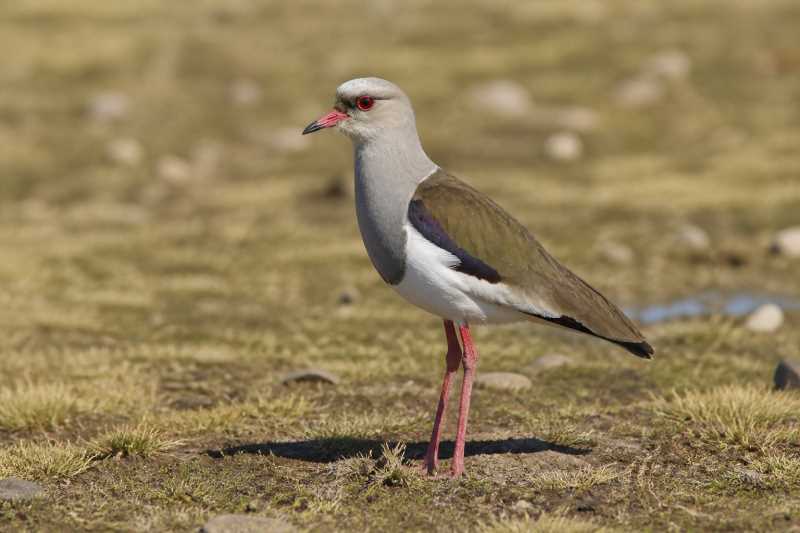
The Andean Lapwing is a medium-sized wader, measuring approximately 32-38 cm in length. It is distinguished by its striking plumage, which features a mix of black, white, and shades of gray. The bird’s back and wings are primarily gray, while its chest and underparts are white. One of the most distinctive features is the black crown on its head, contrasting sharply with the white face and throat. The lapwing’s legs are long and slender, adapted for its terrestrial lifestyle, and its beak is short and pointed, ideal for probing the ground for food.
Another notable characteristic is the bird’s sharp, piercing call, which is often heard echoing across the open landscapes it inhabits. This call plays a vital role in communication among individuals, especially during the breeding season.
Habitat and Distribution
The Andean Lapwing is primarily found in the high-altitude regions of the Andes, ranging from northern Ecuador through Peru and Bolivia, and extending into northern Chile and northwestern Argentina. These birds are typically found at elevations of 3,000 to 4,500 meters above sea level, where they inhabit open grasslands, marshes, and the edges of lakes and rivers.
Their choice of habitat is influenced by the availability of water and food resources, as well as the need for open spaces to detect predators and other threats. The harsh climate of the Andes, with its cold temperatures and strong winds, has shaped the lapwing’s adaptations, allowing it to thrive in environments where other species might struggle.
Diet and Feeding Behavior
The Andean Lapwing is an opportunistic feeder, with a diet primarily consisting of insects, small invertebrates, and occasionally seeds. Its feeding behavior involves a combination of probing the ground with its beak and picking prey from the surface. This bird is often seen foraging in small groups, particularly in areas where food is abundant.
The availability of food resources can vary seasonally, influencing the lapwing’s movements and distribution. During the rainy season, when insects and other invertebrates are more plentiful, the birds may be more widely dispersed across their range.
Breeding and Reproduction
Breeding for the Andean Lapwing typically occurs during the dry season, when conditions are more favorable for nesting. The birds are monogamous, with pairs forming strong bonds that last for several breeding seasons. Nesting sites are usually located on the ground, often in open areas with sparse vegetation, providing a clear line of sight to detect approaching predators.
The female lays a clutch of 2-4 eggs, which are incubated by both parents for about 25-30 days. The eggs are well-camouflaged, blending in with the surrounding environment to protect them from predators. After hatching, the chicks are precocial, meaning they are relatively mature and mobile, capable of leaving the nest within a few hours.
Parental care is shared between the male and female, with both taking turns to guard and feed the young. The chicks fledge after approximately 30-40 days, but they remain dependent on their parents for some time as they learn to forage and fend for themselves.
Conservation Status and Challenges
Currently, the Andean Lapwing is classified as a species of Least Concern by the International Union for Conservation of Nature (IUCN). Despite this, the bird faces several challenges that could impact its future survival. Habitat degradation, driven by agricultural expansion, mining activities, and infrastructure development, poses a significant threat to the species.
Climate change is another concern, as alterations in temperature and precipitation patterns can affect the availability of food and suitable breeding sites. Conservation efforts are needed to monitor population trends and ensure that the Andean Lapwing’s habitat is protected and managed sustainably.
Conclusion
The Andean Lapwing is a remarkable example of adaptation and resilience in the face of challenging environmental conditions. Its striking appearance, intriguing behaviors, and adaptability make it a fascinating subject for study and conservation. Protecting this species and its habitat will require collaborative efforts from governments, conservation organizations, and local communities to ensure that future generations can continue to enjoy the presence of this captivating bird in the high Andes.
As we continue to learn more about the Andean Lapwing and its place in the ecosystem, it serves as a reminder of the incredible diversity of life that thrives in some of the planet’s most extreme environments.
Related posts