The Enigmatic Black-chinned Fruit Dove: A Jewel of the Avian World
The Black-chinned Fruit Dove (Ptilinopus leclancheri), a member of the Columbidae family, is an exquisite species that inhabits the lush forests of the Philippines and surrounding islands. Known for its vibrant plumage and gentle demeanor, this bird serves as a vital component of its ecosystem, playing a significant role in seed dispersal.
Distinctive Features
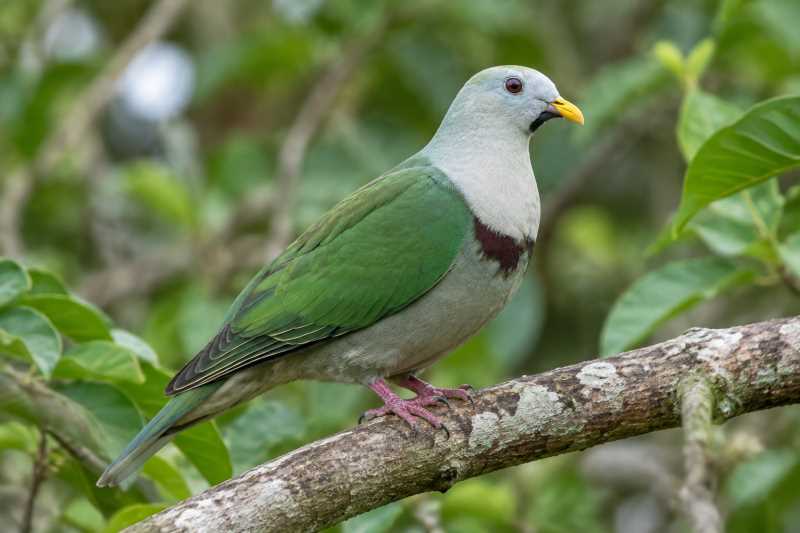
The Black-chinned Fruit Dove is renowned for its striking appearance. It boasts a colorful array of feathers, with a predominantly green body that helps it blend seamlessly into its tropical habitat. The bird’s most distinguishing feature is its black chin and throat, which contrasts sharply with its otherwise vivid plumage. Its crown is a soft purple hue, while the wings and back display a spectrum of greens and blues. The underparts are typically a lighter green, providing an excellent camouflage among the foliage.
This medium-sized dove averages around 24 centimeters in length, making it larger than some of its fruit dove cousins. Its eyes are encircled by a thin ring of bare skin, usually pale in color, adding to its distinct facial features.
Habitat and Distribution
Ptilinopus leclancheri primarily inhabits the lowland and montane forests of the Philippines, as well as the Talaud and Sangihe Islands in Indonesia. It prefers dense, humid forests where fruit is abundant, as its diet consists mainly of various fruits and berries. The availability of fruiting trees directly impacts the presence and density of these doves in a given area.
Due to its preference for dense forest cover, the Black-chinned Fruit Dove is often heard before it is seen. Its soft cooing calls resonate through the forest, providing a serene soundtrack to its vibrant habitat. Despite its vivid colors, it remains surprisingly elusive, often blending into the canopy.
Ecological Role
As a frugivore, the Black-chinned Fruit Dove plays a crucial role in its ecosystem as a seed disperser. By consuming fruits and subsequently excreting the seeds at different locations, it aids in the propagation of various plant species. This process not only supports forest regeneration but also helps maintain the biodiversity of these tropical ecosystems.
The dove’s feeding habits also influence the structure of the forest, as the seeds of larger fruiting trees tend to be dispersed over greater distances. This can lead to more diverse plant communities, which in turn support a variety of wildlife.
Conservation Status
The Black-chinned Fruit Dove is currently classified as Near Threatened by the International Union for Conservation of Nature (IUCN). The primary threats to its survival are habitat loss and fragmentation due to logging, agricultural expansion, and urban development. These activities have led to a significant reduction in suitable habitats for the species, particularly in lowland areas.
Conservation efforts are essential to ensure the survival of this beautiful bird. Protecting its natural habitat, establishing protected areas, and promoting sustainable land-use practices are critical strategies for conserving the Black-chinned Fruit Dove. Additionally, raising awareness about the importance of these doves in ecosystem health can garner public support for conservation initiatives.
Research and Observation
Ongoing research is vital for understanding the population dynamics and ecological requirements of the Black-chinned Fruit Dove. Field studies focusing on its feeding habits, breeding behaviors, and movement patterns can provide valuable insights into its role within the forest ecosystem.
Birdwatchers and ornithologists often document sightings and behaviors of these doves, contributing to citizen science projects that aid in data collection. These efforts help fill knowledge gaps and inform conservation strategies.
Conclusion
The Black-chinned Fruit Dove is not only a stunning bird but also an integral part of its ecosystem. Its presence signifies a healthy, functioning forest where biodiversity thrives. Conservation of this species requires a concerted effort to protect its habitat and address the root causes of its decline.
By valuing and preserving these vibrant doves, we not only ensure their future but also contribute to the broader goal of maintaining the ecological balance of tropical forests. The Black-chinned Fruit Dove, with its captivating colors and gentle nature, stands as a symbol of the rich biodiversity that must be cherished and protected for generations to come.
Related posts