Little Ringed Plover: A Comprehensive Study of Charadrius dubius
Introduction
The Little Ringed Plover (Charadrius dubius) belongs to the Charadriidae family, a diverse group of small to medium-sized birds commonly found near water bodies. Known for its distinctive yellow eye-ring, this species is a fascinating subject of study due to its unique behaviors, breeding patterns, and migration habits. This article aims to provide a comprehensive overview of the Little Ringed Plover, covering its taxonomy, habitat, behavior, conservation status, and much more.
Taxonomy and Classification
The Little Ringed Plover is classified under the order Charadriiformes, encompassing a variety of shorebirds. Within the genus Charadrius, this species is closely related to other plovers that share similar ecological niches and morphological characteristics. First described by the German naturalist Peter Simon Pallas in 1776, the scientific name ‘dubius’ reflects the initial uncertainty about its distinctiveness from closely related species.
Physical Characteristics
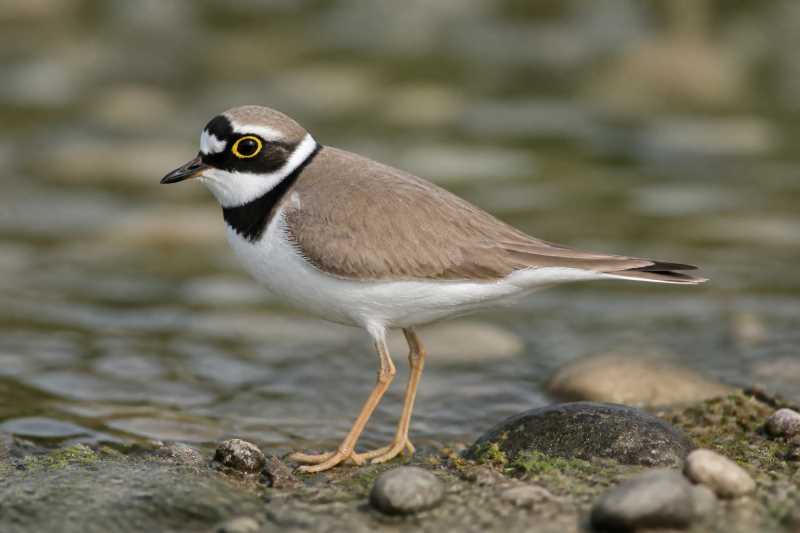
Measuring approximately 15-18 cm in length, the Little Ringed Plover is a compact bird with a short neck and long legs. It exhibits a unique coloration pattern, with a brownish-grey upper body, white underparts, and a conspicuous black band across its chest. The most striking feature is its bright yellow eye-ring, which is especially prominent during the breeding season. Juveniles resemble adults but have a duller appearance with less defined markings.
Habitat and Distribution
The Little Ringed Plover favors open, gravelly or sandy areas near freshwater bodies such as rivers, lakes, and reservoirs. It is widely distributed across Europe, Asia, and parts of North Africa, displaying a preference for temperate to tropical climates. During the breeding season, these birds are often found in inland regions, while non-breeding populations may migrate to coastal areas or further south to Africa and southern Asia.
Breeding and Nesting Behavior
Breeding occurs from late spring to early summer, with the timing varying slightly depending on the geographical location. The Little Ringed Plover is a ground-nesting bird, creating simple scrapes in sand or gravel to lay its eggs. Clutches typically consist of 3 to 4 eggs, which both parents incubate over a period of about 24-25 days. The chicks are precocial, leaving the nest shortly after hatching and being guided by their parents to feeding areas.
Feeding and Diet
Primarily insectivorous, the Little Ringed Plover forages for food in shallow waters and mudflats. Its diet consists mainly of insects, larvae, and small invertebrates, which it captures using a technique known as ‘foot-trembling’. This involves vibrating one foot rapidly in water or soft mud to disturb prey, making it easier to catch.
Migration Patterns
Migration is a significant aspect of the Little Ringed Plover’s life cycle. Northern populations undertake long-distance migrations to avoid harsh winter conditions, traveling to subtropical and tropical regions. These journeys are often perilous, with the birds relying on a combination of innate navigational skills and environmental cues to reach their destinations. Migration routes can vary, but many individuals follow established flyways along coastlines and river valleys.
Conservation Status
Currently, the Little Ringed Plover is classified as ‘Least Concern’ by the International Union for Conservation of Nature (IUCN). However, it faces threats from habitat loss, human disturbance, and pollution. Conservation efforts focus on safeguarding breeding sites, monitoring populations, and promoting awareness about the importance of preserving natural habitats.
Human Interaction and Cultural Significance
The Little Ringed Plover holds a place in various cultural contexts, often symbolizing adaptability and resilience. Birdwatchers and ornithologists are particularly drawn to this species due to its widespread distribution and interesting behaviors. Efforts to study and protect these birds also contribute to broader environmental conservation initiatives.
Conclusion
The Little Ringed Plover is a remarkable species that exemplifies the beauty and complexity of avian life. Through understanding its ecology, behavior, and the challenges it faces, we gain valuable insights into the health of our ecosystems. Continued research and conservation work are essential to ensure that future generations can enjoy the presence of this charming bird in their natural habitats.
References
– Piersma, T., & Wiersma, P. (1996). Family Charadriidae (Plovers). In J. del Hoyo, A. Elliott, & J. Sargatal (Eds.), Handbook of the Birds of the World. Vol. 3, Hoatzin to Auks. Lynx Edicions.
– BirdLife International (2021). Charadrius dubius. The IUCN Red List of Threatened Species 2021.
– Hayman, P., Marchant, J., & Prater, T. (1986). Shorebirds: An Identification Guide to the Waders of the World. Houghton Mifflin.
—
Related posts