The Crimson Chat: A Jewel of the Australian Outback
In the vast and diverse landscape of Australia, where the flora and fauna display an array of colors and forms, the Crimson Chat (Epthianura tricolor) stands out as a vibrant gem. Known for its striking plumage and adaptive behaviors, this small bird has captured the attention of ornithologists and birdwatching enthusiasts alike. This article delves into the captivating world of the Crimson Chat, exploring its habitat, physical features, behavior, and the conservation efforts aimed at preserving its population.
Habitat and Distribution
The Crimson Chat is predominantly found across the arid and semi-arid regions of inland Australia. Its range extends from western New South Wales and southern Queensland to South Australia and Western Australia. These birds are highly nomadic, often following the availability of food sources which are largely influenced by rainfall patterns. They thrive in open, shrubby landscapes such as saltbush and bluebush plains, grasslands, and sometimes in agricultural areas where conditions are favorable.
Their ability to adapt to varying environmental conditions is remarkable. During periods of drought, when resources become scarce, Crimson Chats are known to travel long distances in search of food and water. This adaptability is crucial for their survival in the often harsh and unpredictable climate of the Australian outback.
Physical Characteristics
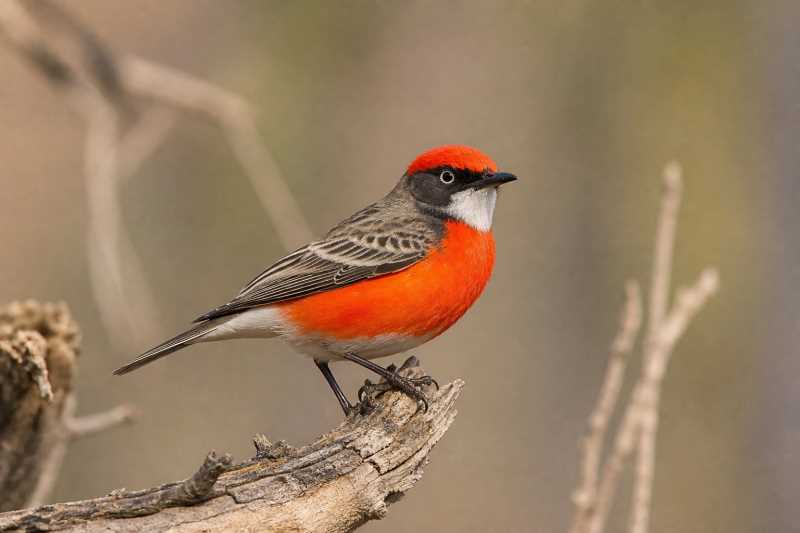
The Crimson Chat is a small bird, measuring approximately 10 to 13 centimeters in length and weighing around 10 to 12 grams. What truly sets this species apart is the vibrant coloration of the males, especially during the breeding season. Males boast a striking crimson crown, throat, and breast, contrasted with a white belly and a black band across the eyes. The back and wings are a mix of browns and greys, providing effective camouflage when needed.
Females and non-breeding males are less conspicuous, with more muted brown and grey plumage. This dimorphism is typical of many bird species, where the males need to be more visually appealing to attract mates, while females benefit from being less noticeable, especially when nesting and caring for young.
Behavior and Diet
Crimson Chats are primarily insectivorous, feeding on a diet of insects and other small invertebrates. They are known to forage on the ground, using their short bills to pick insects from the soil and vegetation. Their diet can also include seeds and nectar, especially during times when insects are less abundant.
These birds are social creatures, often seen in small flocks, particularly outside the breeding season. Their social behavior extends to their breeding habits as well, where they are known to form loose colonies. The breeding season typically occurs from August to December, coinciding with the availability of food following rainfall. During this time, males engage in elaborate displays to attract females, showcasing their vivid plumage and singing to win over potential mates.
Nesting is usually a joint effort, with both males and females participating in the construction of the nest, which is often a simple cup-shaped structure built low in shrubs or on the ground. The female lays two to four eggs, which are incubated by both parents. After hatching, both parents are involved in feeding and caring for the chicks until they fledge.
Conservation Status
Currently, the Crimson Chat is listed as a species of ‘Least Concern’ by the International Union for Conservation of Nature (IUCN). However, their dependence on specific environmental conditions makes them vulnerable to habitat degradation and climate change. Land clearing for agriculture and changes in fire regimes can significantly impact their habitat.
Conservation efforts for the Crimson Chat focus on habitat preservation and management. Protecting the native shrublands and promoting sustainable agricultural practices are essential for ensuring the continued survival of this species. Additionally, monitoring programs are in place to track their population trends and to better understand the impacts of environmental changes.
Conclusion
The Crimson Chat is a testament to the resilience and adaptability of nature. Its vibrant presence in the Australian outback highlights the importance of preserving the delicate ecosystems that these birds, and many other species, depend on. By appreciating and protecting the habitats of the Crimson Chat, we contribute not only to their survival but also to the rich biodiversity of Australia’s unique landscapes.
As we continue to study and observe these remarkable birds, it becomes increasingly clear that their survival is intricately linked to the health of their environment. The Crimson Chat not only enriches the natural beauty of the outback but also serves as a reminder of the delicate balance within ecosystems that must be maintained for future generations.
Related posts