The Capped Wheatear: A Comprehensive Overview of Oenanthe pileata
The Capped Wheatear (Oenanthe pileata) is a striking and dynamic bird species that captures the attention of ornithologists and bird enthusiasts alike. Known for its distinctive plumage and captivating behaviors, this bird is a vital component of the ecosystems it inhabits. This article delves into the various aspects of the Capped Wheatear, including its habitat, behavior, diet, breeding patterns, and conservation status, providing a comprehensive overview of this fascinating species.
Habitat and Distribution
The Capped Wheatear is predominantly found across sub-Saharan Africa, with a range that stretches from the western parts of the continent in Senegal to the eastern reaches in Ethiopia and southward to South Africa. It thrives in open grasslands, savannas, and shrublands, preferring areas that offer a mix of bare ground and scattered vegetation. This habitat preference allows it to exploit a variety of niches, making it a highly adaptable species.
Adaptation to different environmental conditions is a notable feature of the Capped Wheatear. While it primarily occupies lowland regions, it can also be found at higher altitudes in mountainous areas, particularly in East Africa. This adaptability is crucial for its survival across a diverse range, as it enables the species to cope with varying climatic conditions and habitat modifications.
Physical Characteristics
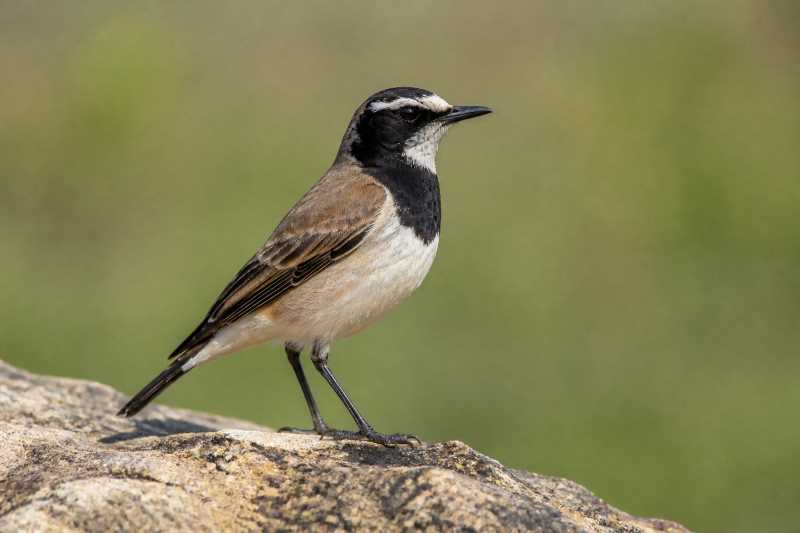
The Capped Wheatear is easily recognizable due to its distinctive appearance. It features a bold black cap that contrasts sharply with its white forehead and throat. The rest of its plumage ranges from a warm brown to a sandy hue, which provides excellent camouflage against the arid landscapes it inhabits. This coloration is complemented by a striking black tail with white outer feathers, which becomes most noticeable in flight.
Males and females are similar in appearance, although females tend to have slightly duller plumage. Juveniles, on the other hand, exhibit a more mottled appearance, which gradually transforms as they mature into adult plumage.
Behavior and Diet
The Capped Wheatear is a highly territorial bird, often observed engaging in displays to defend its territory from intruders. These displays include wing flicking, tail fanning, and a variety of vocalizations that serve to ward off rivals and attract mates. Its song, characterized by a series of melodious whistles and chirps, is a common sound across its range, particularly during the breeding season.
In terms of diet, the Capped Wheatear is primarily insectivorous, feeding on a wide array of invertebrates including beetles, ants, and termites. It employs a "perch and pounce" hunting strategy, where it perches on an elevated spot to scan the ground for prey before swooping down to capture it. This method is both energy-efficient and highly effective, allowing the bird to exploit food resources in its habitat efficiently.
Breeding and Reproduction
Breeding typically occurs during the rainy season, which varies across its range. The Capped Wheatear is monogamous, with pairs forming strong bonds that last throughout the breeding season. Nests are constructed on the ground, often concealed under a tuft of grass or a small bush to protect them from predators.
The female lays between 2 to 5 eggs, which she incubates for about two weeks. During this time, the male plays a crucial role in providing food and protection for the female and the nest. Once the chicks hatch, both parents share the responsibility of feeding and caring for them until they are ready to fledge, usually around two weeks after hatching.
Conservation Status
Currently, the Capped Wheatear is listed as a species of Least Concern by the International Union for Conservation of Nature (IUCN). Its wide distribution and relatively stable population numbers contribute to this assessment. However, habitat degradation due to agricultural expansion, overgrazing, and climate change poses potential threats to its populations in certain areas.
Conservation efforts focused on preserving natural habitats and mitigating human-induced environmental changes are essential for ensuring the long-term survival of the Capped Wheatear. Continued research and monitoring are also crucial to understanding the full impact of these threats and implementing effective conservation strategies.
Conclusion
The Capped Wheatear is a resilient and adaptable bird that plays a significant role in the ecosystems it inhabits. Its striking appearance and engaging behaviors make it a favorite among birdwatchers and researchers. While currently not at immediate risk, maintaining efforts to protect its habitats and monitor population trends is vital for its continued prosperity. Understanding and appreciating the Capped Wheatear is not only a step towards conserving a remarkable species but also towards appreciating the intricate tapestry of life in Africa’s diverse landscapes.
Related posts