Introduction
The Mongoose Lemur (Eulemur mongoz) is a captivating primate that belongs to the family Lemuridae, a group that is endemic to the island of Madagascar. With its distinctive appearance and intriguing behavior, this species has captured the interest of researchers and wildlife enthusiasts alike. Unfortunately, like many other lemurs, the Mongoose Lemur faces significant threats in the wild, necessitating concerted conservation efforts. This article delves into the fascinating world of the Mongoose Lemur, exploring its physical characteristics, natural habitat, behavior, diet, and conservation status.
Physical Description
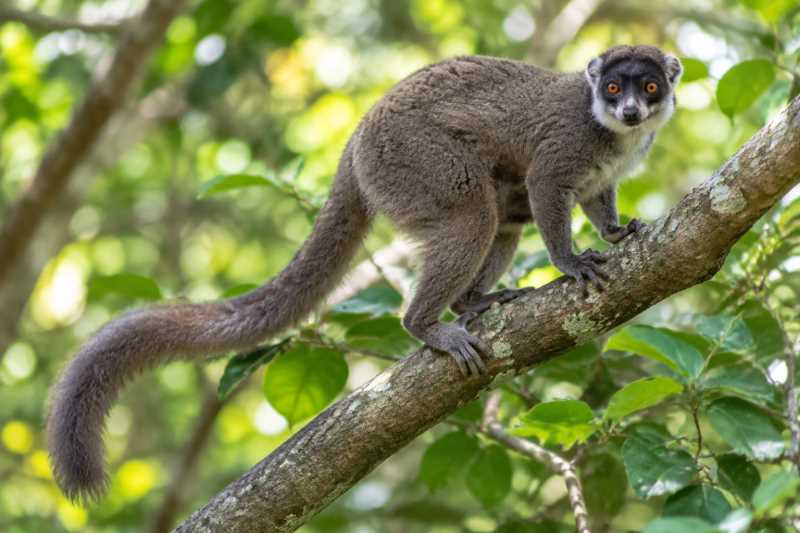
Mongoose Lemurs are small to medium-sized primates, with adults weighing around 1.5 to 2 kilograms (3.3 to 4.4 pounds) and measuring approximately 30 to 35 centimeters (12 to 14 inches) in body length, not including the tail. Their tails are slightly longer than their bodies, measuring around 45 to 50 centimeters (18 to 20 inches), and are used for balance when moving through trees.
The fur of the Mongoose Lemur is dense and soft, with a predominantly grayish-brown hue. Notably, sexual dimorphism is evident in this species: males typically have a reddish-brown face and crown, whereas females display a more uniform gray coloration. Both sexes exhibit a white or light-colored muzzle and throat, which contrast sharply with the darker fur of their faces.
Range and Habitat
The Mongoose Lemur is native to Madagascar, but its range is restricted to the northwestern part of the island. In addition to Madagascar, small populations have been introduced to the Comoro Islands. These lemurs primarily inhabit dry deciduous forests, a biome characterized by seasonal rainfall and a rich diversity of plant and animal life.
Within these forests, Mongoose Lemurs are arboreal, spending much of their time in the canopy. They are well adapted to life in the trees, with strong limbs and dexterous hands and feet that allow them to grasp branches securely.
Behavior and Diet
Mongoose Lemurs are known for their complex social structures. They typically live in small family groups consisting of a monogamous pair and their offspring. Unlike many other lemur species, Mongoose Lemurs exhibit a unique form of social organization where both males and females can take on leadership roles within the group.
These lemurs are cathemeral, meaning that they are active both during the day and at night. This flexible activity pattern allows them to adapt to varying environmental conditions and food availability. Their diet is predominantly frugivorous, consisting mainly of fruits and nectar, which they obtain from flowers. However, they also consume leaves, flowers, and occasionally insects, making them opportunistic feeders.
Identification Tips (Field Recognition Cues)
Identifying Mongoose Lemurs in the wild can be a rewarding experience for wildlife enthusiasts. Here are some field recognition cues to help you spot these elusive primates:
- Coloration: Look for the distinct reddish-brown crown and face in males and the uniform gray face in females, along with the characteristic white muzzle and throat.
- Size and Shape: Note their medium-sized body with a long tail used for balance.
- Behavior: Observe their arboreal habits and social behavior, often seen in family groups.
Conservation Status (with Threats and Protections)
The Mongoose Lemur is currently listed as Critically Endangered on the IUCN Red List. The primary threats to their survival include habitat destruction due to slash-and-burn agriculture, illegal logging, and charcoal production. Additionally, hunting for bushmeat and the illegal pet trade pose significant risks.
Conservation efforts are underway to protect this species, including habitat restoration projects and the establishment of protected areas. Organizations are also working to raise awareness about the importance of lemur conservation and to promote sustainable practices among local communities.
Frequently Asked Questions
- What is the lifespan of a Mongoose Lemur?
The average lifespan of a Mongoose Lemur in the wild is around 20 to 25 years, although individuals in captivity have been known to live longer due to the absence of natural threats and better healthcare.
- Are Mongoose Lemurs social animals?
Yes, Mongoose Lemurs are highly social animals that live in small family groups. They exhibit complex social behaviors and communicate through vocalizations, scent marking, and body language.
- What are the main threats to Mongoose Lemurs?
The main threats include habitat loss due to deforestation and agriculture, hunting for bushmeat, and capture for the illegal pet trade. Conservation efforts are crucial to mitigate these threats.
- Where can I see Mongoose Lemurs in the wild?
Mongoose Lemurs can be observed in the dry deciduous forests of northwestern Madagascar. Visiting protected areas and participating in guided tours with local experts can enhance your chances of seeing them.
- How do Mongoose Lemurs contribute to their ecosystem?
Mongoose Lemurs play a vital role in their ecosystem as seed dispersers. Through their frugivorous diet, they help in the regeneration of forests by spreading the seeds of the fruits they consume.
Related posts