The Scrub Honeyeater: A Glimpse into the Life of Microptilotis Albonotatus
The Scrub Honeyeater, scientifically known as Microptilotis albonotatus, is a captivating avian species that inhabits the lush forests of New Guinea and parts of northern Australia. This bird is a member of the Meliphagidae family, commonly known as honeyeaters, which are renowned for their unique feeding habits and ecological roles within their habitats. This article delves into the fascinating world of the Scrub Honeyeater, exploring its characteristics, habitat, behavior, and conservation status.
Characteristics and Identification
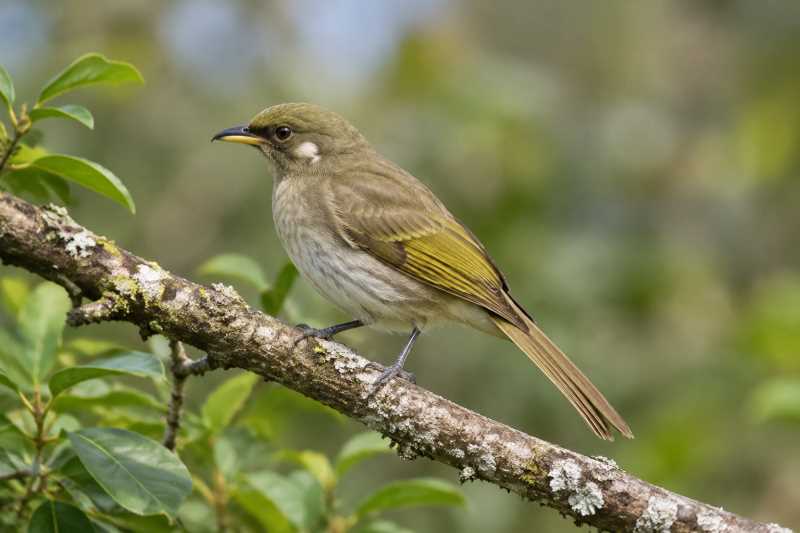
The Scrub Honeyeater is a small to medium-sized bird, measuring approximately 14 to 16 centimeters in length. Its plumage is predominantly olive-green, with a distinctive white streak behind the eye, which serves as a key identifying feature. The underparts of the bird are generally lighter, showcasing a pale yellow or whitish hue. This honeyeater possesses a slightly curved bill, adapted for extracting nectar from flowers, a primary component of its diet.
The bird’s vocalizations are a series of melodious and varied calls, often heard echoing through the forest canopy. These calls play an essential role in communication between individuals, particularly during the breeding season.
Habitat and Distribution
The Scrub Honeyeater is primarily found in the tropical and subtropical rainforests of New Guinea and northern Australia. It favors dense forest undergrowth and is often observed flitting through the mid-story and lower canopy levels in search of food. These birds are crucial pollinators within their ecosystems, contributing to the reproductive success of numerous plant species.
Despite their preference for forested environments, Scrub Honeyeaters have shown some adaptability to altered landscapes, such as secondary forests and regrowth areas. However, they remain most abundant and active in pristine habitats where their natural food sources are plentiful.
Behavior and Diet
The diet of the Scrub Honeyeater is diverse, consisting primarily of nectar, supplemented by insects and small arthropods. By feeding on nectar, these birds inadvertently assist in plant pollination, making them vital contributors to the health and sustainability of their ecosystems. They exhibit a behavior known as "trap-lining," where individuals follow a regular route to visit a sequence of flowering plants, maximizing their foraging efficiency.
Socially, Scrub Honeyeaters are relatively solitary or found in small family groups. They are territorial, especially during the breeding season, when males engage in vocal displays and aggressive interactions to defend their nesting sites. The breeding season varies slightly across their range but generally occurs during the wettest months when food is most abundant.
Nests are typically constructed in dense foliage, often close to the ground, and comprise a delicate cup-like structure made from twigs, grass, and spider webs. The female lays a clutch of two to three eggs, which she incubates while the male assists in feeding the fledglings once they hatch.
Conservation Status
Currently, the Scrub Honeyeater is classified as a species of Least Concern by the International Union for Conservation of Nature (IUCN). Despite this classification, certain threats could impact their populations in the future. Habitat destruction due to deforestation and land conversion for agriculture poses a significant risk to the species, as it leads to the loss of food resources and nesting sites.
Climate change also presents a looming threat, potentially altering the distribution and flowering patterns of the plants these birds rely on for sustenance. Conservation efforts focused on preserving rainforest habitats and promoting sustainable land use practices are crucial to ensuring the long-term survival of the Scrub Honeyeater and the myriad of other species that share its ecosystem.
Conclusion
The Scrub Honeyeater is a remarkable example of the rich biodiversity found in the rainforests of New Guinea and northern Australia. Its role as a pollinator and its adaptability to different forested environments highlight its ecological importance. While currently not facing immediate threats, continued conservation efforts are vital to safeguard its habitat from the growing pressures of human activities and climate change. By understanding and protecting the Scrub Honeyeater, we contribute to the broader effort of conserving the intricate web of life that thrives in these tropical forests.
Related posts